
Learn to care for your 0-1 week old kitten
Fill out the brief form below to help Kitten Lady understand who’s using the kitten age calculator. Click “submit” to be redirected to tons of information about caring for your 0-1 week old kitten!
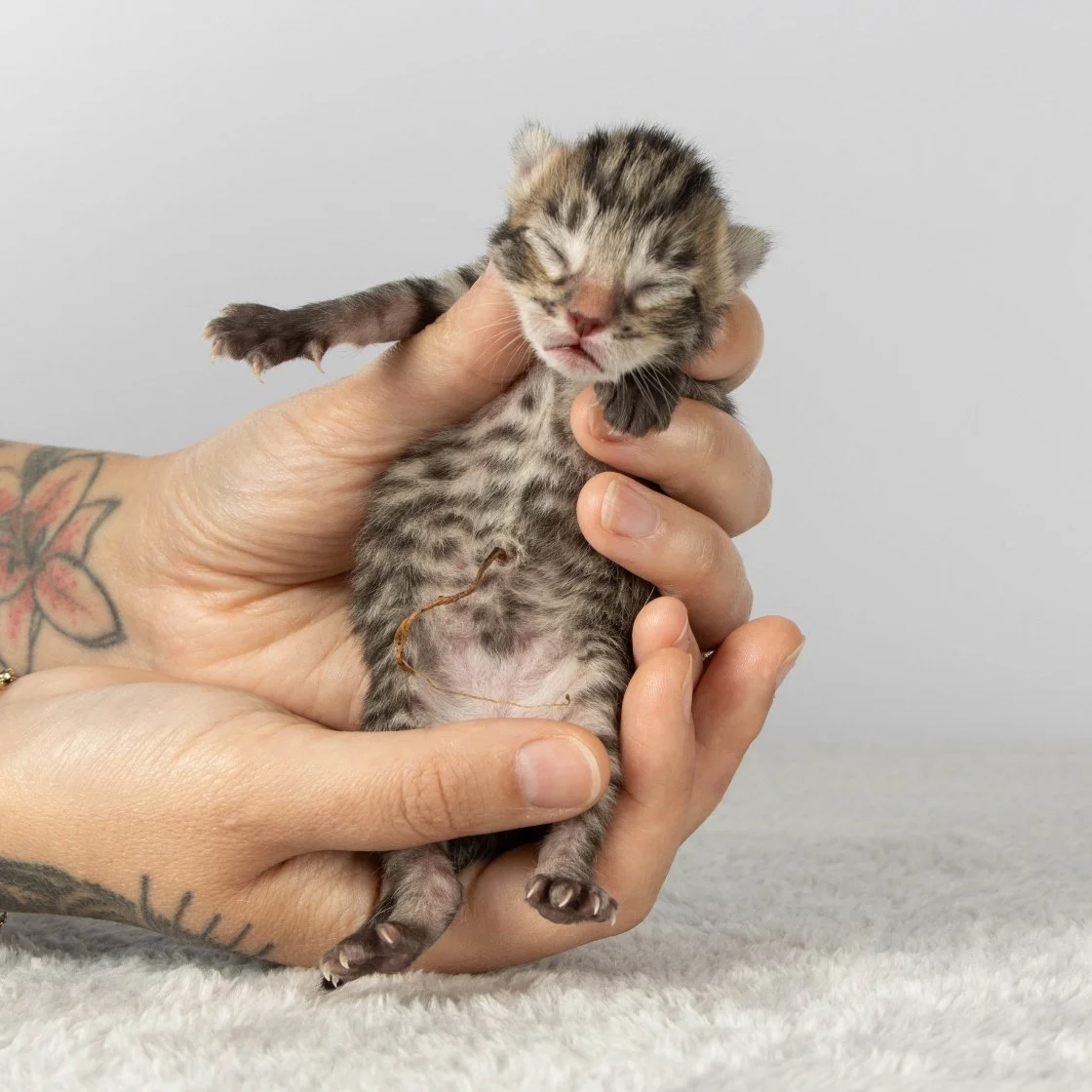
0-1 Week Old:
The Newborn Stage
The first week of life is the most fragile period in a kitten’s development.
You Should Know:
During the first 12-24 hours after birth, mother cats produce an antibody rich first milk called colostrum. Kittens who do not receive enough colostrum during this brief window are more vulnerable to illness. After about 24 hours kittens can no longer absorb these antibodies effectively.
Because their immune systems are still immature, kittens this age should be handled only with clean hands and protected from other animals and potential sources of infection.
Whenever possible, kittens should stay with their mother. If you find a kitten outdoors, make every effort to keep the family together.
If a kitten is truly orphaned, they will need intensive care: constant warmth, help urinating and defecating, and frequent bottle feedings around the clock.
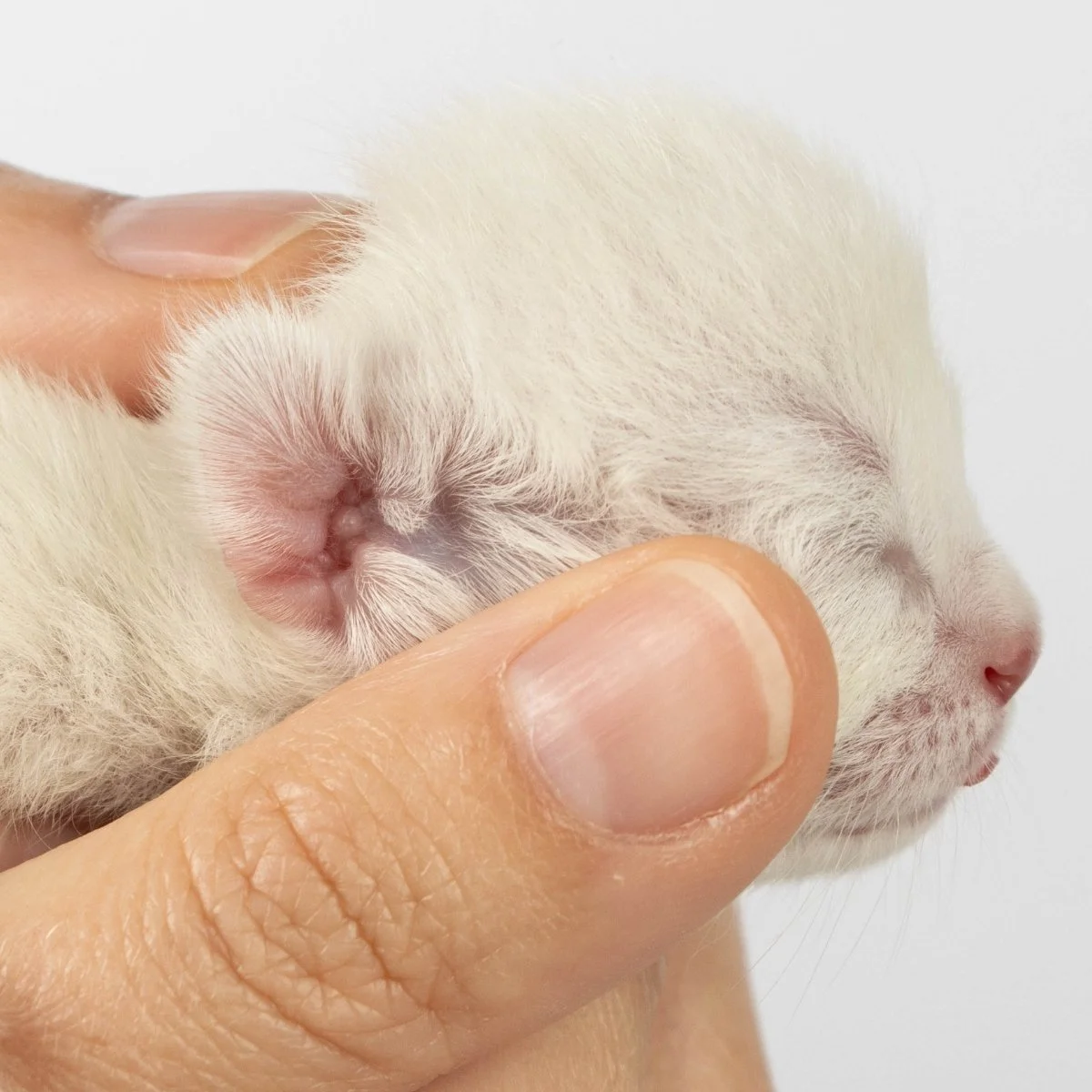
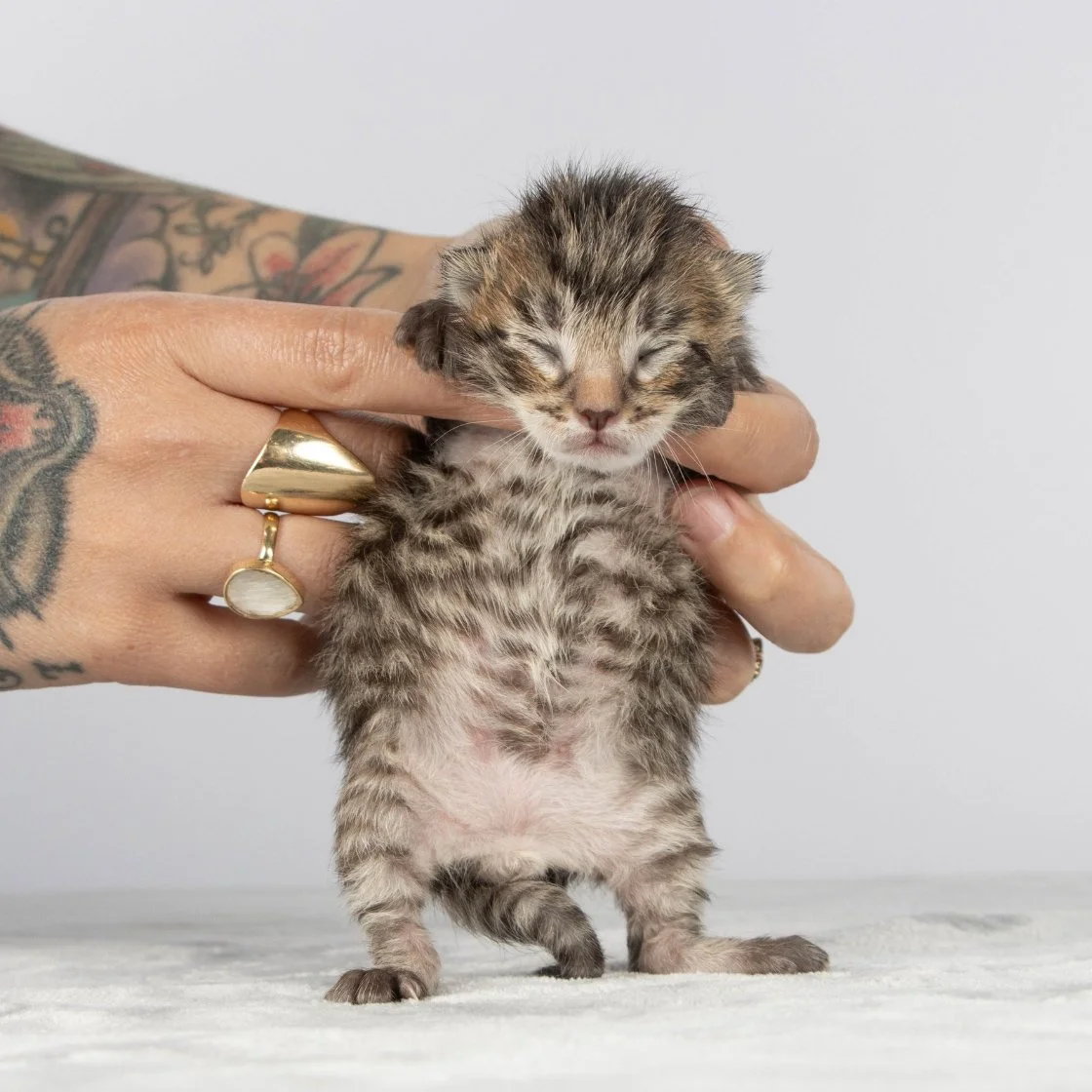
Newborn ear canals are shut.
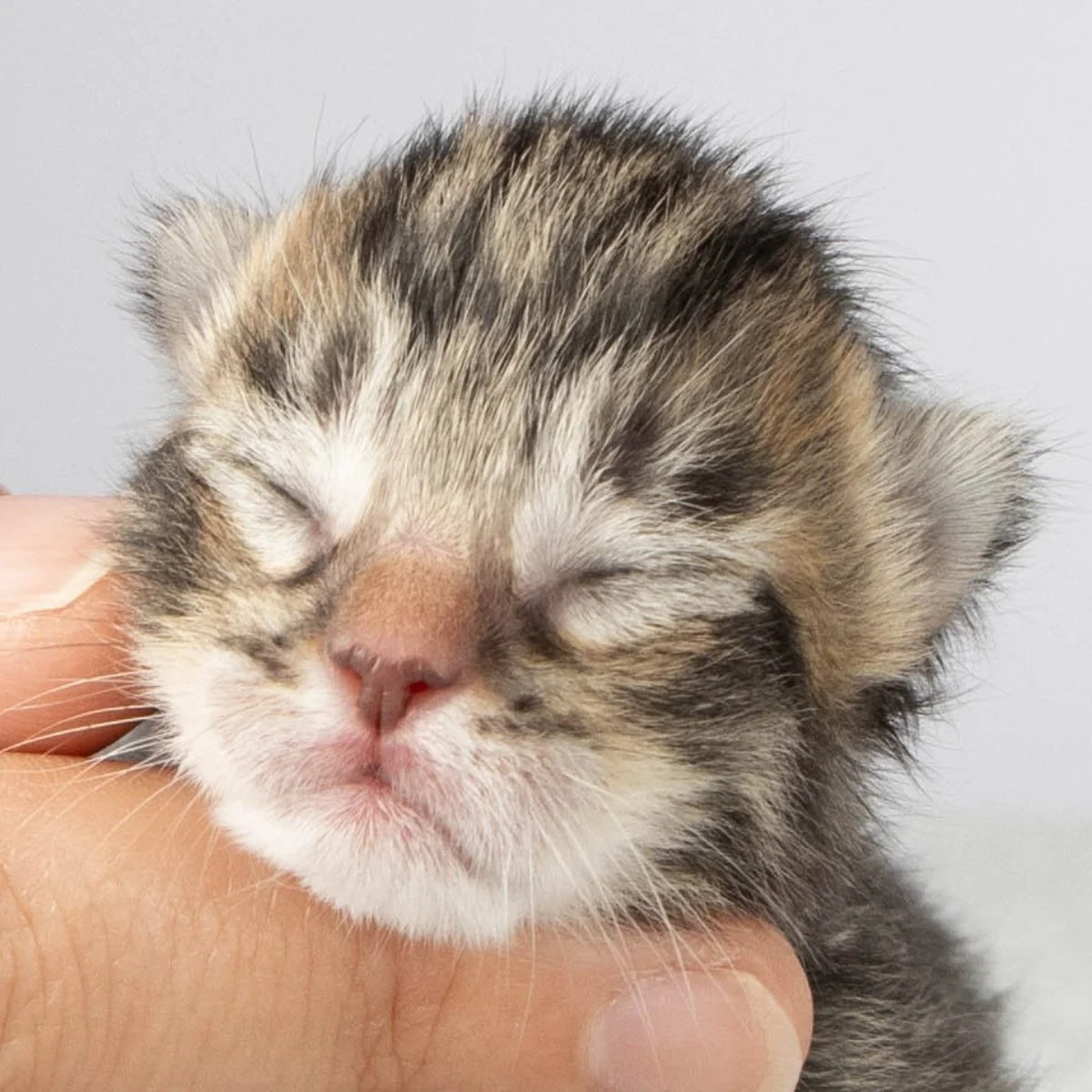
Newborns have fully closed eyes throughout the first week of life.
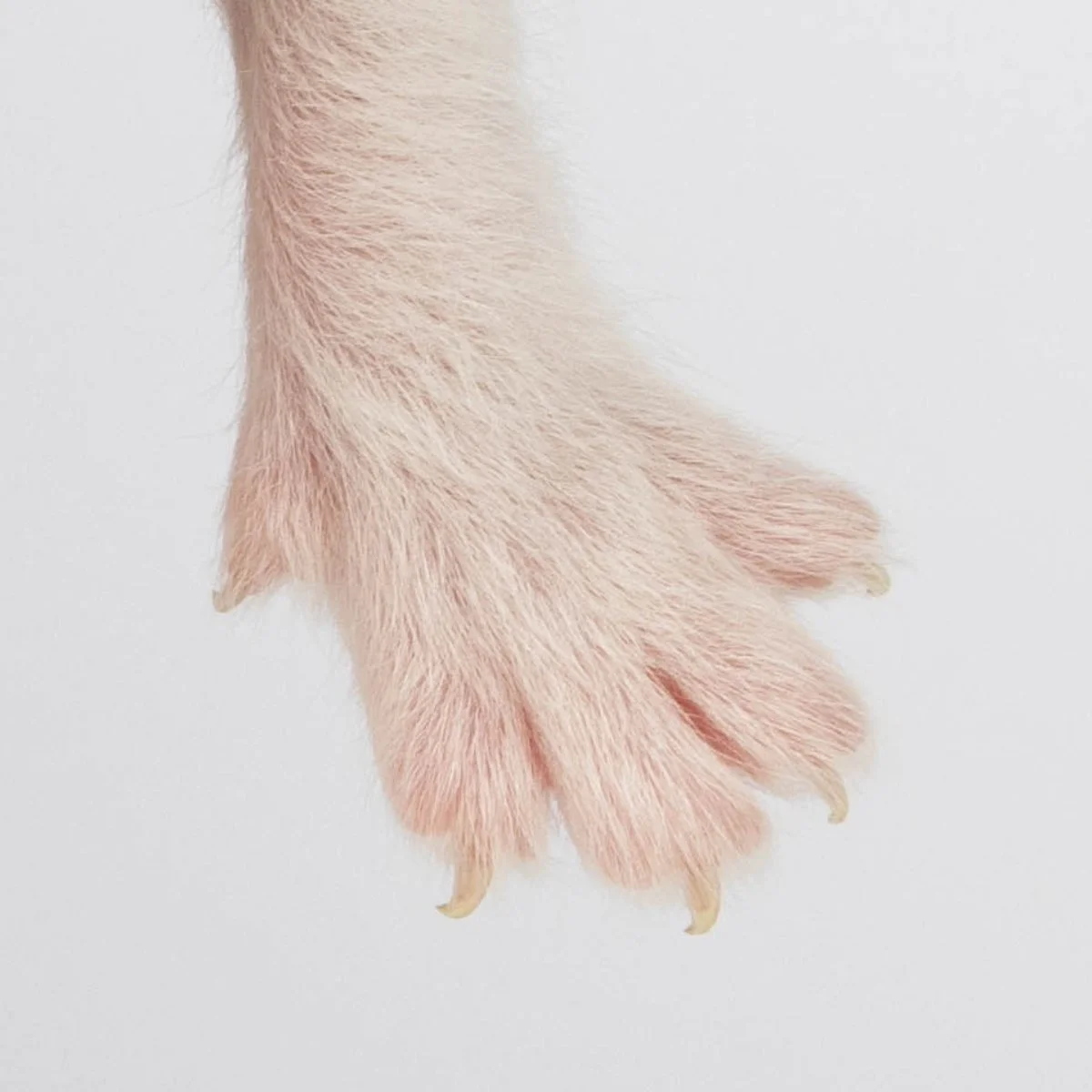
Newborn claws cannot retract, even at rest.
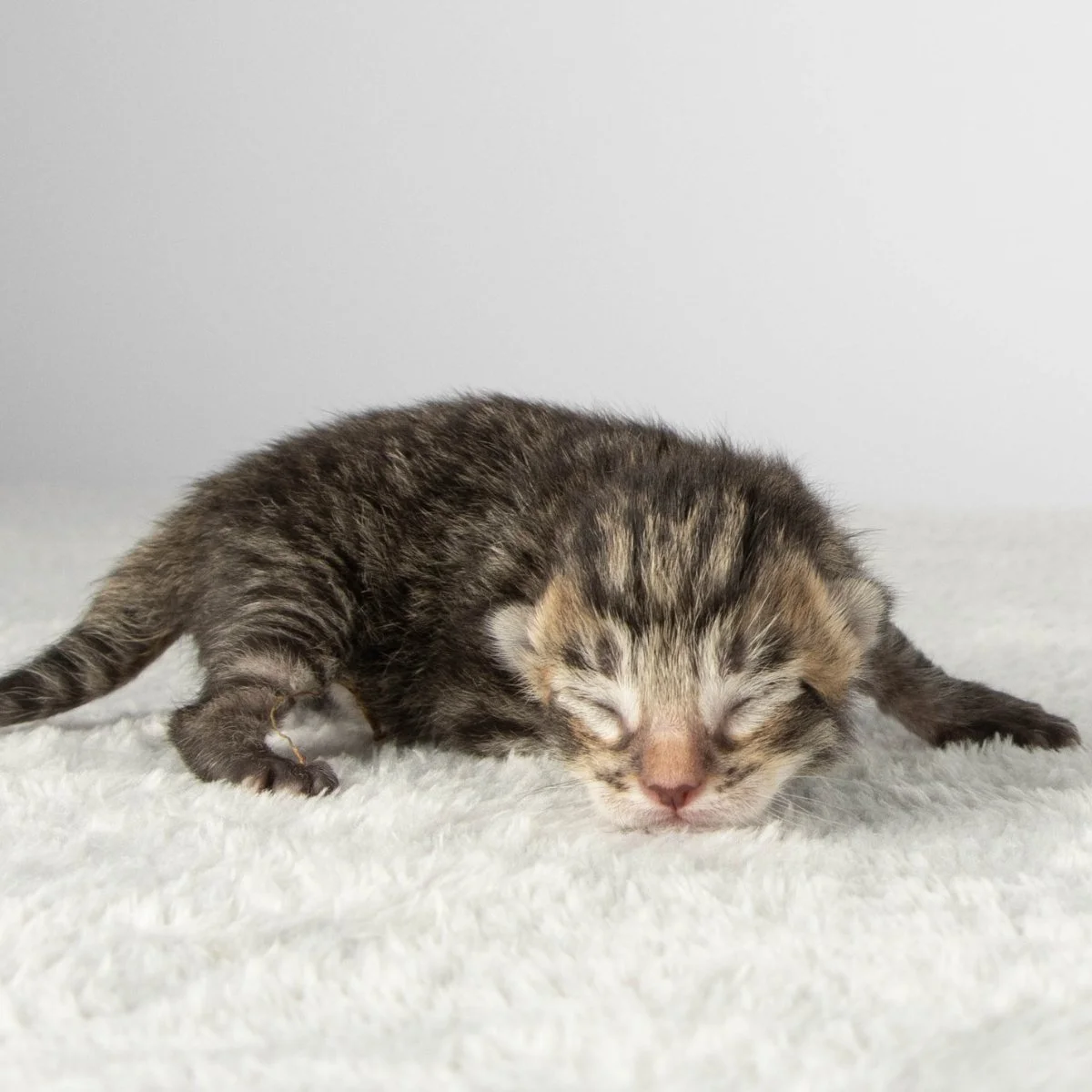
Newborns have weak necks and move with splayed limbs, often in a circle.
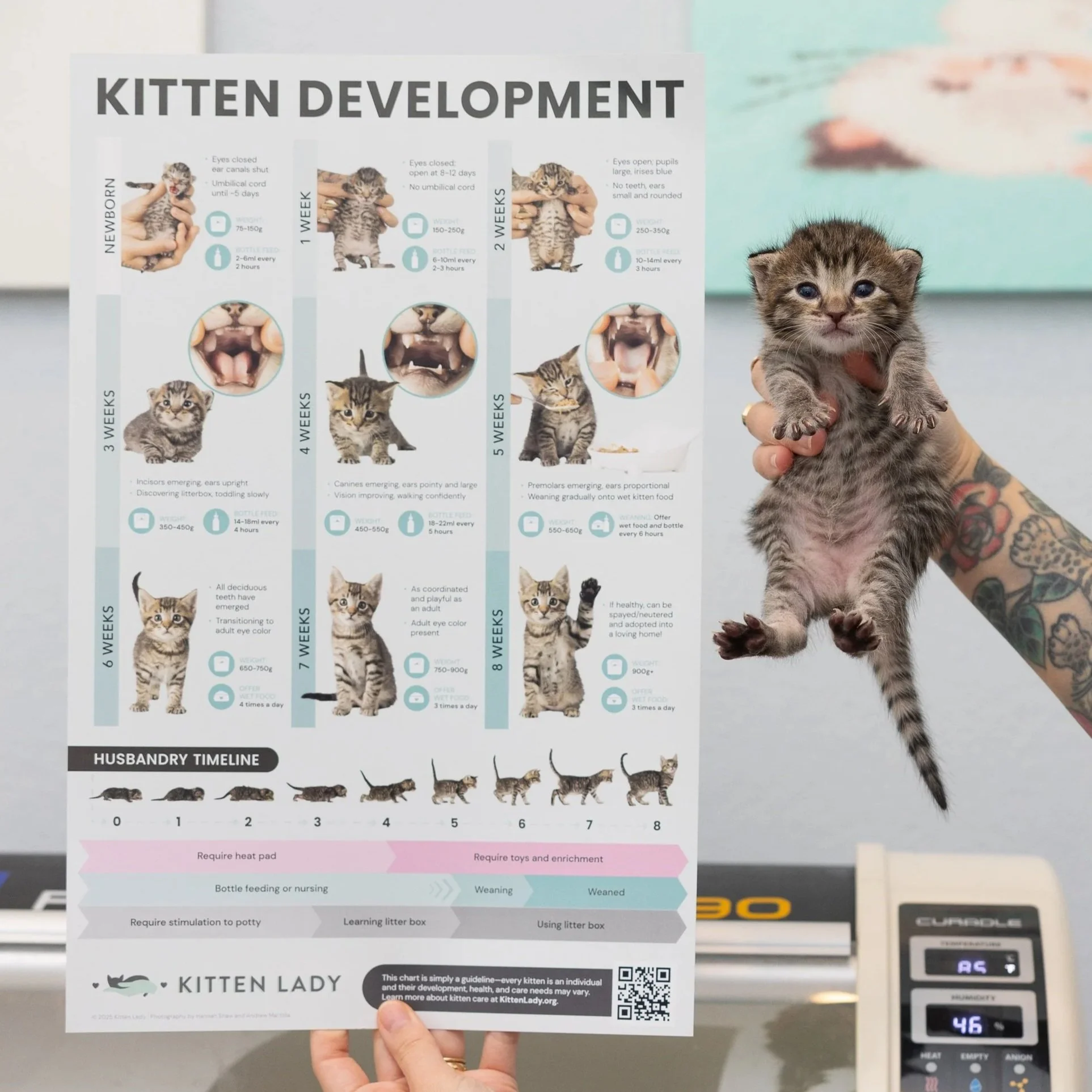
Week 0-1 Developmental Attributes
Stool:
Kittens cannot defecate on their own and must be stimulated at every feeding.
They typically defecate about once per day.
First 24 hours: Dark, tarry stool (meconium) is present as they pass material from the uterus
Day 1-7: Stool should be solid in form and mustard yellow in color.
Urine:
Cannot urinate on their own and must be stimulated at every feeding.
They should urinate each time they are stimulated.
Sleep:
Newborns sleep almost constantly when not nursing.
Movement:
Neck muscles are weak and the head appears heavy.
Kittens crawl or wiggle slowly with legs splayed, and cannot yet stand or walk.
Body temperature:
Day 0–3: 96–97°F (35–36°C)
Day 4–7: 96–98°F (35.5–36.5°C)
Week 0-1 Physical Attributes
Eyes:
Completely closed
Ears:
Small and folded against the head
Ear canals closed
Teeth:
No teeth present
Umbilical cord:
First 24 hours: attached and moist
Day 1-5: attached and dry
Day ~5: cord typically falls off
Day 6-7: no cord present
Claws:
Non-retractable
Typical weight:
First 24 hours: ~75-100g
By day 7: ~150g
Healthy weight gain:
At least 7g per day
Essential Supplies for a 0-1 Week Old Kitten

Blender bottle for mixing
Gram scale for weighing
Cozy hut and/or stuffed animal
Plastic storage pin with no lid
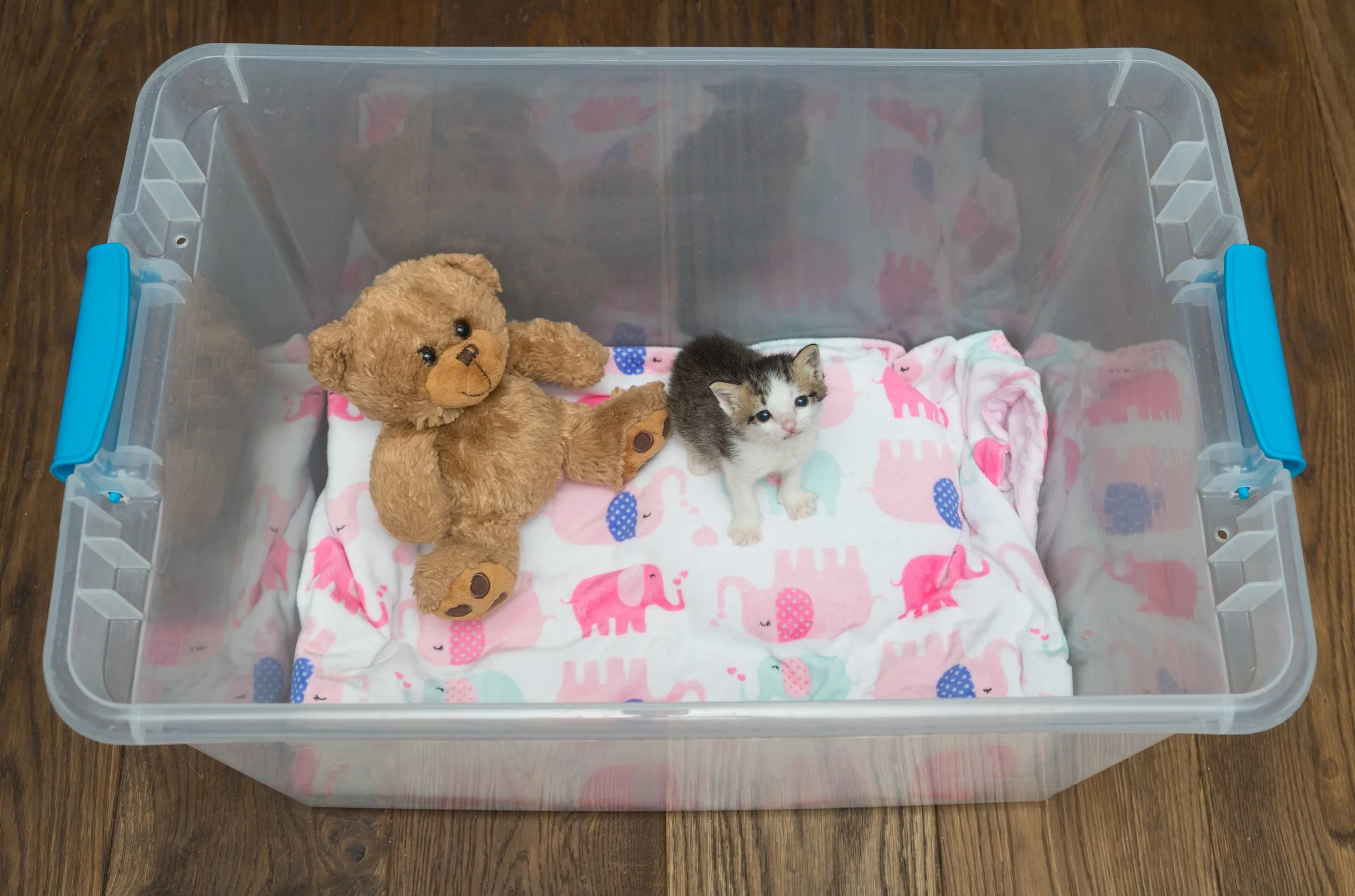
Newborns can be housed in a storage bin with a heated disk, blanket and stuffed toy.
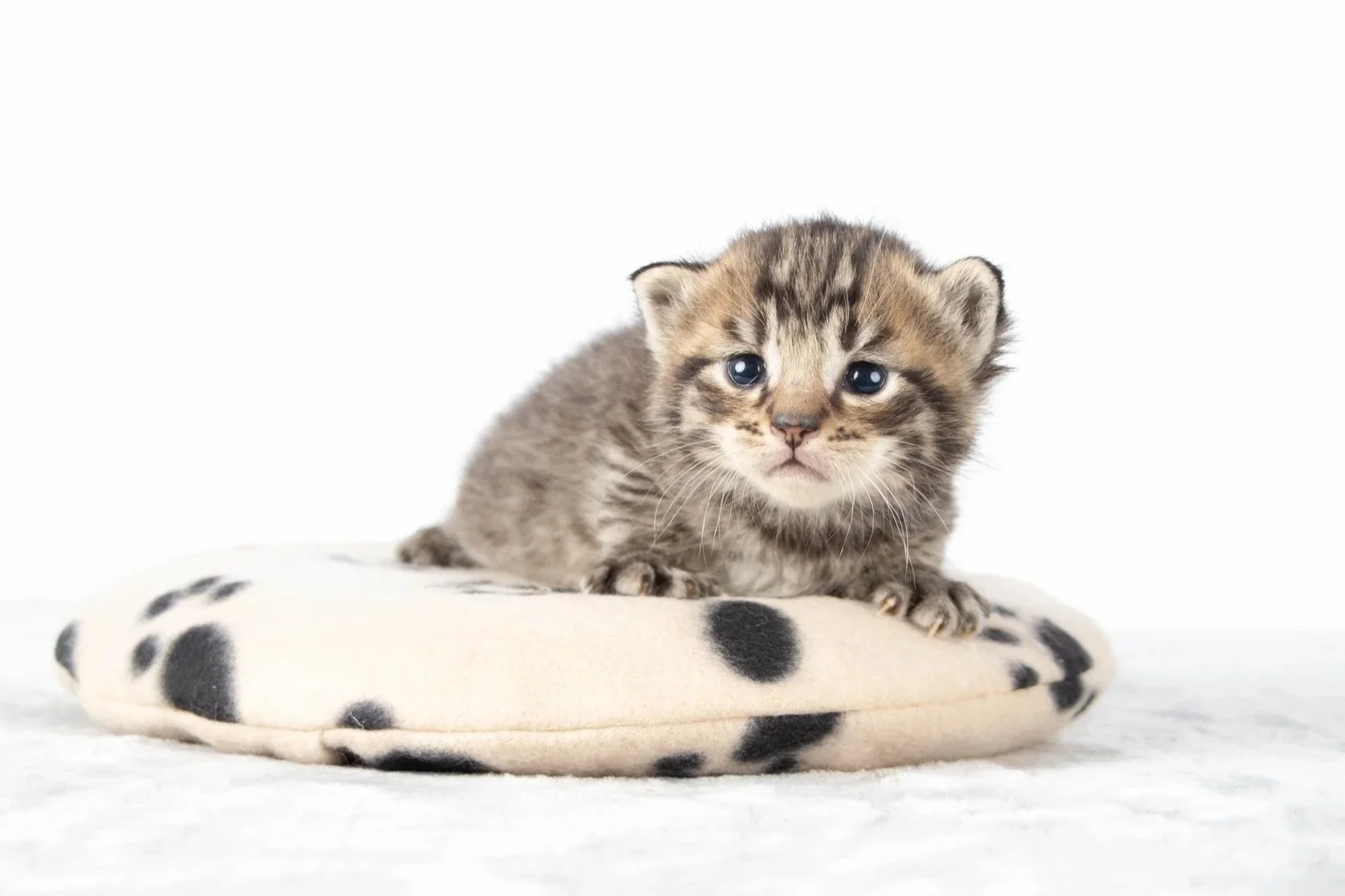
A heated disk is an essential supply for a newborn kitten.
How to Set Up Your Space for a 0-1 Week Old Kitten
Newborn kittens need a small, safe, and warm environment. Always keep neonatal kittens quarantined from unfamiliar animals to reduce the risk of infectious disease.
In a bin:
Use a plastic storage bin without a lid to allow airflow.
Place a kitten-safe heat source under one side of the bin, creating a warm zone and a cooler zone so the kitten can move if it becomes too warm. Make sure the heat source remains comfortably warm at all times, but never hot.
Cover the entire base with a soft baby blanket.
Add a small cozy hut or stuffed animal to provide comfort and something to lean against.
In an incubator:
Use a kitten-safe incubator with a soft baby blanket. Never use a cheap incubator.
Provide a cozy hut or stuffed animal so the kitten has something to snuggle against.
Set the incubator to approximately 90°F (32°C) during the first week of life.
Maintain around 60% humidity.
With a mama:
Use a nesting box or small enclosed bed lined with a baby blanket or soft bedding.
Keep the space warm and clean.
Ensure the mother has easy access to fresh food, water, and a litter box nearby.
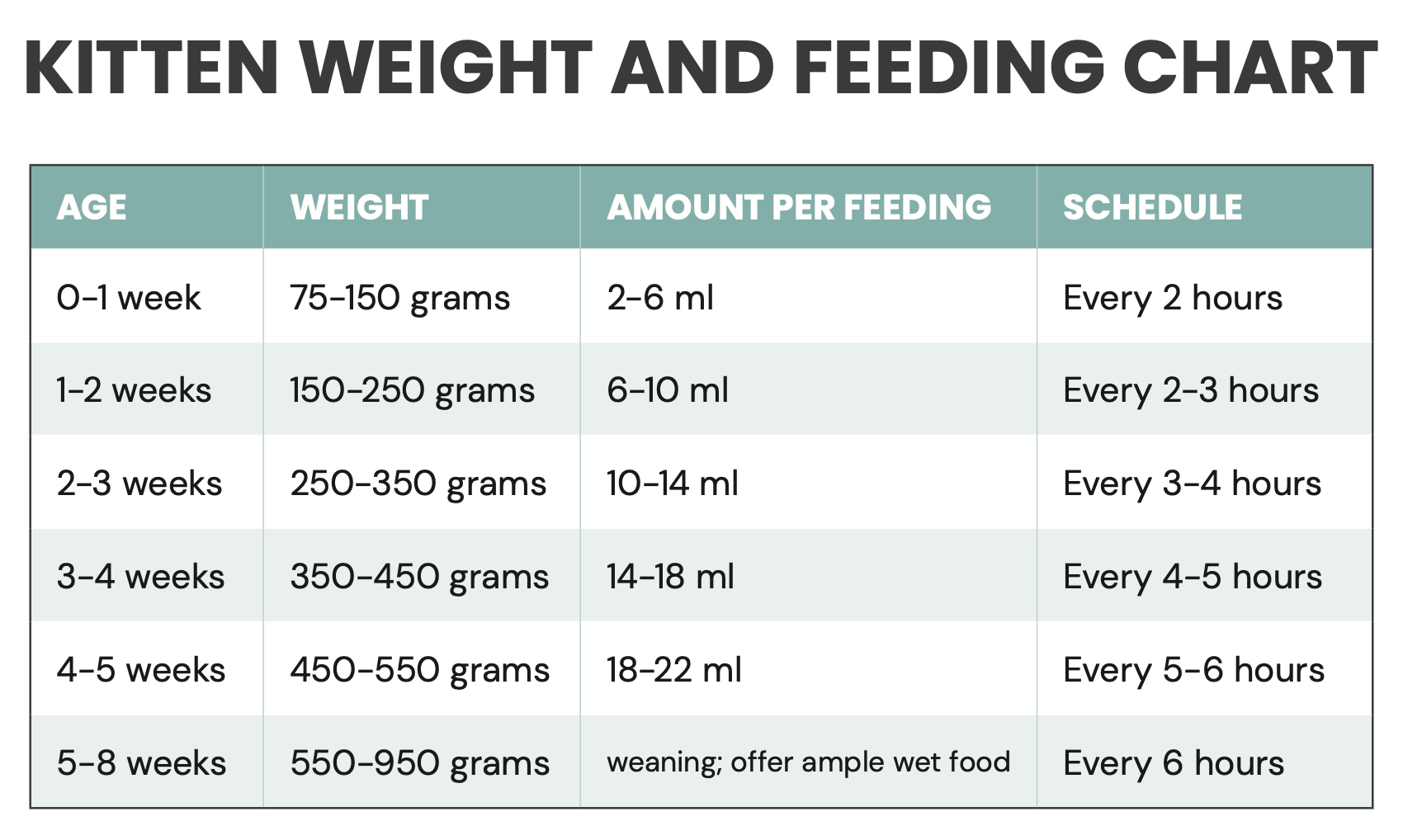
Care Schedule: Every 2 Hours
At 0–1 week of age, kittens must eat very frequently because their stomach capacity is extremely small and their bodies are growing rapidly. In a natural setting, a mother cat would nurse her kittens throughout the day and night, providing almost constant opportunities to nurse.
In addition to the need for frequent feedings, kittens lack the neuromuscular signaling needed to eliminate waste on their own. After about 2 hours their bladder will be quite full, and you will need to stimulate them to go to the bathroom, which their mother would normally do.
Most kittens this age will eat about 2–6 ml of formula per feeding, typically every 2 hours. These frequent feedings keep the kitten hydrated, fuel their high metabolism, and support healthy growth.
Care Routine for a 0-1 Week Old Kitten
Wash your hands or put on clean gloves.
Neonatal kittens have immature immune systems and should be handled with clean hands.
Stimulate the kitten to go to the bathroom.
Use a clean tissue to gently rub the genital area until the kitten urinates and, if needed, defecates.
Bottle feed the kitten.
Use a kitten bottle and allow them to nurse at their own pace.
Weigh the kitten.
Record the weight in grams, along with the time of feeding. Healthy kittens should gain weight every day.
Clean the kitten.
Use a baby wipe or warm cloth to gently clean the kitten’s face and bottom if needed.
Return the kitten to the warm nest.
Ensure the kitten is placed in the warm zone of the nesting area.
Set an alarm for the next feeding in 2 hours.
Neonatal kittens require around-the-clock care, so setting alarms helps maintain a consistent feeding schedule.
Additional Resources
Learn to care for your 1-2 week old kitten
Fill out the brief form below to help Kitten Lady understand who’s using the kitten age calculator. Click “submit” to be redirected to tons of information about caring for your 1-2 week old kitten!
1-2 Weeks Old:
The Eye Opening Stage
The second week of life is a special time when kittens begin taking their first (blurry) peek at the world.
You Should Know:
Kittens are born with closed eyes. Around day 8, moisture appears near the tear duct as the eyes begin to open. The kitten may look a little silly during this stage, but the eyes should be left to open naturally; the full process may take 1 to 3 days.
Once their eyes are open, their vision will be very poor. It is normal for kittens this age not to make eye contact or visually track objects.
Because their immune systems are still immature, kittens this age should be handled only with clean hands and protected from other animals and potential sources of infection.
Whenever possible, kittens should stay with their mother. If you find a kitten outdoors, make every effort to keep the family together.
If a kitten is truly orphaned, they will need intensive care: constant warmth, help urinating and defecating, and frequent bottle feedings around the clock.
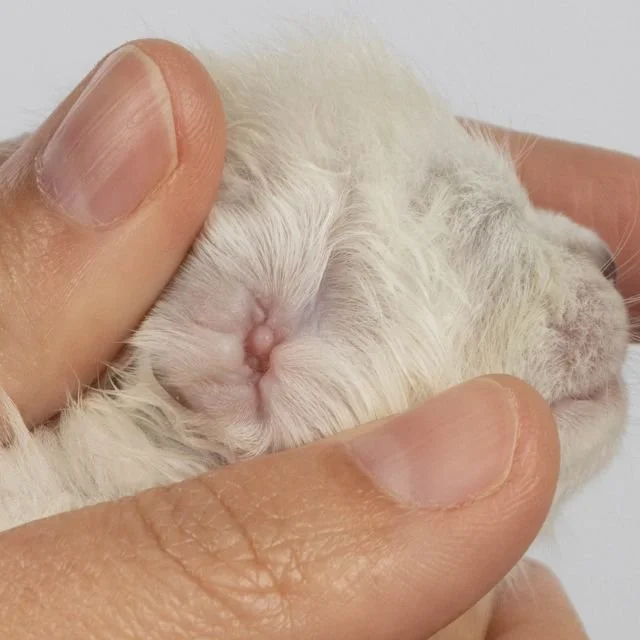
Kittens’ ear canals are shut at birth, but open slowly around day 10.
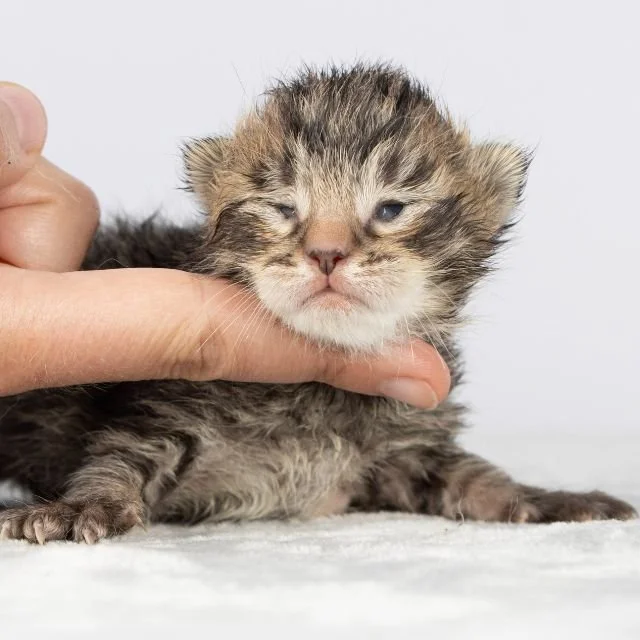
Kittens’ eyes are shut at birth, but open slowly around 8-12 days.
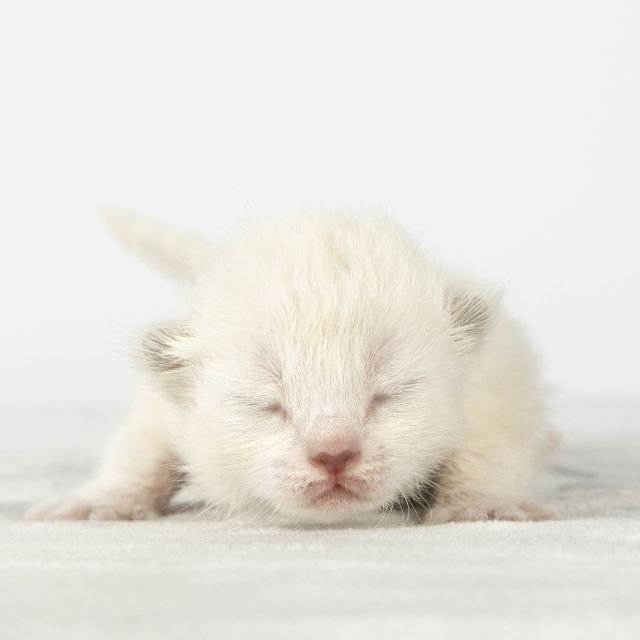
At 1-2 weeks, kittens gently lift their heads for brief periods.

Once open, kittens’ eyes have large pupils that cause them to look very dark.
Week 1-2 Developmental Attributes
Stool:
Kittens cannot defecate on their own and must be stimulated at every feeding.
They typically defecate about once per day.
Stool should be solid and mustard yellow.
Urine:
Kittens cannot urinate on their own and must be stimulated at every feeding.
They should urinate each time they are stimulated.
Sleep:
Kittens this age sleep almost constantly when not nursing.
Movement:
Neck muscles still fairly weak; head may lift for brief periods but still appear heavy.
Kittens crawl or wiggle slowly and cannot yet stand or walk. They may begin slightly pushing up on their limbs.
Body temperature:
97–99°F (36–37°C)
Week 1-2 Physical Attributes
Eyes:
Day 7: closed
Day ~8-12: opening
Day 13-14: open with large pupils and poor vision
Ears:
Day ~7-10: ear canals slowly opening
Day ~10-14: ear canals open
Teeth:
No teeth present
Umbilical cord:
Umbilical cord is absent
Claws:
Often still extended even at rest
Typical weight:
150-250g
Healthy weight gain:
At least 7g per day
Essential Supplies for a 0-1 Week Old Kitten
Blender bottle for mixing
Gram scale for weighing
Cozy hut and/or stuffed animal
Plastic storage pin with no lid
Kittens can be housed in a storage bin with a heated disk, blanket and stuffed toy.
A heated disk is an essential supply for a newborn kitten.
How to Set Up Your Space for a 1-2 Week Old Kitten
Baby kittens need a small, safe, and warm environment. Always keep neonatal kittens quarantined from unfamiliar animals to reduce the risk of infectious disease.
In a bin:
Use a plastic storage bin without a lid to allow airflow.
Place a kitten-safe heat source under one side of the bin, creating a warm zone and a cooler zone so the kitten can move if it becomes too warm. Make sure the heat source remains comfortably warm at all times, but never hot.
Cover the entire base with a soft baby blanket.
Add a small cozy hut or stuffed animal to provide comfort and something to lean against.
In an incubator:
Use a kitten-safe incubator with a soft baby blanket. Never use a cheap incubator.
Provide a cozy hut or stuffed animal so the kitten has something to snuggle against.
Set the incubator to approximately 88-90°F (32°C) during the first week of life.
Maintain around 60% humidity.
With a mama:
Use a nesting box or small enclosed bed lined with a baby blanket or soft bedding.
Keep the space warm and clean.
Ensure the mother has easy access to fresh food, water, and a litter box nearby.
Care Schedule: Every 2-3 Hours
At 1-2 week of age, kittens eat frequent meals because their stomach capacity is very small and their bodies are growing quickly. In a natural setting, a mother cat would nurse her kittens throughout the day and night, providing almost constant opportunities to nurse.
In addition to the need for frequent feedings, kittens lack the neuromuscular signaling needed to eliminate waste on their own. After a few hours their bladder will be quite full, and you will need to stimulate them to go to the bathroom, which their mother would normally do.
Most kittens this age will eat about 6-10 ml of formula per feeding, typically every 2-3 hours. These regular feedings keep the kitten hydrated, fuel their high metabolism, and ensure steady weight gain.
Care Routine for a 1-2 Week Old Kitten
Wash your hands or put on clean gloves.
Neonatal kittens have immature immune systems and should be handled with clean hands.
Stimulate the kitten to go to the bathroom.
Use a clean tissue to gently rub the genital area until the kitten urinates and, if needed, defecates.
Bottle feed the kitten.
Use a kitten bottle and allow them to nurse at their own pace.
Weigh the kitten.
Record the weight in grams, along with the time of feeding. Healthy kittens should gain weight every day.
Clean the kitten.
Use a baby wipe or warm cloth to gently clean the kitten’s face and bottom if needed.
Return the kitten to the warm nest.
Ensure the kitten is placed in the warm zone of the nesting area.
Set an alarm for the next feeding in 2-3 hours.
Baby kittens require around-the-clock care, so setting alarms helps maintain a consistent feeding schedule.
Additional Resources
Learn to care for your 2-3 week old kitten
Fill out the brief form below to help Kitten Lady understand who’s using the kitten age calculator. Click “submit” to be redirected to tons of information about caring for your 2-3 week old kitten!
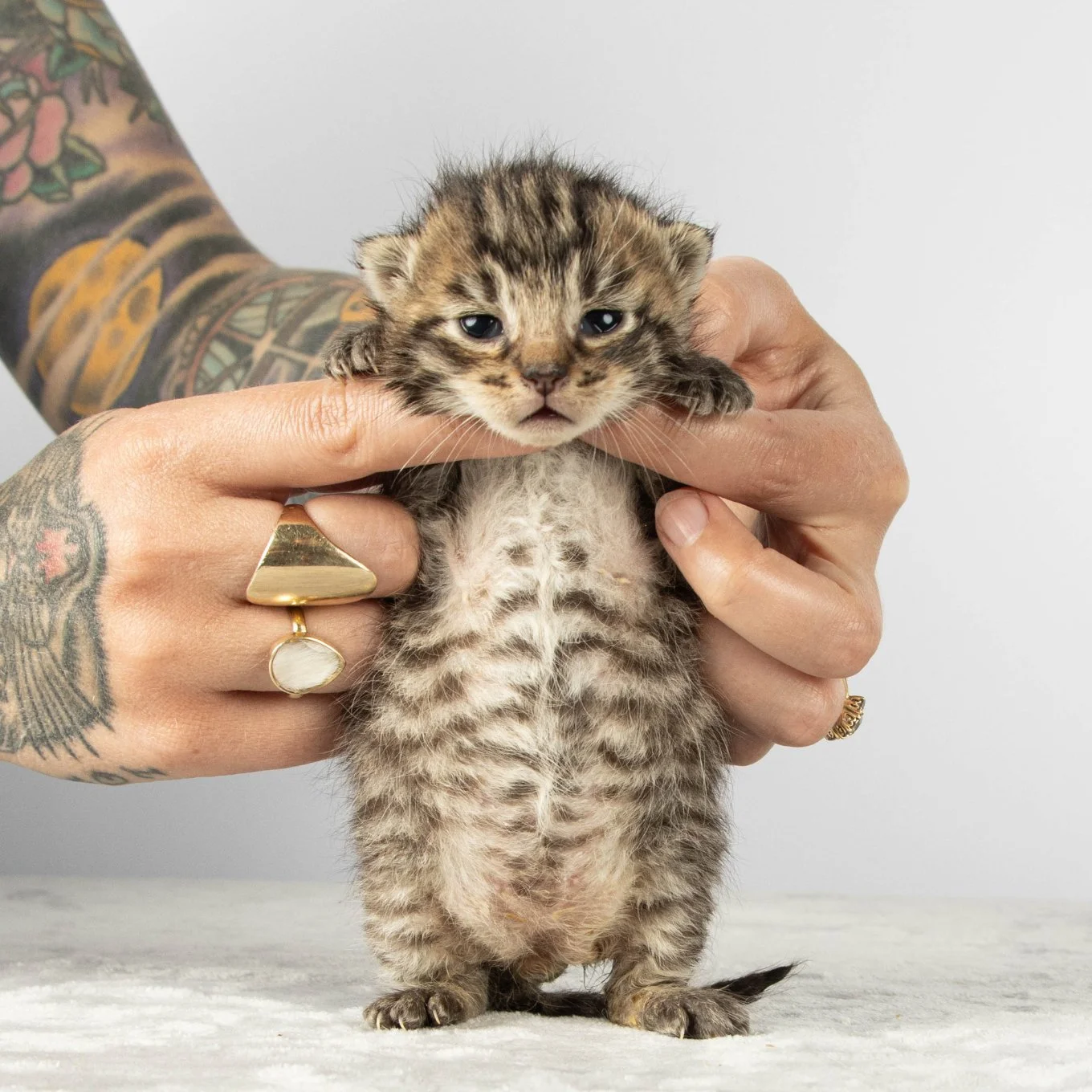
2-3 Weeks Old:
The Wobbly Stage
The third week of life brings rapid changes as the kittens become more aware of the world around them.
You Should Know:
Kittens’ eyes are fully open at 2-3 weeks of age, but their vision is still developing. They cannot track a finger or toy. Their pupils are large and a small denim blue iris is visible.
During this stage, kittens become slightly more mobile. They may begin pushing up on their legs, lifting their head, and taking wobbly steps.
Because their immune systems are still developing, kittens this age should be handled only with clean hands and protected from other animals and potential sources of infection.
Whenever possible, kittens should stay with their mother. If you find a kitten outdoors, make every effort to keep the family together.
If a kitten is truly orphaned, they will need intensive care: constant warmth, help urinating and defecating, and frequent bottle feedings around the clock.
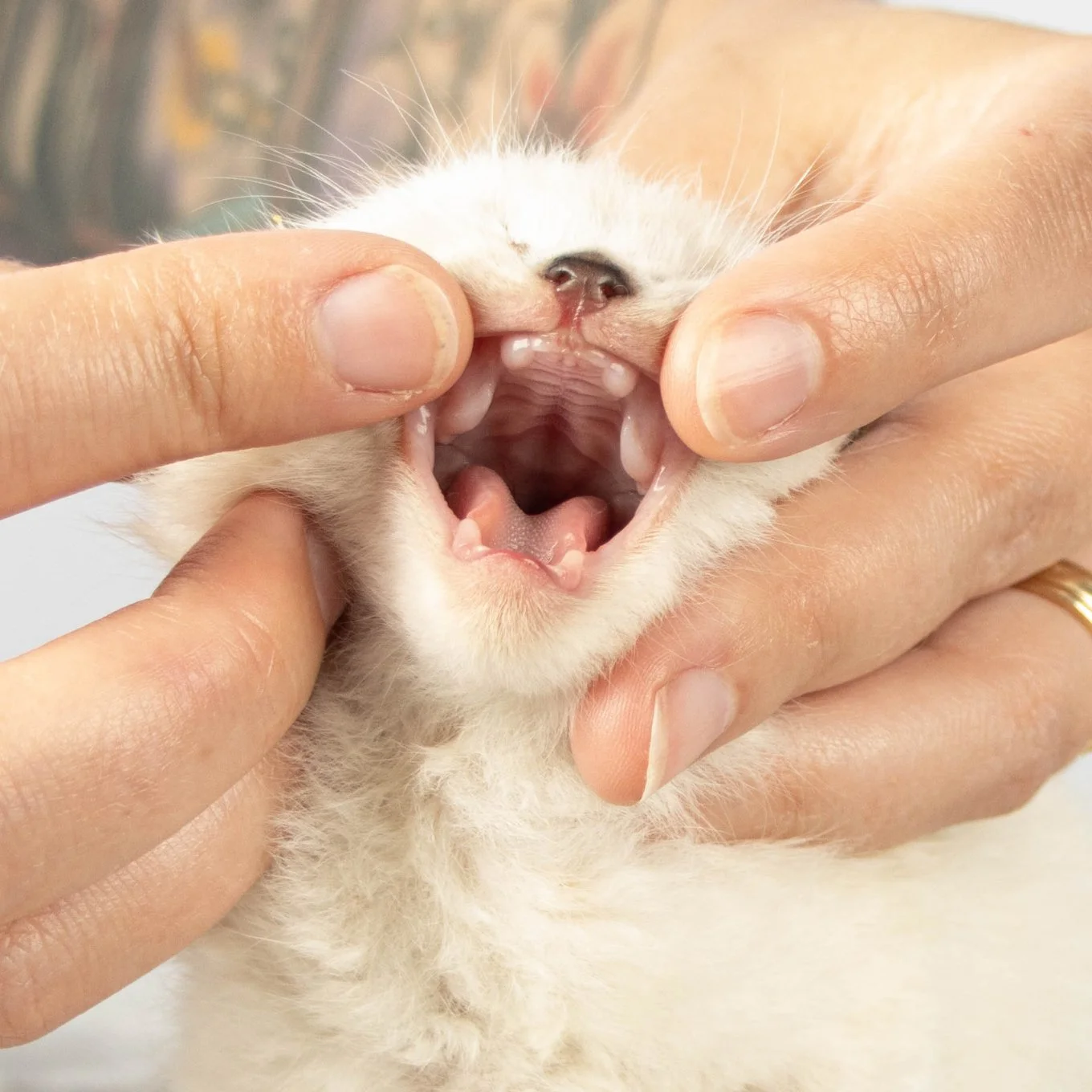
At 2-3 weeks, kittens have no teeth present.
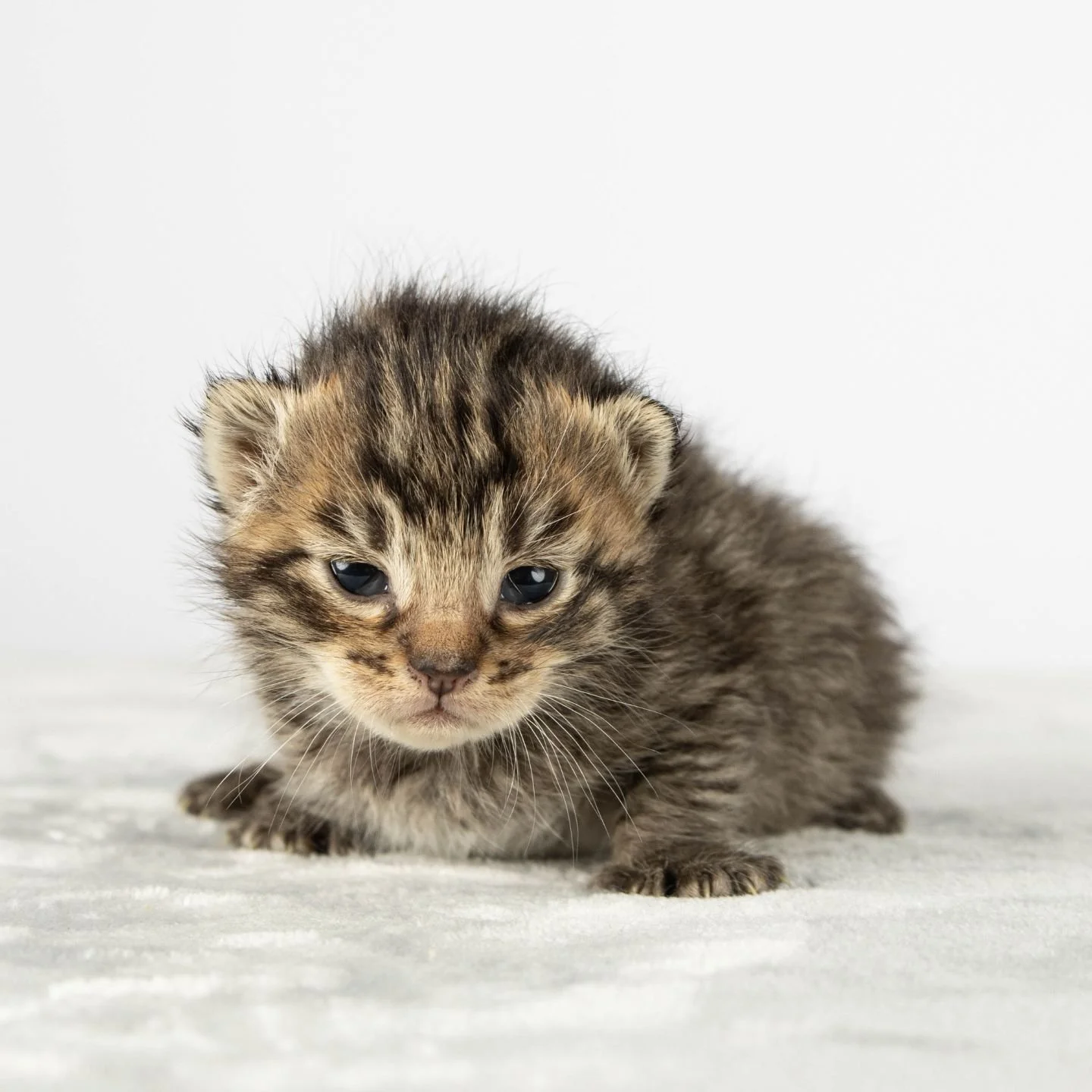
Kittens have small ears and large pupils at 2-3 weeks.
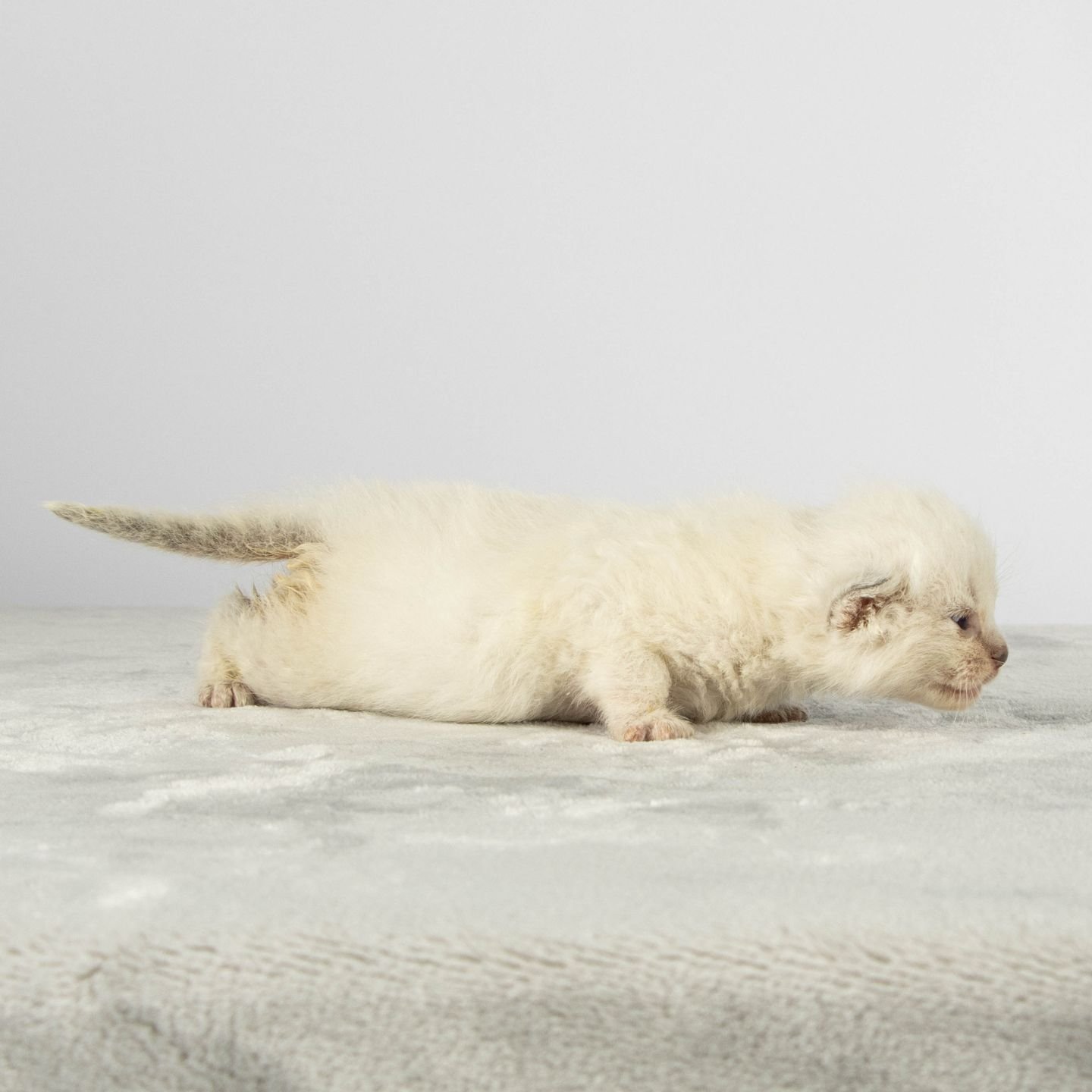
At 2-3 weeks, kittens can lift their heads and place their feet as they wobble.
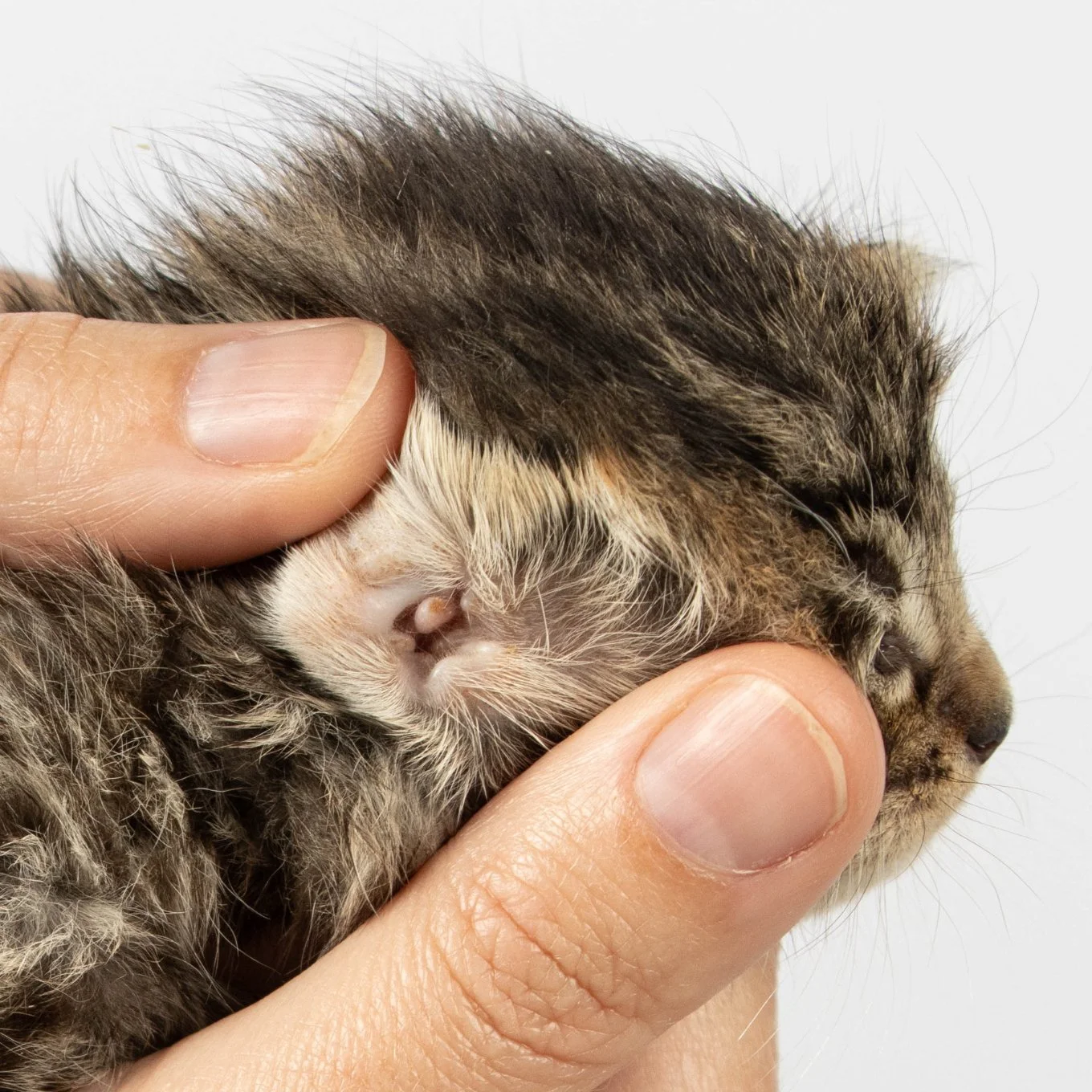
At 2-3 weeks, kittens’ ear canals are open and their hearing is strong.
Week 2-3 Developmental Attributes
Stool:
Kittens cannot defecate on their own and must be stimulated at every feeding.
They typically defecate about once per day.
Stool should be solid and mustard yellow.
Urine:
Kittens cannot urinate on their own and must be stimulated at every feeding.
They should urinate each time they are stimulated.
Sleep:
Kittens this age sleep at most times when not eating, but are starting to have short wakeful moments.
Movement:
Kittens begin pushing up on their legs. They may stand briefly and make attempts at wobbly walking.
Movement is very wobbly and uncoordinated.
Body temperature:
98–100°F (36.7–37.8°C)
Week 2-3 Physical Attributes
Eyes:
Fully open with large pupils and blue irises
Vision is developing but poor; cannot track objects
Ears:
Ear canals fully open and responsive to sound
Upright and small, like a bear cub
Teeth:
Day 14-20: no teeth present
Day ~21: incisors emerging
Claws:
Starting to retract when relaxed
Typical weight:
250-350g
Healthy weight gain:
At least 7-10g per day
Essential Supplies for a 2-3 Week Old Kitten
Blender bottle for mixing
Gram scale for weighing
Cozy hut and/or stuffed animal
Plastic storage pin with no lid
Kittens can be housed in a storage bin with a heated disk, blanket and stuffed toy.
A heated disk is an essential supply for a newborn kitten.
How to Set Up Your Space for a 2-3 Week Old Kitten
Baby kittens need a small, safe, and warm environment. Always keep neonatal kittens quarantined from unfamiliar animals to reduce the risk of infectious disease.
In a bin:
Use a plastic storage bin without a lid to allow airflow.
Place a kitten-safe heat source under one side of the bin, creating a warm zone and a cooler zone so the kitten can move if it becomes too warm. Make sure the heat source remains comfortably warm at all times, but never hot.
Cover the entire base with a soft baby blanket.
Add a small cozy hut or stuffed animal to provide comfort and something to lean against.
In an incubator:
Use a kitten-safe incubator with a soft baby blanket. Never use a cheap incubator.
Provide a cozy hut or stuffed animal so the kitten has something to snuggle against.
Set the incubator to approximately 85-86°F (29.4–30°C) during the first week of life.
Maintain around 60% humidity.
With a mama:
Use a nesting box or small enclosed bed lined with a baby blanket or soft bedding.
Keep the space warm and clean.
Ensure the mother has easy access to fresh food, water, and a litter box nearby.
Care Schedule: Every 3-4 Hours
At 2–3 weeks of age, kittens can begin going slightly longer between feedings, though they still require frequent meals because their stomach capacity remains small and their bodies are growing rapidly. In a natural setting, a mother cat would continue nursing her kittens throughout the day and night.
Kittens at this age still lack the neuromuscular signaling needed to eliminate waste on their own. At each feeding time their bladder will be quite full, and you will need to stimulate them to go to the bathroom, which their mother would normally do.
Most kittens this age will eat about 10-14 ml of formula per feeding, typically every 3-4 hours. These regular feedings keep the kitten hydrated, fuel their high metabolism, and ensure healthy development.
Care Routine for a 2-3 Week Old Kitten
Wash your hands or put on clean gloves.
Neonatal kittens have immature immune systems and should be handled with clean hands.
Stimulate the kitten to go to the bathroom.
Use a clean tissue to gently rub the genital area until the kitten urinates and, if needed, defecates.
Bottle feed the kitten.
Allow them to nurse at their own pace.
Weigh the kitten.
Record the weight in grams, along with the time of feeding. Healthy kittens should gain weight every day.
Clean the kitten.
Use a baby wipe or warm cloth to gently clean the kitten’s face and bottom if needed.
Return the kitten to the warm nest.
Ensure the kitten is placed in the warm zone of the nesting area.
Set an alarm for the next feeding in 3-4 hours.
Baby kittens require around-the-clock care, so setting alarms helps maintain a consistent feeding schedule.
Additional Resources
Learn to care for your 3-4 week old kitten
Fill out the brief form below to help Kitten Lady understand who’s using the kitten age calculator. Click “submit” to be redirected to tons of information about caring for your 3-4 week old kitten!
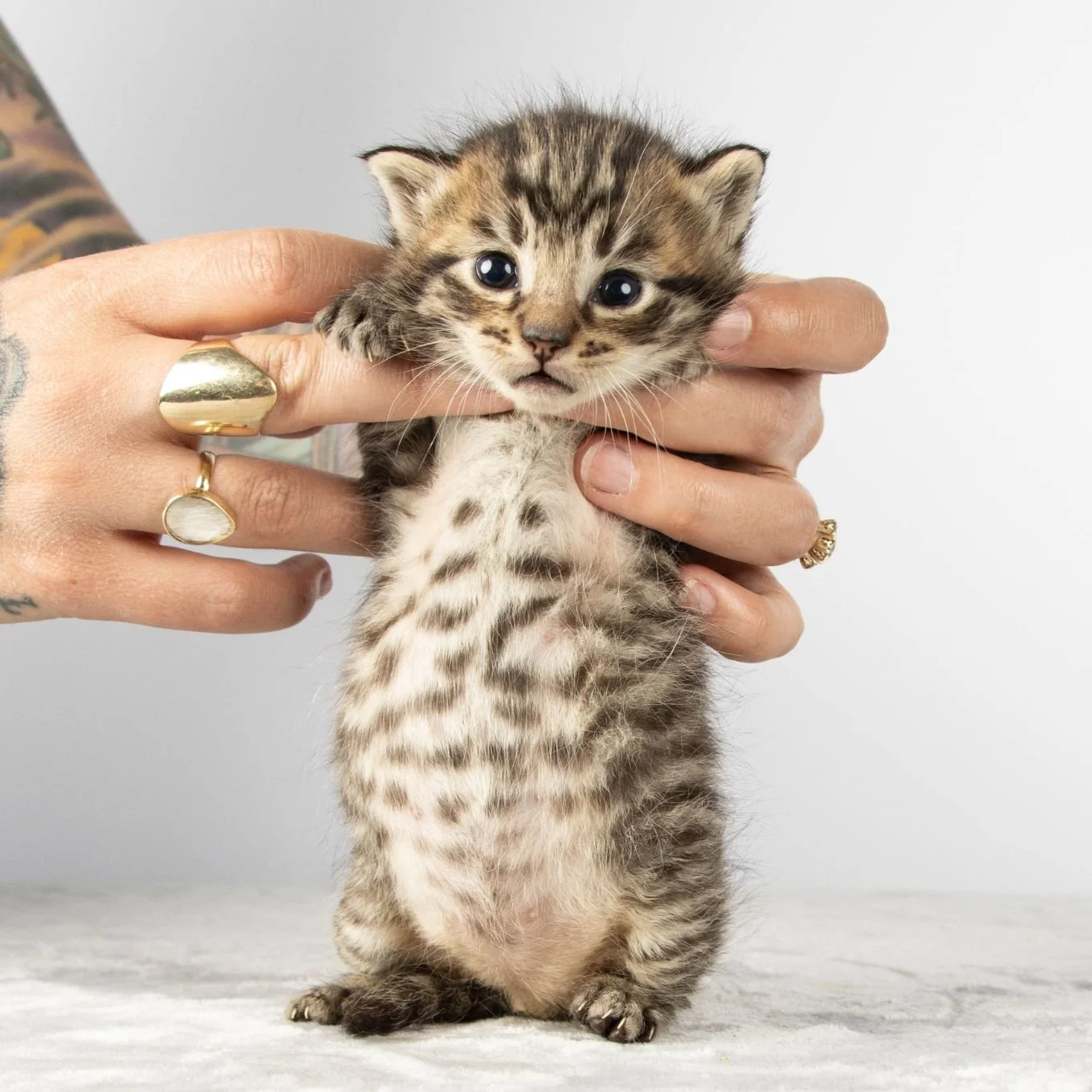
3-4 Weeks Old:
The Wide-eyed Stage
This transitional week brings major milestones like improved vision and the first tiny teeth.
You Should Know:
Kittens’ vision improves rapidly during this week, and they become very curious about the world around them. By about 3.5 weeks they can make eye contact and observe their immediate surroundings with wide blue eyes, but they aren’t yet coordinated enough to reach out and bat at toys.
At this age, kittens develop their first tiny teeth—the incisors at the front of the mouth. These teeth are not for eating solid food; kittens this age are still 100% dependent on nursing with mom or bottle feeding.
Because their immune systems are still developing, kittens this age should be handled only with clean hands and protected from other animals and potential sources of infection.
Whenever possible, kittens should stay with their mother. If you find a kitten outdoors, make every effort to keep the family together.
If a kitten this age is truly orphaned, they will need special support like bottle feeding and a gentle heat source.
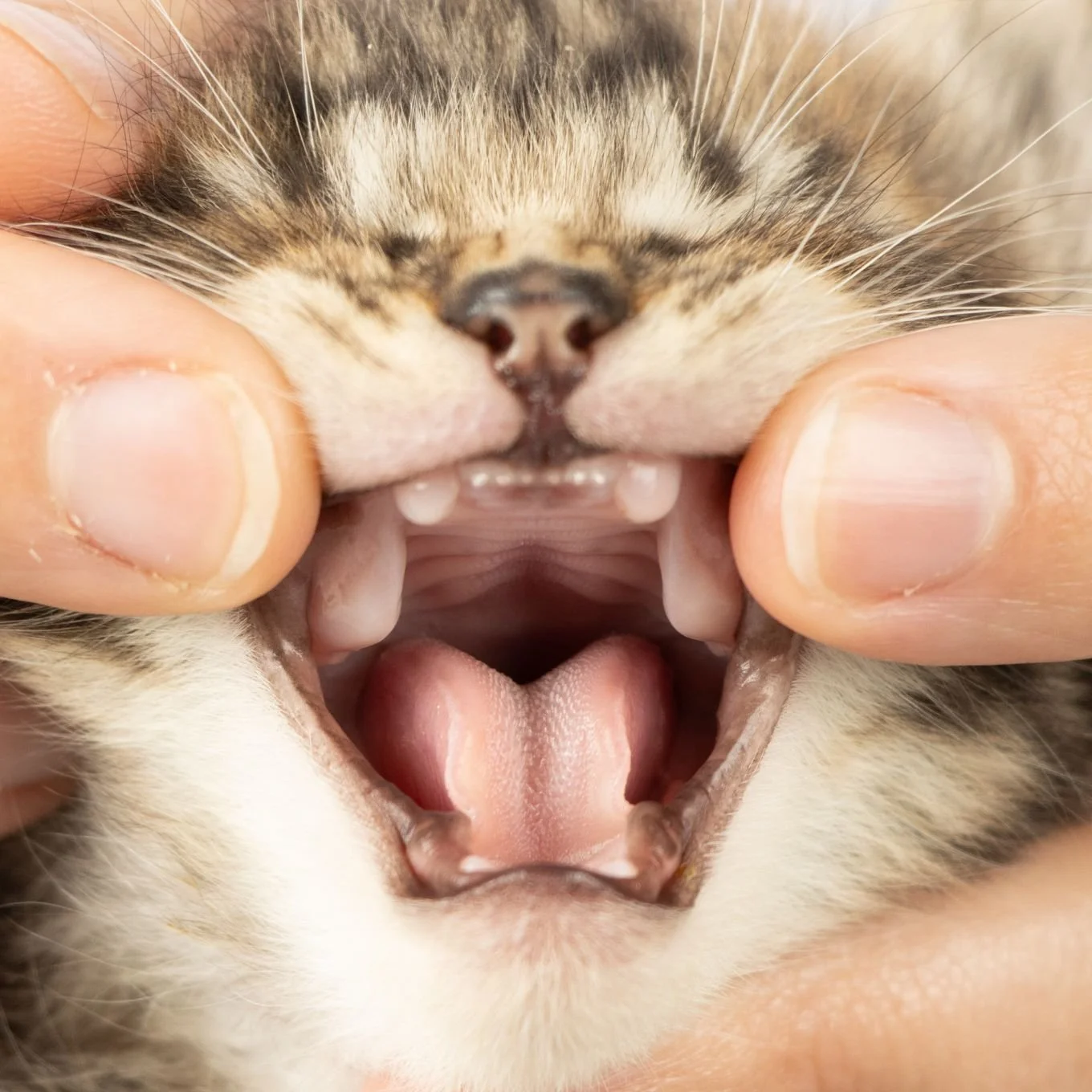
The first tiny teeth, the incisors, emerge at 3 weeks; no other teeth are present at this time.
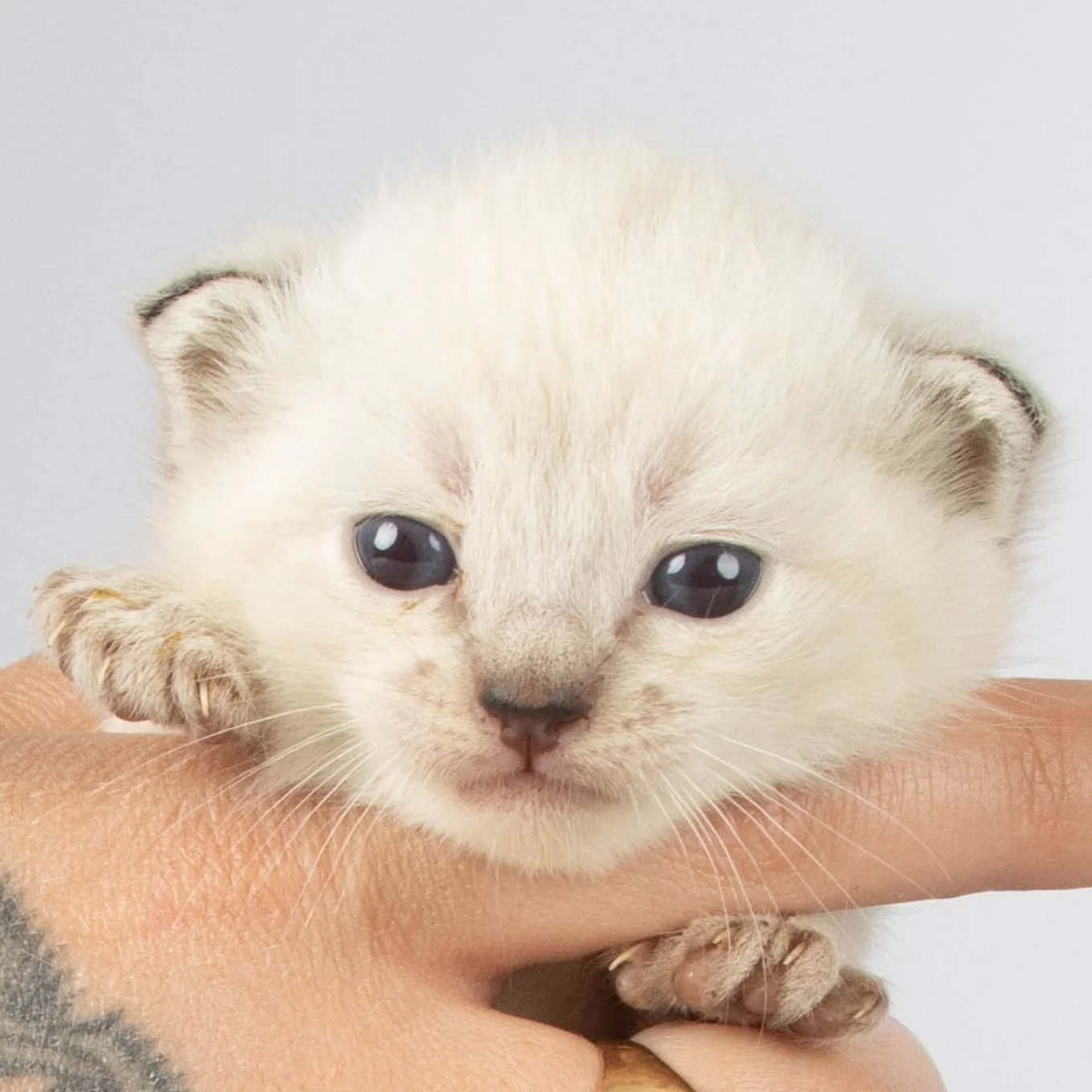
At 3-4 weeks, kittens’ ears look rounded with a tiny point, and their eyes are denim blue.
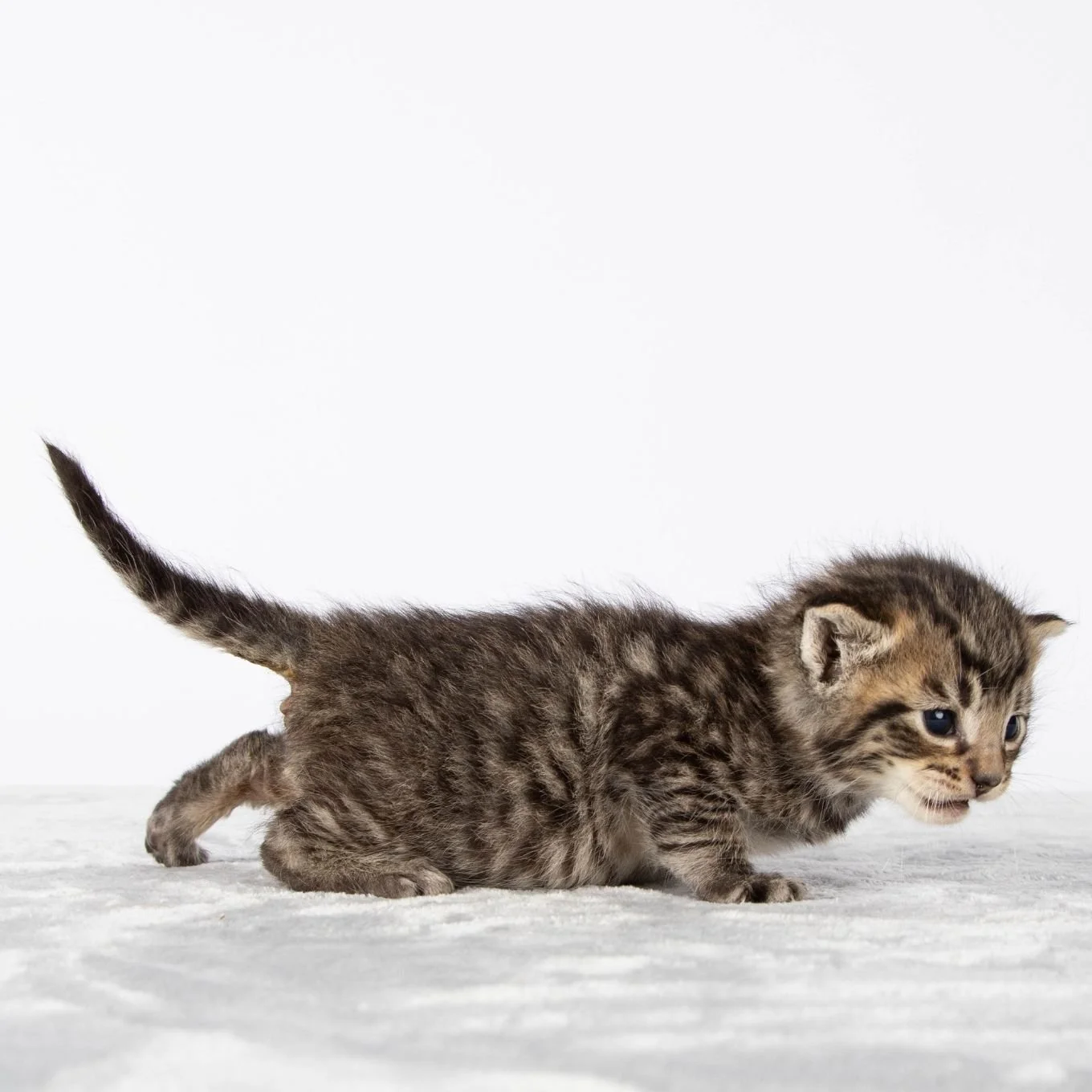
At 3-4 weeks, kittens are toddling curiously with their feet placed and their bellies touching the floor.

3-4 week old kittens can make eye contact and keep their heads upright as they observe their world.
Week 3-4 Developmental Attributes
Stool:
Kittens are developing the ability to eliminate independently, but may still need assistance. Provide a shallow litter box and continue stimulation should be offered until the kitten is using the litter box.
They typically defecate about once per day.
Stool should be solid and mustard yellow.
Urine:
Kittens start urinating on their own around this age, and a shallow litter box should be provided. Continue to stimulate at each feeding until the kitten is clearly using the litter box.
They should urinate each time they are stimulated.
Sleep:
Kittens this age still sleep for most of the day, but have longer wake periods.
Movement:
Kittens are toddling curiously and interested in brief exploration outside of their nest. Their belly is still touching the floor as they walk.
Early grooming behaviors are beginning.
Body temperature:
98–100°F (36.7–37.8°C)
Week 3-4 Physical Attributes
Eyes:
Blue irises
Vision rapidly improving; can make eye contact and observe within a few feet
Ears:
Ears upright or floppy in appearance
Rounded with a small point
Teeth:
At 3 weeks: tiny incisors emerge at the front of the mouth; these teeth may appear as small white points along the gumline
At 4 weeks: canine teeth emerge, which appear as tiny fangs
Claws:
Retracted when relaxed
Typical weight:
350-450g
Healthy weight gain:
At least 10g per day
Essential Supplies for a 3-4 Week Old Kitten
Blender bottle for mixing
Gram scale for weighing
Mesh playpen or plastic panel playpen
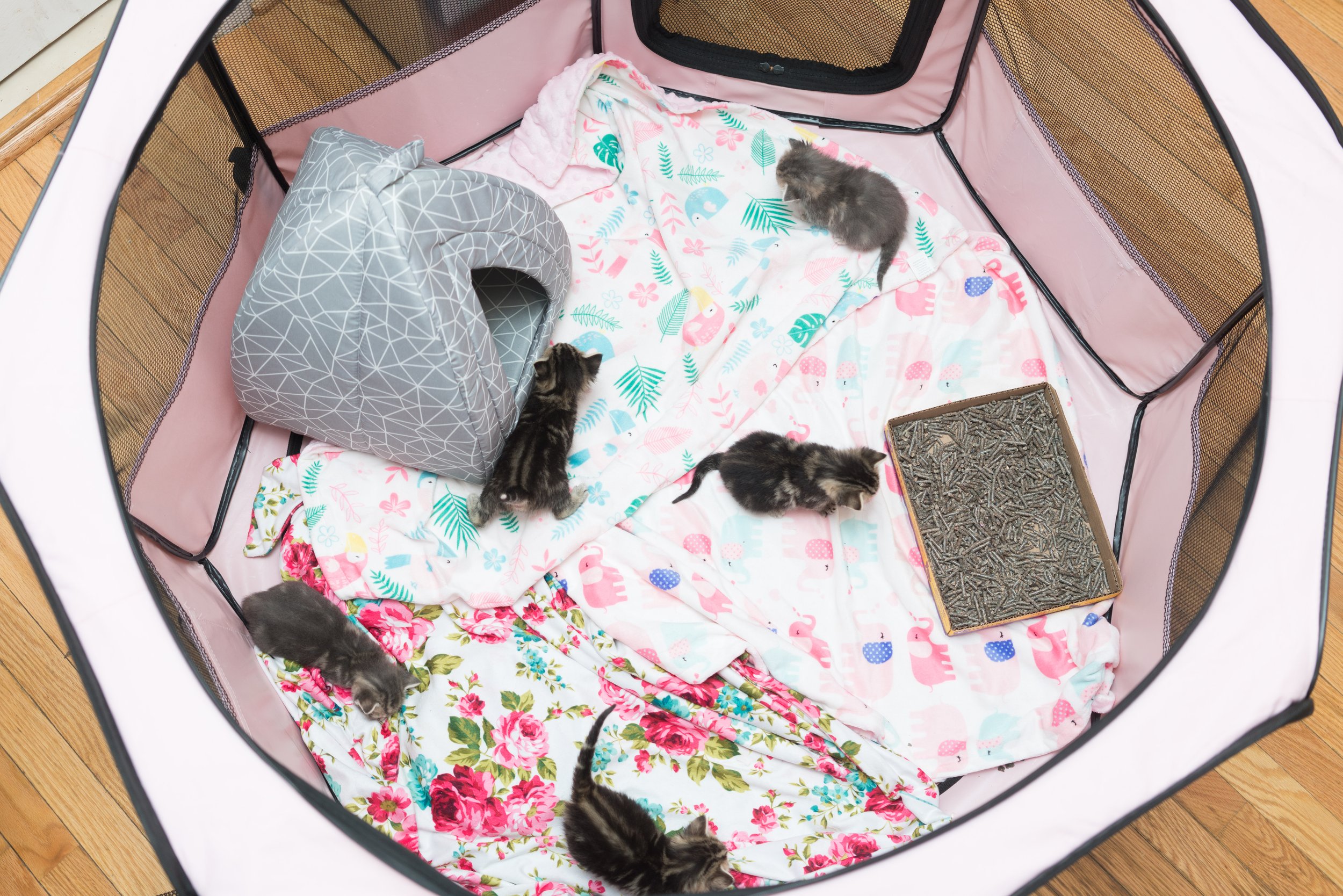
Kittens can be housed in a storage bin with a heated disk, blanket and stuffed toy.
A heated disk is an essential supply for kittens 0-4 weeks of age.
How to Set Up Your Space for a 3-4 Week Old Kitten
At 3 weeks old, kittens are curious and wanting to explore slightly beyond their bed/nest. They are much too small to freely roam a room, but a contained playpen offers an ideal balance of safety and space to walk.
In a playpen:
The ideal setup is a mesh playpen or plastic panel playpen.
Place a kitten-safe heat source in one corner, covered with a soft baby blanket.
Provide a cozy hut and/or a soft bed.
Provide a shallow litter box (a cardboard cat food tray works well) with kitten-safe litter.
In a bathroom:
A small bathroom can be appropriate for kittens this age, but be careful to ensure it is kitten-proofed. Keep the toilet lid shut and tuck in shower curtains so that they cannot be climbed. Ensure cabinets are closed and toxic chemicals are not accessible. Line the floor with blankets as tile can be too cold for kittens. Set up the space with all supplies listed above.
In an incubator:
An incubator is generally too small for this developmental stage, as they don’t allow the kitten to practice walking, briefly exploring and using the litter box. Only use an incubator at this age if the kitten is sick and needs extra rest and thermal support. If healthy, use a playpen and simply offer a kitten-safe heat disk.
With a mama:
An ideal setup is a nesting box in a closed room free of hazards and other animals.
Keep the space warm and clean.
Ensure the mother has easy access to fresh food, water, and a litter box nearby. Add a small shallow litter box for the kitten.
Care Schedule: Every 4-5 Hours
At 3-4 weeks of age, kittens can go slightly longer between feedings, though they still require frequent meals because their stomach capacity remains small and their bodies are growing rapidly. In a natural setting, a mother cat would continue nursing her kittens many times throughout the day and night.
Kittens at this age are developing the neuromuscular signaling needed to eliminate waste on their own. You’ll need to watch closely to see if they are using the litter box. If not, continue to stimulate them at each meal until they do.
Most kittens this age will eat about 14-18 ml of formula per feeding, typically every 4-5 hours. These regular feedings keep the kitten hydrated, fuel their high metabolism, and ensure healthy development.
Care Routine for a 3-4 Week Old Kitten
Wash your hands or put on clean gloves.
Neonatal kittens have immature immune systems and should be handled with clean hands.
Stimulate the kitten to go to the bathroom if needed.
You can skip this step once the kitten is clearly using the litter box to both urinate and defecate.
Bottle feed the kitten.
Allow the kitten to bottle feed at her own pace.
Weigh the kitten.
Record the weight in grams, along with the time of feeding. Healthy kittens should gain weight every day.
Clean the kitten.
Use a baby wipe or warm cloth to gently clean the kitten’s face and bottom if needed.
Return the kitten to her bed or hut.
Ensure the kitten is placed near the warm zone. At this age, it’s normal if they choose to explore a little before they go back to sleep.
Set an alarm for the next feeding in 4-5 hours.
Young kittens require around-the-clock care, so setting alarms helps maintain a consistent feeding schedule.
Additional Resources
Learn to care for your 4-5 week old kitten
Fill out the brief form below to help Kitten Lady understand who’s using the kitten age calculator. Click “submit” to be redirected to tons of information about caring for your 4-5 week old kitten!
4-5 Weeks Old:
The Little Explorer Stage
At this age, kittens are developing the coordination to engage with the world around them.
You Should Know:
At this age, kittens can confidently walk and are exploring their environment with growing confidence. They are not running or climbing just yet, but short bursts of play are common as kittens begin pouncing clumsily at their littermates and investigating new objects.
Vision is now much clearer, and kittens are able to see at a further distance, track movement, and respond to activity around them. With improving motor skills and eye-paw coordination, they begin to gently experiment with playful behaviors such as batting at toys.
By 4 weeks, most kittens don’t require stimulation to go to the bathroom. Soiling bedding may occur, but most kittens begin to use the litter box during this time frame.
By 4 weeks, kittens’ thermoregulatory ability has improved significantly. Their body temperature is approaching normal and they can usually tolerate typical indoor temperatures if healthy, well-fed, not wet, and with littermates and/or soft bedding. If the room is below ~72–75°F (22–24°C)
you are advised to continue using a heat source.
Because their immune systems are still developing, kittens this age should be handled only with clean hands and protected from other animals and potential sources of infection. At this age, the Association of Shelter Veterinarians guidelines recommend for kittens to receive their first FVRCP vaccine.
Whenever possible, kittens should stay with their mother. If you find a kitten outdoors, make every effort to keep the family together.
If a kitten this age is truly orphaned, they will need special support like bottle feeding and a gentle heat source.
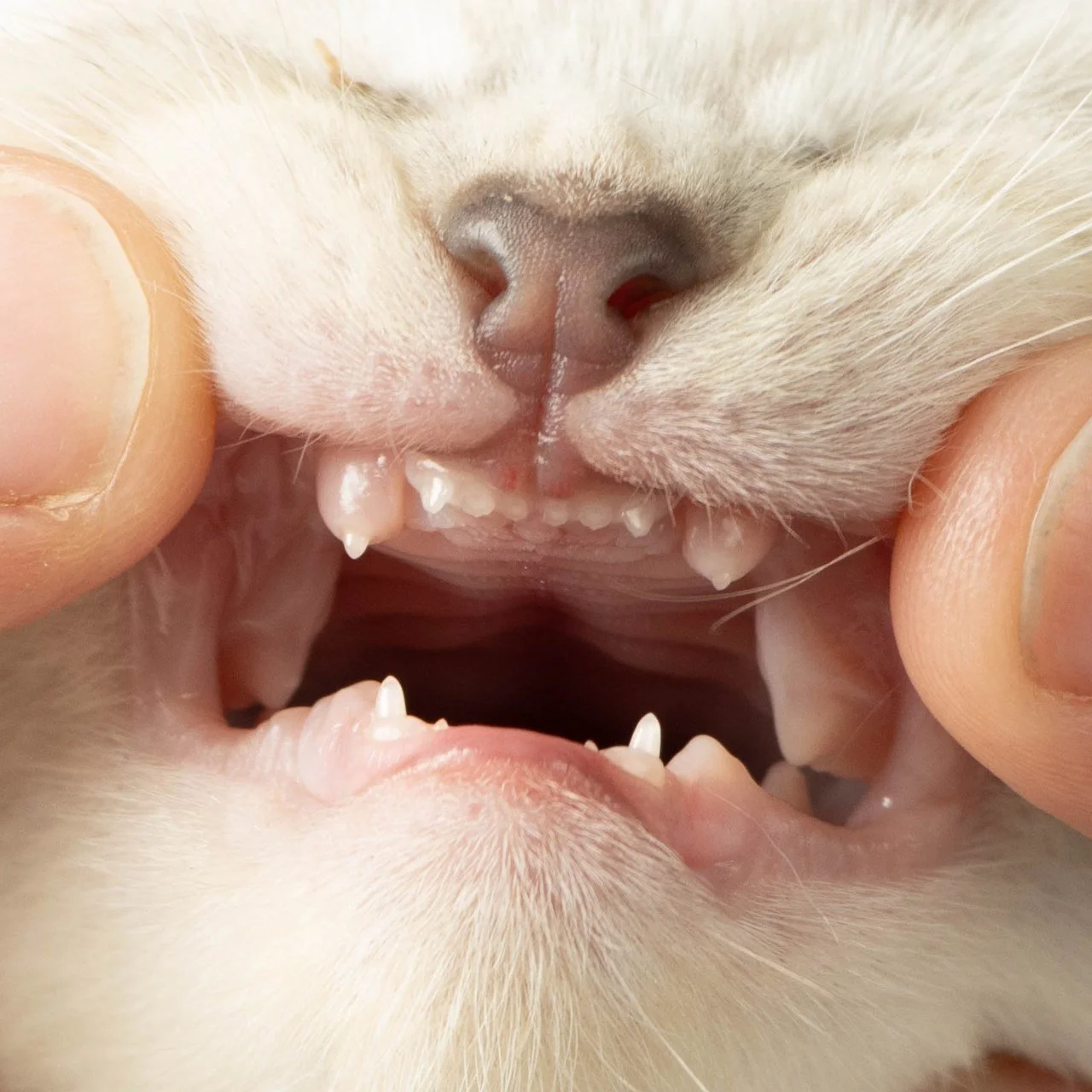
At 4 weeks, the canine teeth (four fangs) are emerging next to the incisors. No teeth are present at the back.
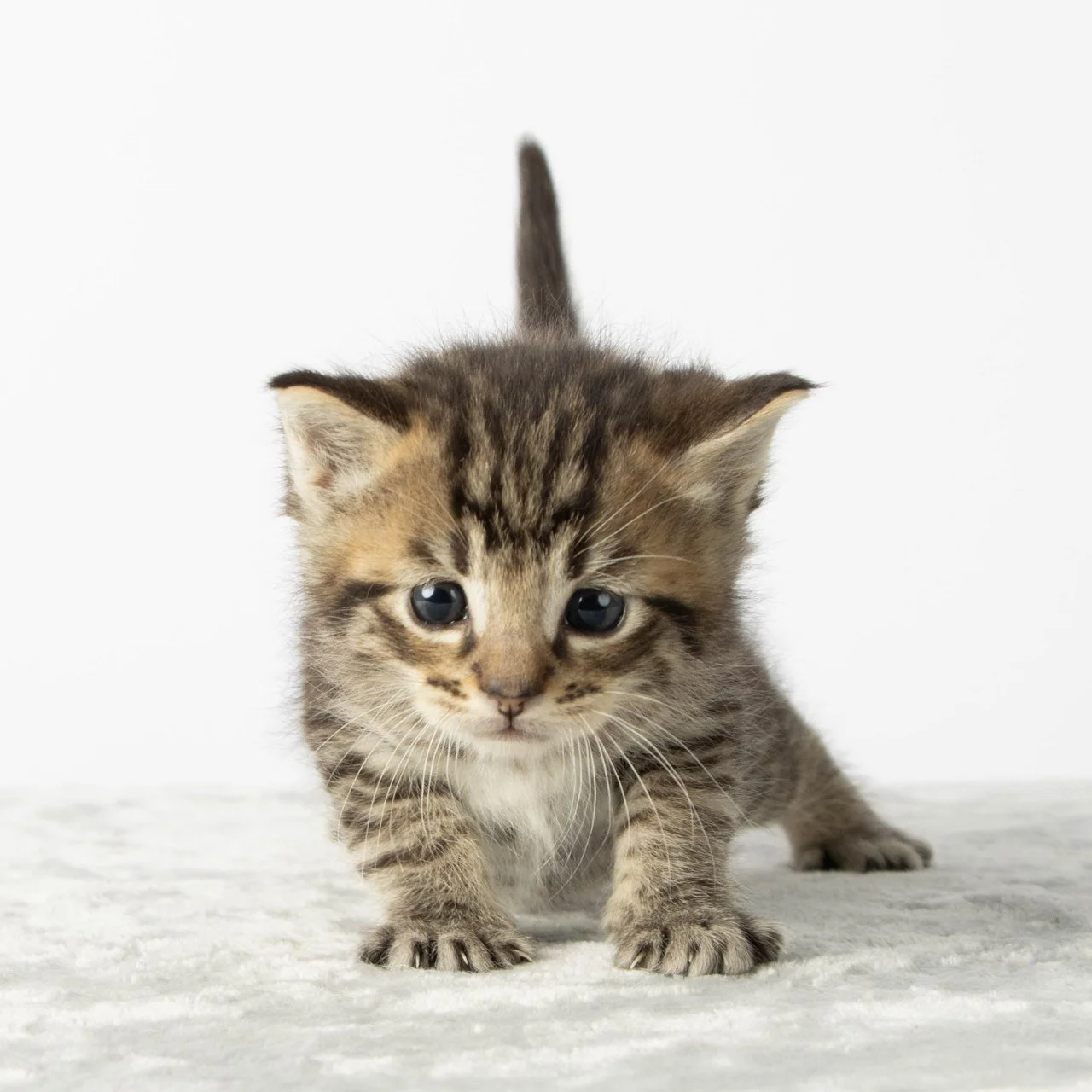
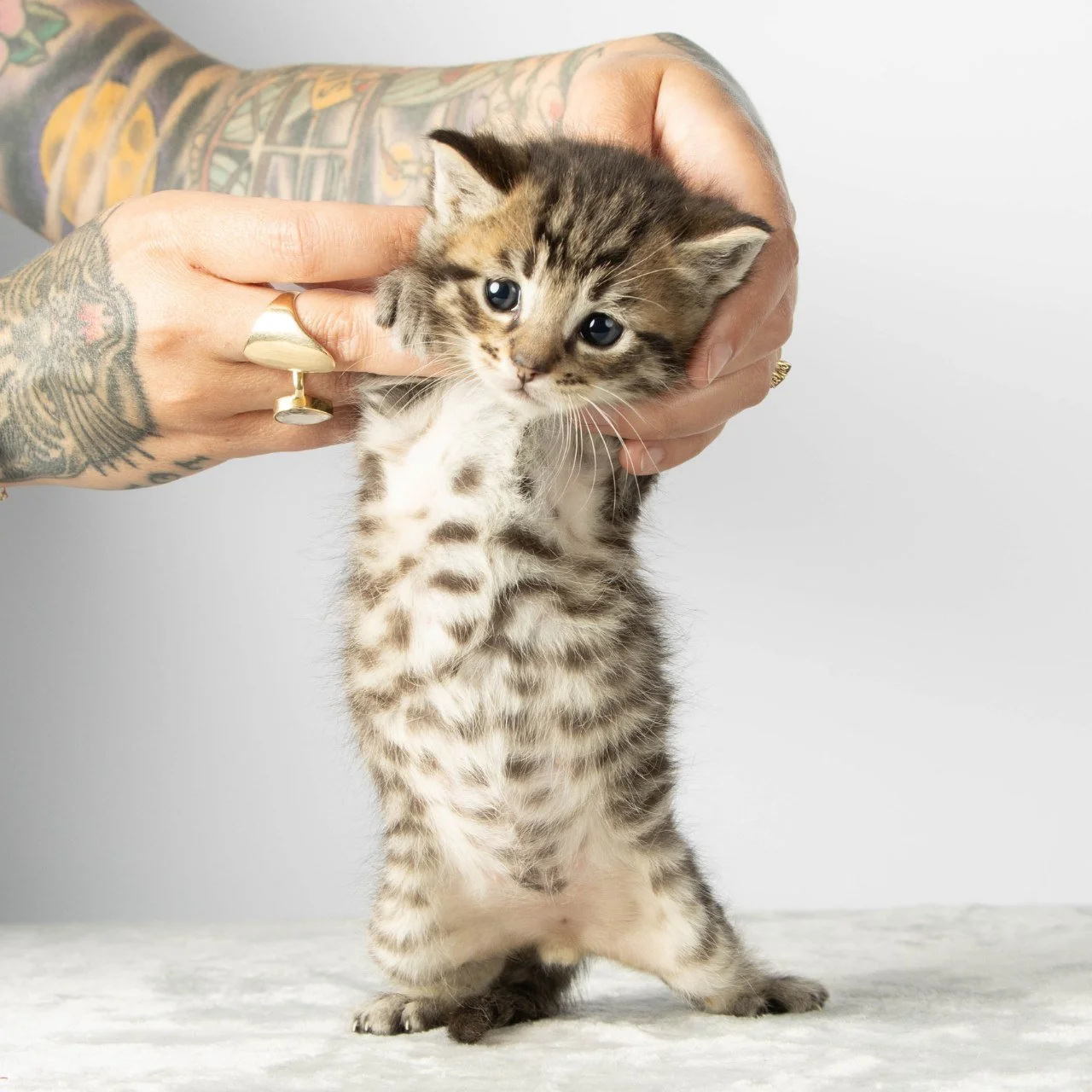
4-5 week old kittens have pointy ears, and bellies that are lifted off the ground as they walk.
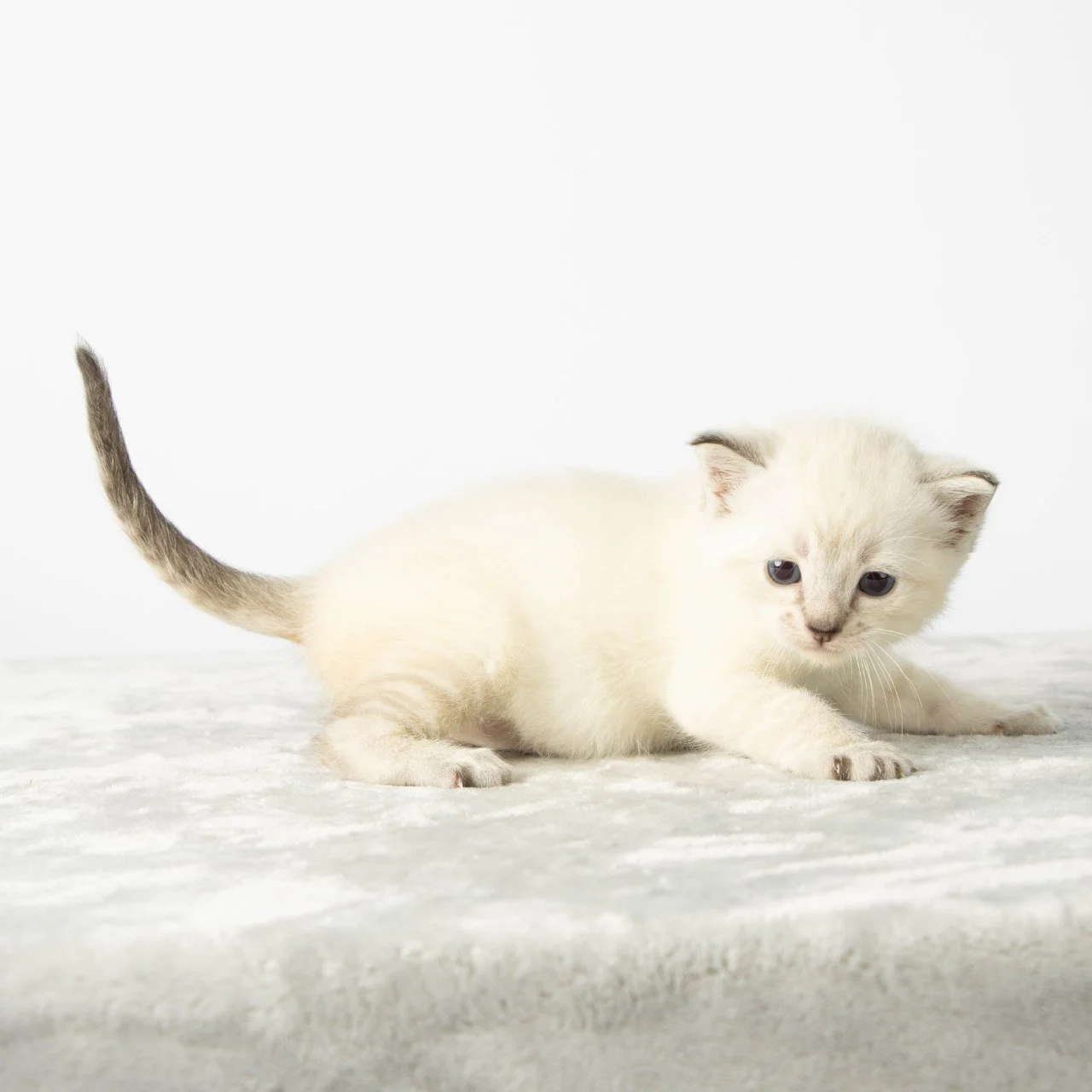
4-5 week old kittens have long tails that raise behind them. They make clumsy movements as they learn new skills.
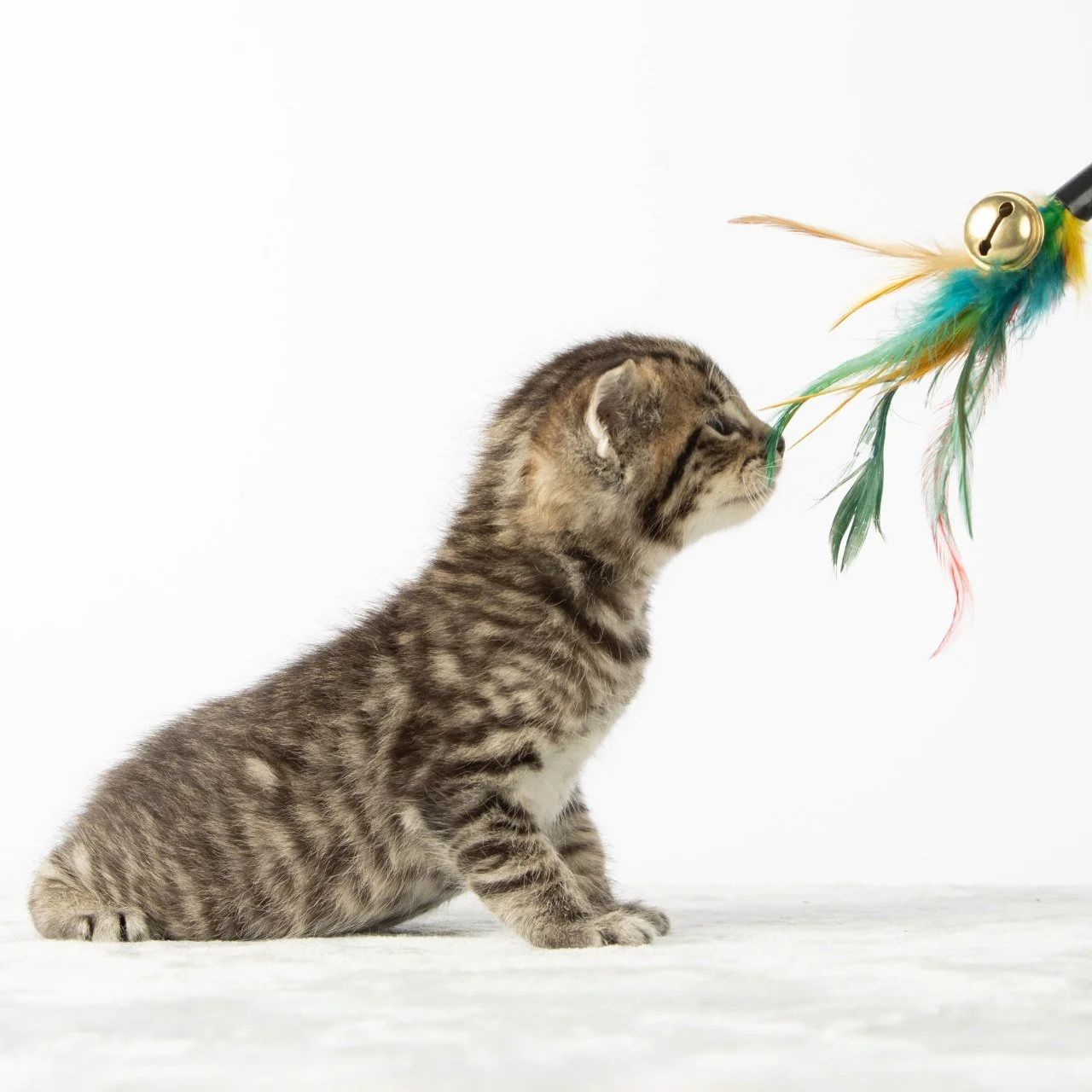
Kittens become curious about exploring toys at 4-5 weeks, but don’t quite know what to do with them…yet!
Week 4-5 Developmental Attributes
Stool and Urine:
Kittens are typically beginning to use the litter box by this age
They urinate every few hours and typically defecate about once per day
Stool should be solid and mustard yellow
Sleep:
Kittens this age still sleep for much of the day but have wake periods in which they are exploring and playful
Movement:
Walking steadily with their belly off the ground
Beginning to gently bat at objects
Not yet running or climbing well
Grooming:
Starting to groom themselves and littermates much more regularly
Body temperature:
99–101°F (37.2-38.3°C)
Week 4-5 Physical Attributes
Eyes:
Blue irises
Vision has significantly improved; can focus on and track objects and see from several feet away
Eye-paw coordination is developing
Ears:
Ears fully upright and responsive
Ears are pointy and look more like an adult cat’s ear shape
Teeth:
Incisors (tiny teeth at the front of the mouth) fully present
Canine teeth (four small fangs) erupting
No premolars present
Claws:
Retracted when relaxed
Typical weight:
450-550g
Healthy weight gain:
At least 10-12g per day
Essential Supplies for a 4-5 Week Old Kitten
Blender bottle for mixing
Gram scale for weighing
Mesh playpen or plastic panel playpen
Kittens can be housed in a small playpen that allows enough space to roam and practice playing.
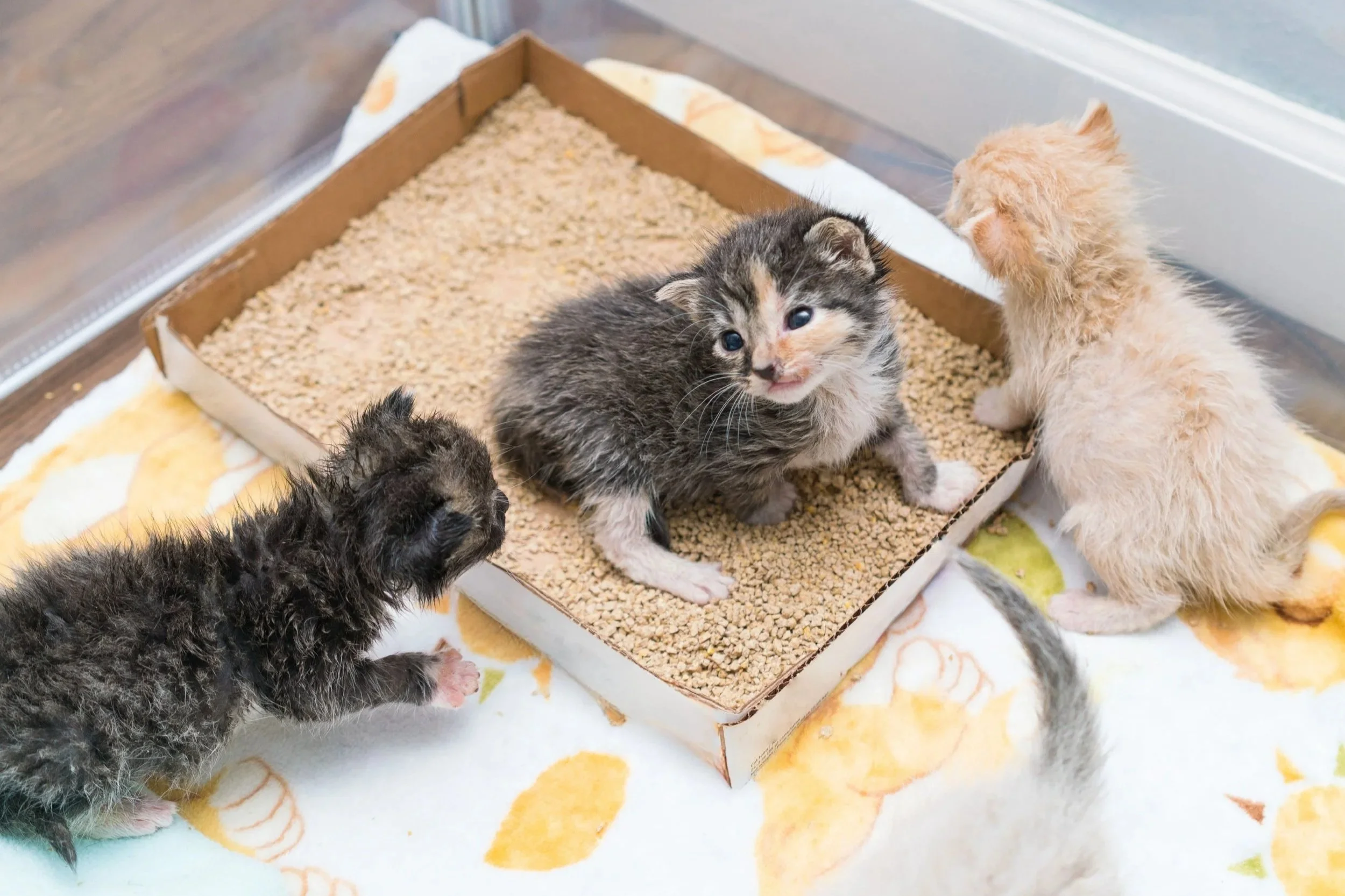
A cardboard cat food tray makes a perfect first litter box for a kitten.
How to Set Up Your Space for a 4-5 Week Old Kitten
By 4–5 weeks of age, kittens are much more mobile and curious. They are walking confidently and beginning to play, explore, and use the litter box. They are still far too small to roam freely in a home, but they benefit from having a safe space where they can move around, play, and continue developing their coordination.
In a playpen:
The ideal setup is a mesh playpen or plastic panel playpen.
Place a kitten-safe heat source in one corner, covered with a soft baby blanket. At this age kittens can usually tolerate normal room temperature, but providing a warm option allows them to rest comfortably if needed.
Provide a shallow litter box (a cardboard cat food tray works well) with kitten-safe litter.
In a bathroom:
A small bathroom can be appropriate for kittens this age, but be careful to ensure it is kitten-proofed. Keep the toilet lid shut and tuck in shower curtains so that they cannot be climbed. Ensure cabinets are closed and toxic chemicals are not accessible. Line the floor with blankets as tile can be too cold for kittens. Set up the space with all supplies listed above.
With a mama:
An ideal setup is a nesting box in a closed room free of hazards and other animals.
Keep the space warm and clean.
Ensure the mother has easy access to fresh food, water, and a litter box nearby. Add a small shallow litter box for the kitten.
Care Schedule: Every 5-6 Hours
At 4–5 weeks of age, kittens are still developmentally adapted for nursing. In a natural setting, mother cats continue nursing frequently during this stage, and milk remains the primary source of nutrition.
Although some guides suggest beginning the weaning process around this age, Kitten Lady cautions against premature weaning and encourages weaning to start only once premolars are present (around 5 weeks.) At 4-5 weeks, their motor skills are still developing, and they often lack the oral structures, coordination, and digestive enzymes needed to reliably consume and process solid food. For these reasons, it is generally best to continue bottle feeding kitten formula (or nursing with mom) as the kitten’s primary nutrition during this stage.
Stimulation is no longer necessary at this age; kittens are reliably learning to use the litter box.
Most kittens this age will eat about 18-22 ml of formula per feeding, typically every 4-5 hours. These regular feedings keep the kitten hydrated, fuel their high metabolism, and ensure healthy development.
Care Routine for a 4-5 Week Old Kitten
Wash your hands or put on clean gloves.
Neonatal kittens have immature immune systems and should be handled with clean hands.
Bottle feed the kitten.
Allow the kitten to bottle feed at her own pace.
Weigh the kitten.
Record the weight in grams, along with the time of feeding. Healthy kittens should gain weight every day.
Clean the kitten.
Use a baby wipe or warm cloth to gently clean the kitten’s face and bottom if needed.
Return the kitten to her bed or hut.
Ensure the kitten is placed near the warm zone. At this age, it’s normal if they prefer to play for a bit rather than to fall back asleep.
Set an alarm for the next feeding in 5-6 hours.
Young kittens require frequent care, so setting alarms helps maintain a consistent feeding schedule.
Additional Resources
Learn to care for your 5-6 week old kitten
Fill out the brief form below to help Kitten Lady understand who’s using the kitten age calculator. Click “submit” to be redirected to tons of information about caring for your 5-6 week old kitten!
5-6 Weeks Old:
The Weaning Stage
At this age, kittens make the exciting slow transition onto solid foods.
You Should Know:
At this age, kittens begin the gradual transition from nursing to eating solid food through kitten-led weaning. This process is most successful when led by the kitten—not forced on a schedule. Mother cats continue nursing while their kittens explore solid foods at their own pace. It’s strongly advised to allow the kitten to supplementally nurse or bottle feed until eating successfully.
At this age, kittens are highly playful and curious. Play with littermates helps them develop coordination, confidence, and important social skills such as bite inhibition and communication. Providing safe toys and opportunities for gentle human interaction helps support healthy behavioral development.
Because their immune systems are still developing, kittens this age should be handled only with clean hands and protected from other animals and potential sources of infection. At this age, the Association of Shelter Veterinarians guidelines recommend for kittens to receive their first FVRCP vaccine.
At 5-6 weeks, kittens are becoming less dependent on their mother. If you find a kitten outdoors and are willing to foster them, this weaning age is an ideal time to take them in for socialization. If they’re already with their friendly mother in foster care, it’s a great idea to keep them together until adoption age. If they’re already with their unsocial mama in foster care, she can be spayed and returned as soon as they are weaned. Don’t forget to help the mama cat access sterilization to prevent future births.
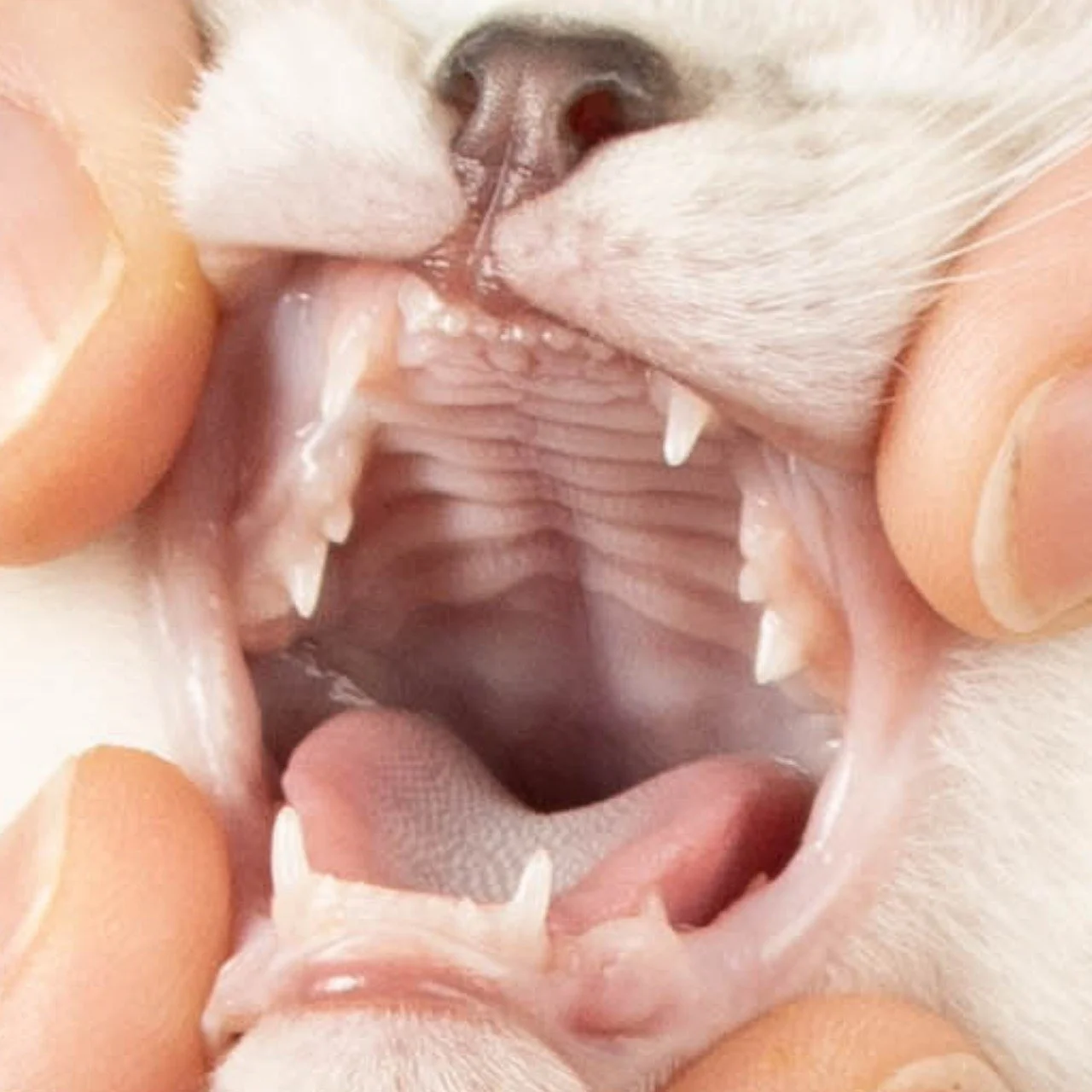
At 5 weeks, the premolars (the sharp at the back of the mouth) have erupted.

Kittens have denim blue eyes at 5-6 weeks.
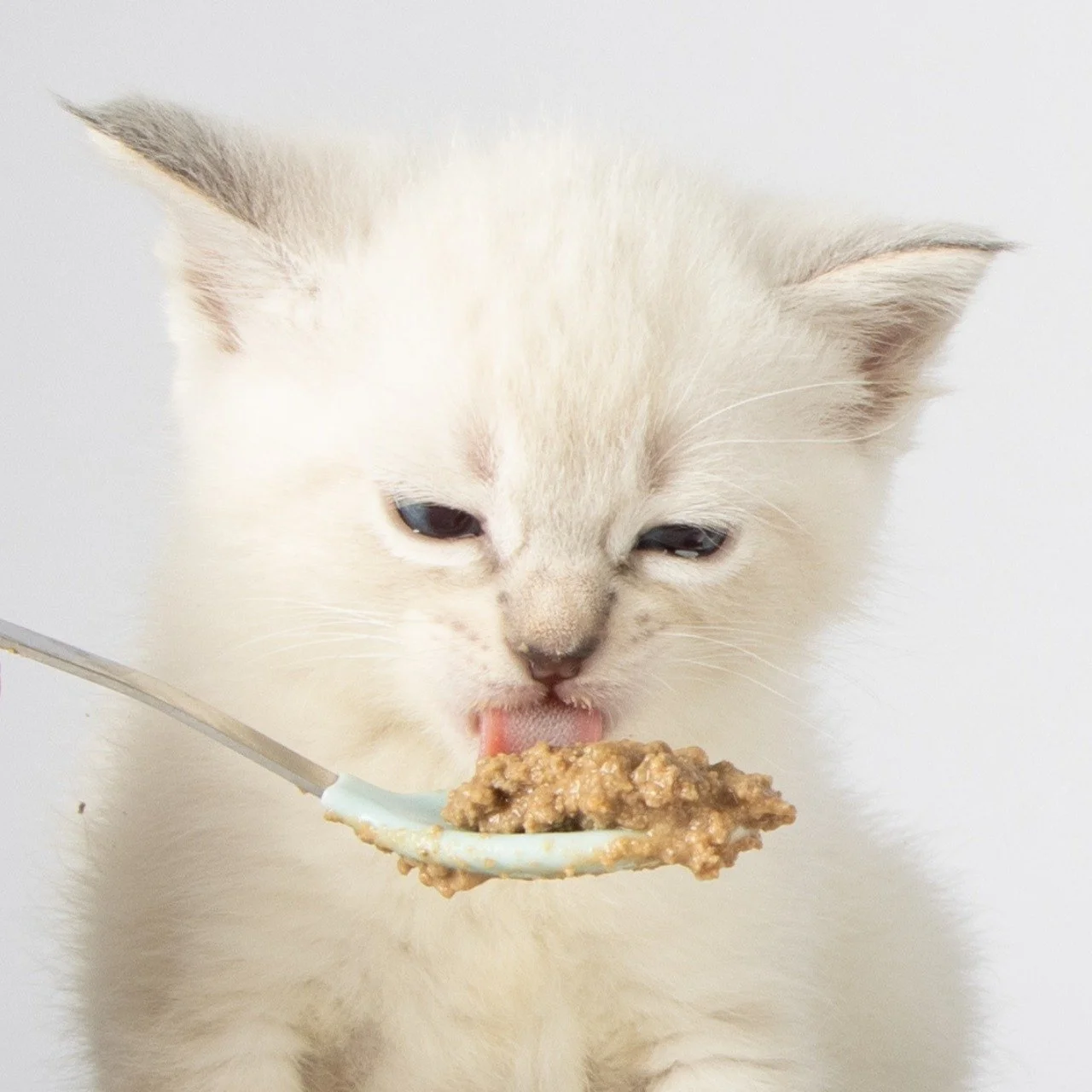
5 week old kittens are ready to start the weaning process.
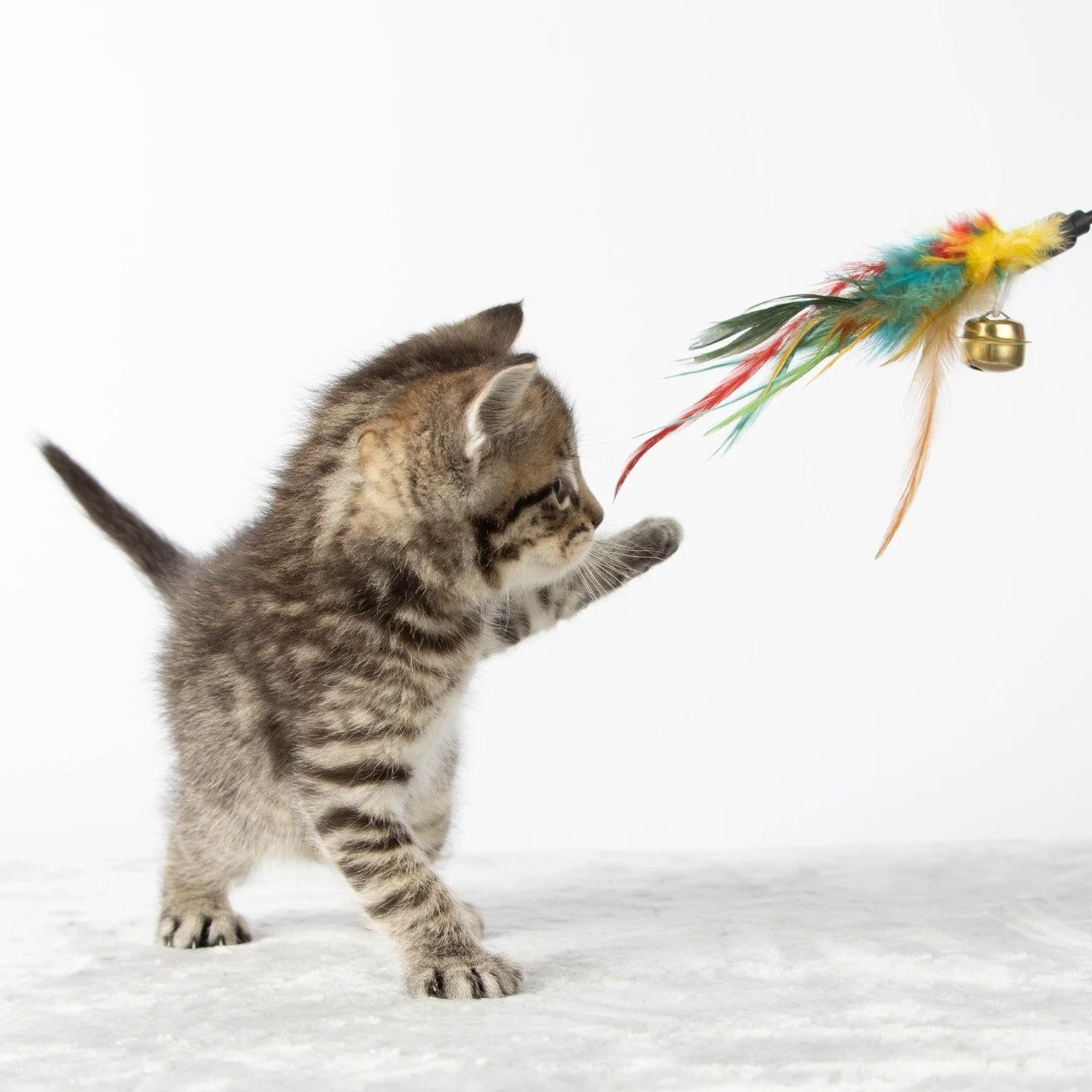
5 week old kittens are becoming much more playful, and can bat at toys.
Week 5-6 Developmental Attributes
Stool and Urine:
Kittens are typically beginning to use the litter box by this age
They urinate every few hours and typically defecate about once per day
Stool should be solid; the color will transition from mustard yellow to brown as they wean onto solid food
Sleep:
Kittens this age still sleep for many hours a day but have wake periods filled with play and exploration
Movement:
Running short distances and changing direction quickly
Beginning to climb low objects and explore their surroundings
Play behavior including chasing, pouncing, wrestling, and batting at toys
Grooming:
Regularly grooming themselves and their littermates
Grooming behavior becomes more coordinated and deliberate
Body temperature:
100–101°F (37.8–38.3°C)
Week 5-6 Physical Attributes
Eyes:
Blue irises
Vision has significantly improved; can focus on and track objects and see from several feet away
Eye-paw coordination has improved significantly
Ears:
Ears fully upright and highly responsive
Ears are similar in shape and proportion to those of an adult cat
Teeth:
Incisors (tiny teeth at the front of the mouth) fully present
Canine teeth (four small fangs) erupting
Premolars (sharp teeth at the back of mouth) erupting
Claws:
Retracted when relaxed
Typical weight:
550-650g
Healthy weight gain:
At least 10-15g per day
Essential Supplies for a 4-5 Week Old Kitten
Wet kitten food
Dry kitten food
Shallow food dishes
Gram scale for weighing
Mesh playpen or plastic panel playpen
Kittens can be housed in a small playpen that allows enough space to roam and practice playing.
A cardboard cat food tray makes a perfect first litter box for a kitten.
How to Set Up Your Space for a 4-5 Week Old Kitten
By 4–5 weeks of age, kittens are much more mobile and curious. They are walking confidently and beginning to play, explore, and use the litter box. They are still far too small to roam freely in a home, but they benefit from having a safe space where they can move around, play, and continue developing their coordination.
In a playpen:
The ideal setup is a mesh playpen or plastic panel playpen.
Place a kitten-safe heat source in one corner, covered with a soft baby blanket. At this age kittens can usually tolerate normal room temperature, but providing a warm option allows them to rest comfortably if needed.
Provide a shallow litter box (a cardboard cat food tray works well) with kitten-safe litter.
In a bathroom:
A small bathroom can be appropriate for kittens this age, but be careful to ensure it is kitten-proofed. Keep the toilet lid shut and tuck in shower curtains so that they cannot be climbed. Ensure cabinets are closed and toxic chemicals are not accessible. Line the floor with blankets as tile can be too cold for kittens. Set up the space with all supplies listed above.
With a mama:
At this age, kittens will be exploring beyond the nesting box and exploring food and water with their mother. Give them a shallow litter box near the mama’s box.
Care Schedule: Every 6 Hours
At 5–6 weeks of age, kittens are learning how to eat solid food. Caregivers should sit with the kittens during meals to help ensure they are eating successfully. Some kittens may need encouragement, hand feeding, or spoon feeding at first. Continue allowing supplemental nursing with mom or bottle feeding until the kitten is reliably eating enough solid food and gaining weight. Always weigh the kitten after each meal to ensure they’re weaning successfully.
Beware of meat nursing! Many kittens look like they’re eating, but are actually nursing on the food—and can fail to eat sufficiently, leading to dehydration and malnutrition. For this reason, actively observing and supporting them is essential at this age.
Feed 4 times a day, every 6 hours. Remove uneaten wet food after about an hour to reduce the risk of bacterial exposure. Wet kitten food should be the primary diet, though kitten kibble can also be offered so kittens become familiar with both textures.
At 5-6 weeks, fresh water should always be available so kittens can learn to drink and stay hydrated.
Care Routine for a 5-6 Week Old Kitten
Wash your hands or put on clean gloves.
Young kittens still have immature immune systems and should be handled with clean hands.
Offer wet kitten food.
Place a small amount in a shallow dish and sit with the kitten while they explore and learn to eat. If they don’t understand it, place a small amount in their mouth using a hand or spoon. You may find that they are most successful when you hold the food right in front of their face for the first several feedings.
Allow supplemental bottle feeding.
Once the kitten has lost interest in the wet food, offer the bottle.
Weigh the kitten.
Record the weight in grams, along with the time of feeding. Healthy kittens should gain weight every day. If the kitten is losing weight, they may be too young to wean—scale them back to bottle feeding.
Clean the kitten.
Use a baby wipe or warm cloth to gently clean the kitten’s face if needed.
Place the kitten in the litter box.
Eating may prompt the kitten to need to use the litter box at this age.
Set an alarm for the next feeding in 6 hours.
Young kittens require frequent care, so setting alarms helps maintain a consistent feeding schedule.
Additional Resources
Learn to care for your 6-7 week old kitten
Fill out the brief form below to help Kitten Lady understand who’s using the kitten age calculator. Click “submit” to be redirected to tons of information about caring for your 6-7 week old kitten!
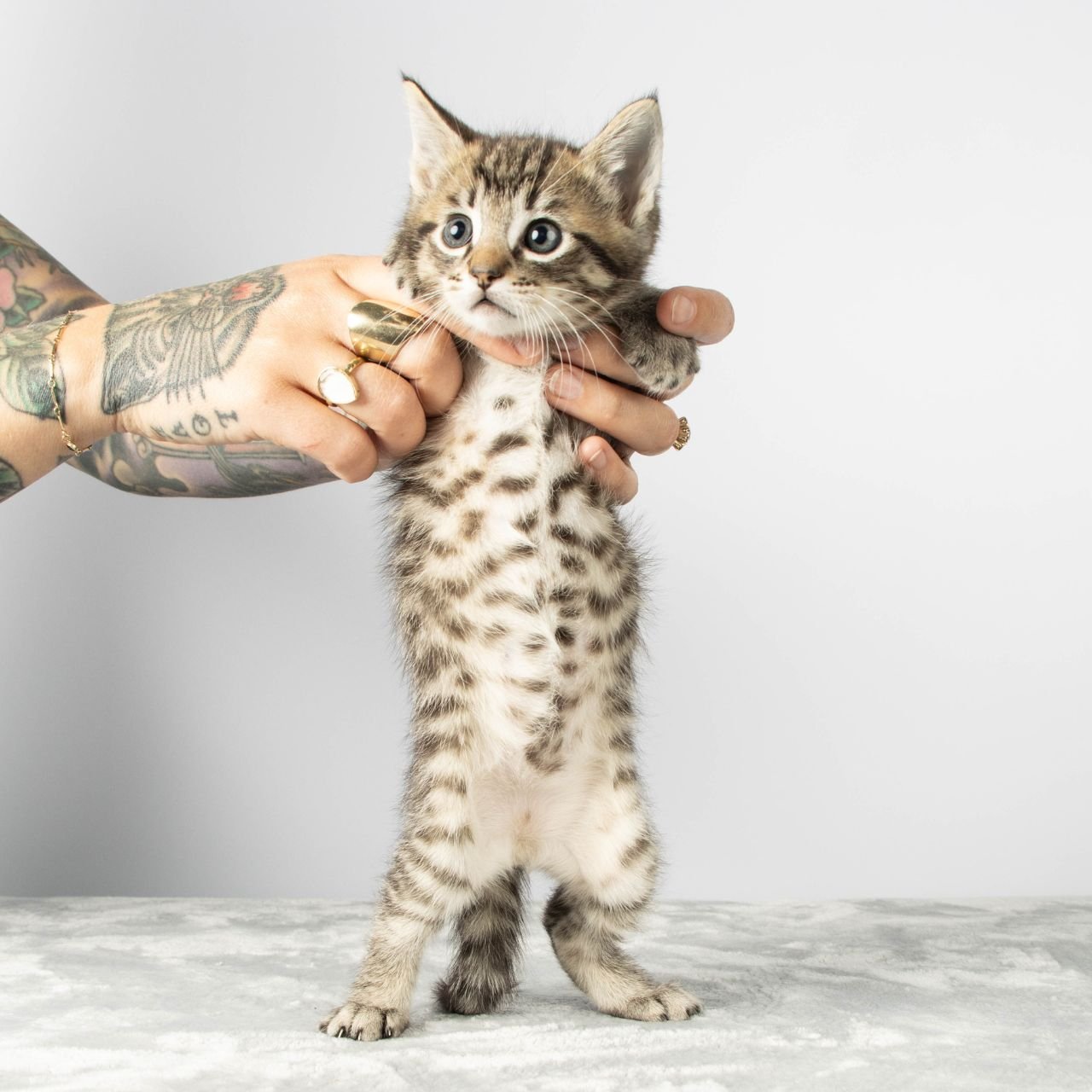
6-7 Weeks Old:
The Color Changing Stage
At this age, kittens’ eyes are changing colors—and they’re transforming into tiny but mighty cats.
You Should Know:
At this age, most kittens are eating solid food with confidence. While some kittens may still comfort-nurse occasionally, their primary nutrition typically comes from wet kitten food at this age. Providing frequent small meals of high-quality wet kitten food supports their rapid growth.
6-7 week old kittens are highly active, coordinated, and playful. They run, pounce, and wrestle with littermates, developing strength, balance, and important social skills such as bite inhibition and communication. Safe toys and regular gentle interaction with people help build confidence and healthy behavior.
Because their immune systems are still developing, kittens this age should continue to be protected from unfamiliar animals and potential sources of infection. According to Association of Shelter Veterinarians guidelines, kittens should have received their first FVRCP vaccine and will typically be due for booster vaccinations every 2–4 weeks until around 16–20 weeks of age.
At 6-7 weeks, kittens are becoming less dependent on their mother. If you find a kitten outdoors and are willing to foster them, this age is an ideal time to take them in for socialization. If they’re already with their mother in foster care, it’s a great idea to keep them together until adoption age. If they’re with an unsocial mama in foster care, she can be spayed and returned as soon as they are weaned. Don’t forget to help the mama cat access sterilization to prevent future births.
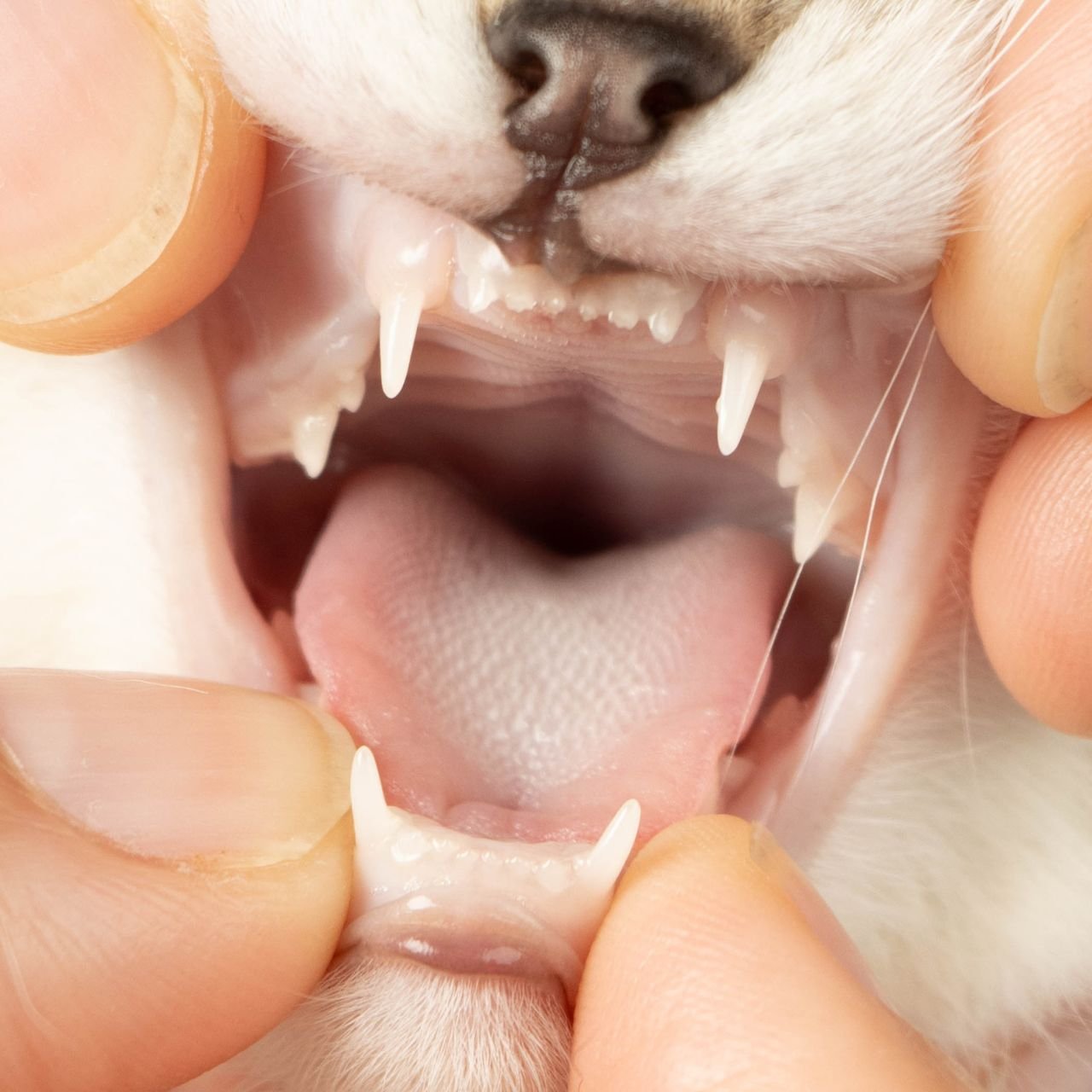
At 6 weeks, all of the deciduous teeth have emerged.
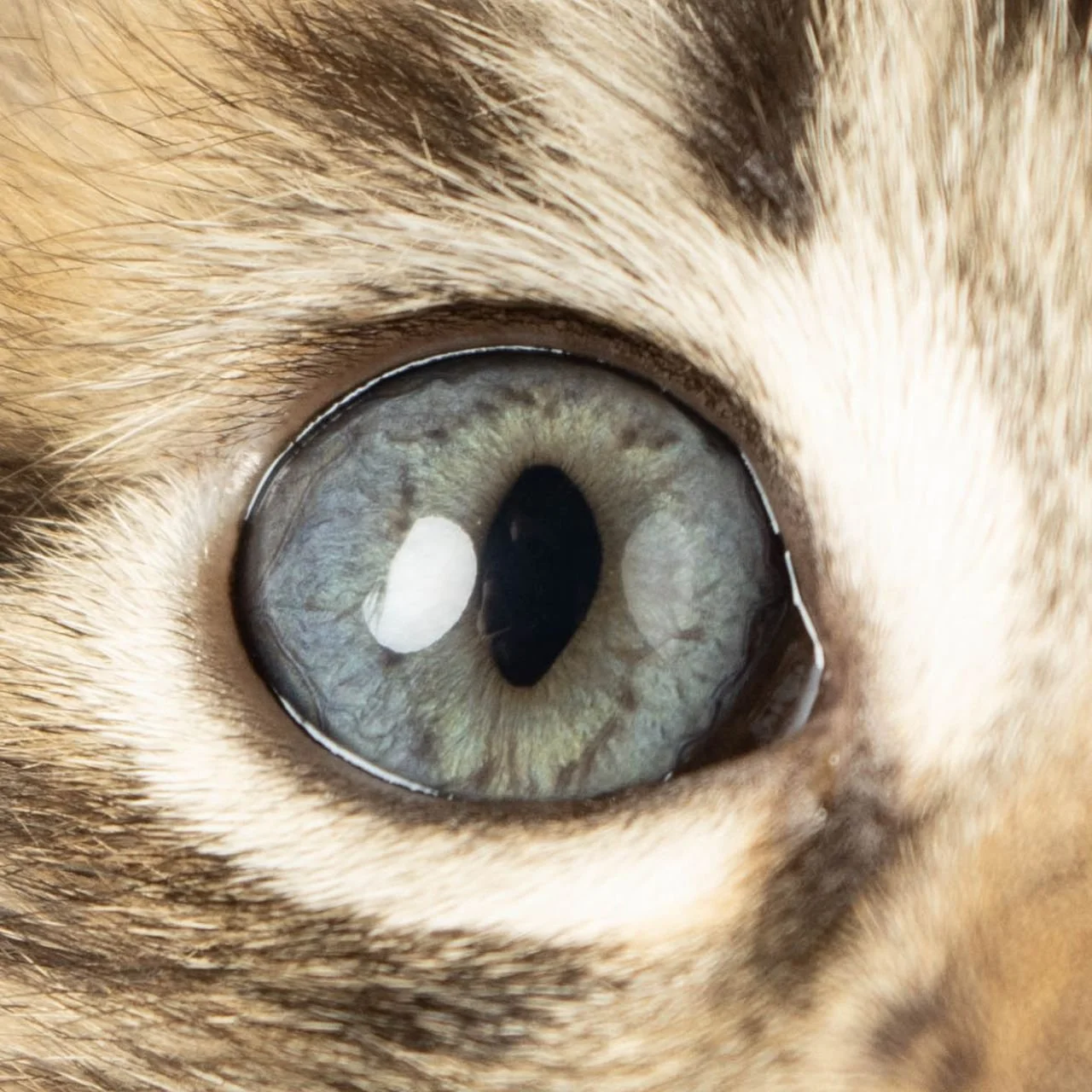
Around 6-7 weeks, kittens’ blue eyes begin to transition to their adult color.
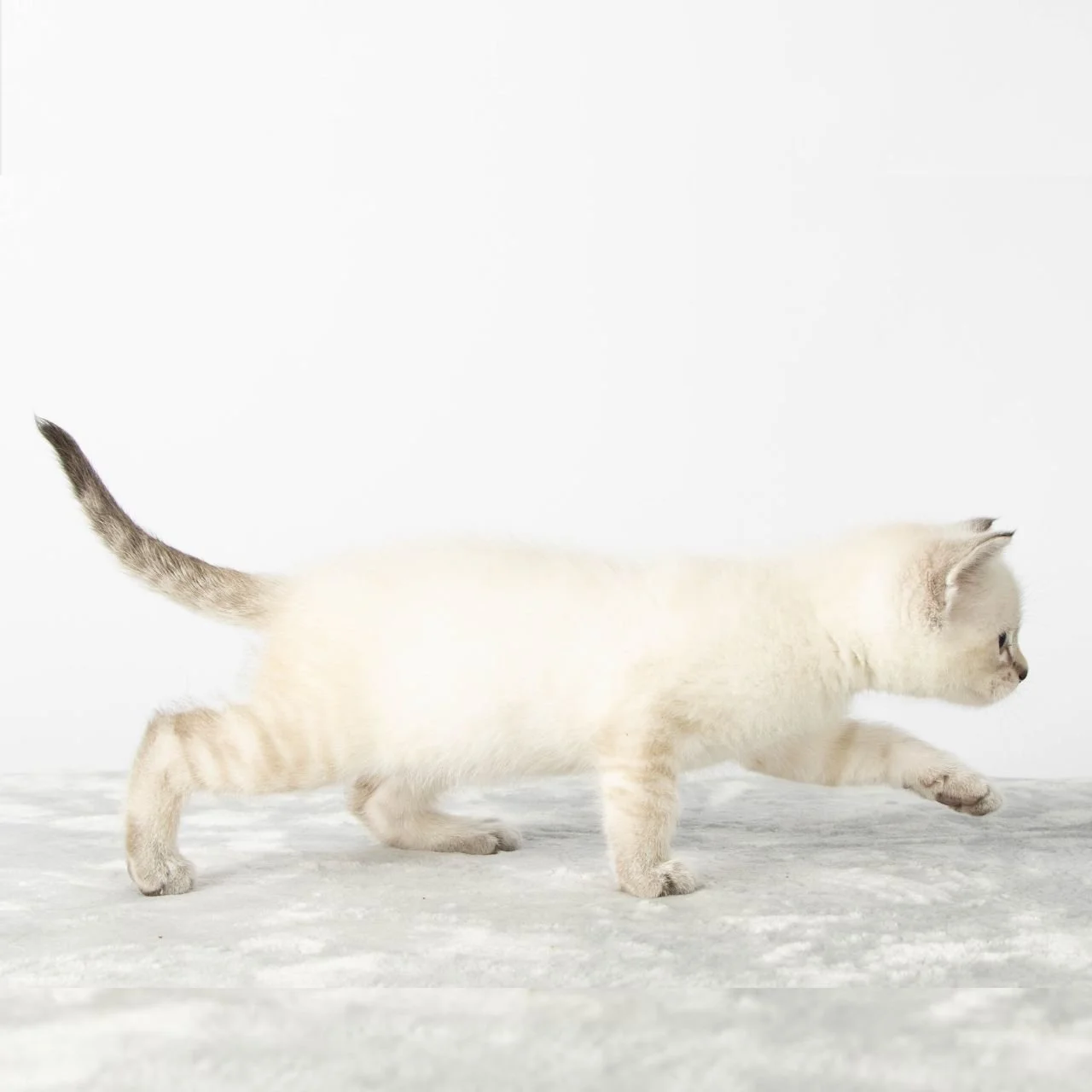
6-7 week old kittens walk, run, and pounce with confidence.
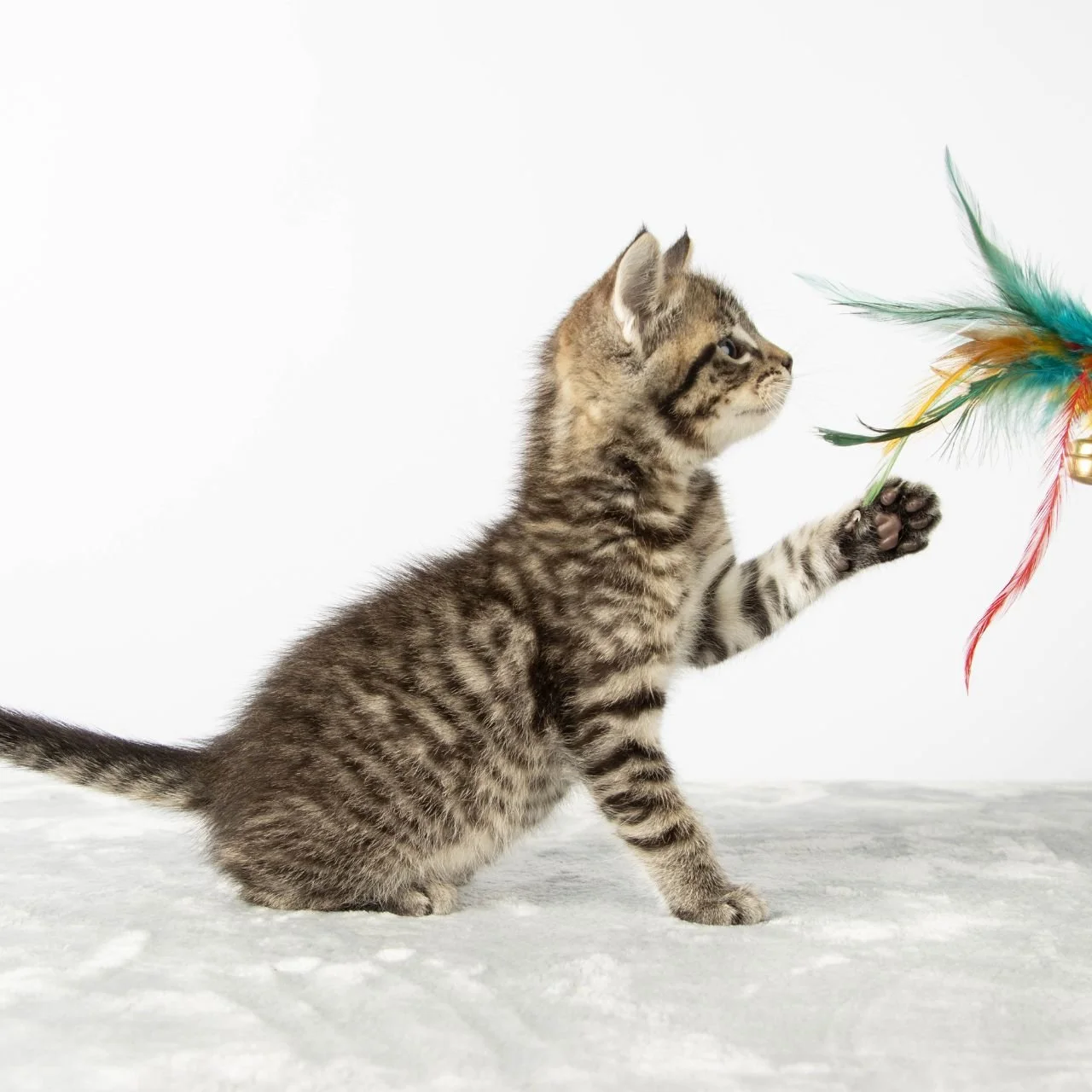
6-7 week old kittens have strong hunting instincts and are eager to play with toys.
Week 6-7 Developmental Attributes
Stool and Urine:
Kittens are typically reliably to using the litter box by this age
They urinate every few hours and typically defecate about once per day
Stool should be solid and brown
Sleep:
Kittens this age still sleep for many hours a day but have long, active wake periods filled with play and exploration
Movement:
Running with good coordination
Climbing and jumping off low surfaces
Play behavior including chasing, pouncing, wrestling, and batting at toys
Grooming:
Regularly grooming themselves and their littermates
Grooming is coordinated and purposeful
Body temperature:
100–102°F (37.8–38.9°C)
Week 6-7 Physical Attributes
Eyes:
Blue irises are transitioning to adult eye color from the center outward
Vision is well developed; can track movement and see clearly at a distance
Eye-paw coordination is strong
Ears:
Ears fully upright and highly responsive
Ears are similar in shape and proportion to those of an adult cat
Teeth:
Deciduous incisors, canines and premolars are all fully present
Claws:
Retracted when relaxed
Typical weight:
650-750g
Healthy weight gain:
At least 10-15g per day
Essential Supplies for a 6-7 Week Old Kitten
Wet kitten food
Dry kitten food
Shallow food dishes
Gram scale for weighing
Mesh playpen or plastic panel playpen
Kittens can be housed in a small playpen that allows enough space to roam and practice playing.
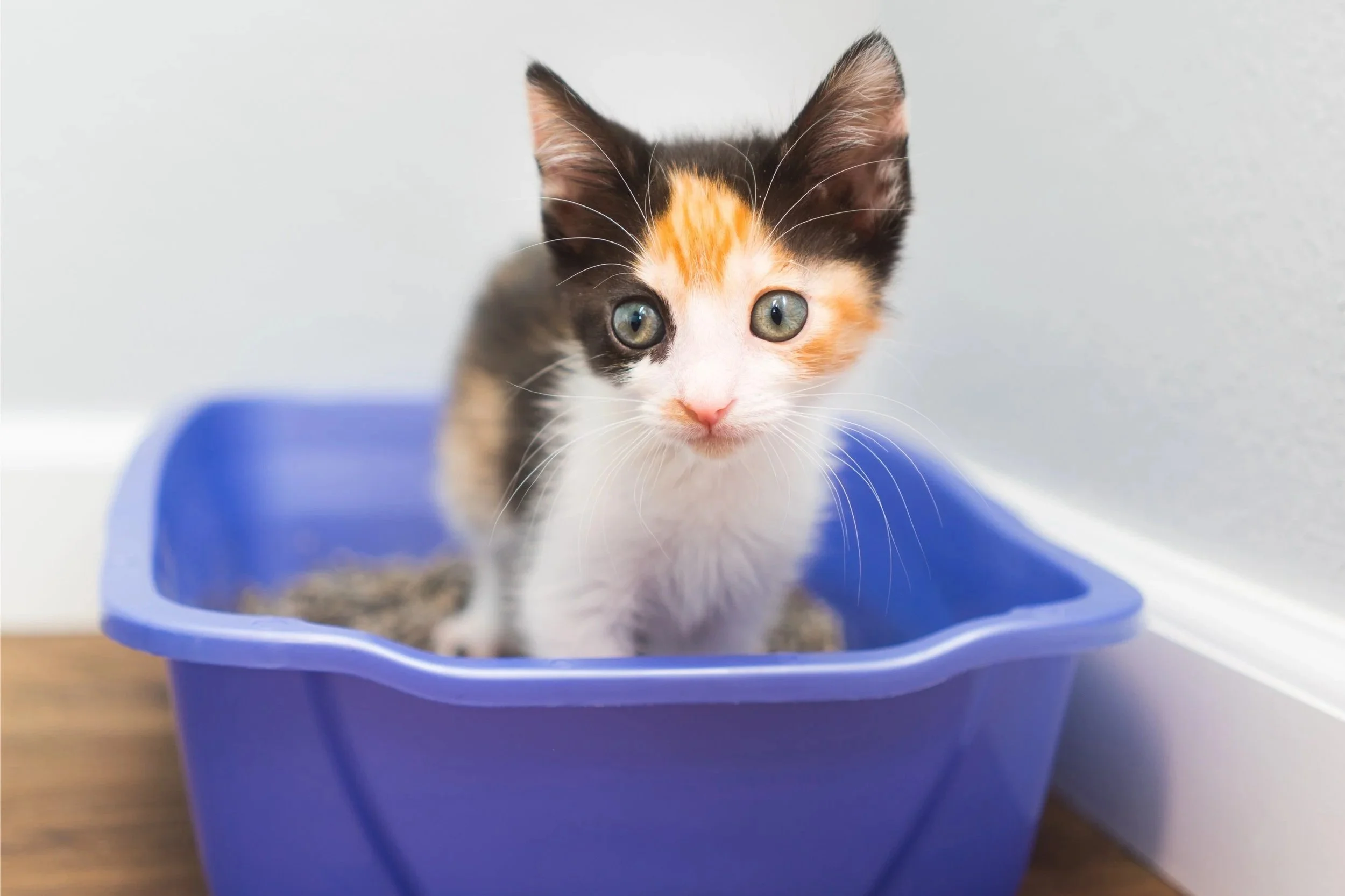
Use a shallow litter box while kittens are still small and growing.
How to Set Up Your Space for a 6-7 Week Old Kitten
By 6–7 weeks of age, kittens are highly mobile, coordinated, and curious. They are running, jumping, climbing, and using the litter box consistently. If they are healthy and have completed a 2 week quarantine, they can begin to explore kitten-proofed rooms; otherwise a playpen or bathroom offer an ideal setup.
In a playpen:
An ideal setup is a mesh playpen or plastic panel playpen.
Kittens can maintain their body temperature well at this age; no heat source is necessary unless the kitten is sick or the room is cold.
Provide a soft baby blanket, a cozy hut and/or a soft bed.
Provide a shallow litter box with kitten-safe litter.
In a bathroom:
A small bathroom can be appropriate for kittens this age, but be careful to ensure it is kitten-proofed. Keep the toilet lid shut and tuck in shower curtains so that they cannot be climbed. Ensure cabinets are closed and toxic chemicals are not accessible. Line the floor with blankets as tile can be too cold for kittens. Set up the space with all supplies listed above.
With a mama:
At this age, kittens will be quite independent and exploring, but may still interact with their mama when resting or comfort nursing. Be sure the mama has a perch where she can get some time to herself, and that the kittens have a shallow litter box near the mama’s box.
Care Schedule: Every 6 Hours
At 6–7 weeks of age, most kittens are fully weaned and eating solid food as their primary diet. However, some kittens may still need support to ensure they are eating enough and maintaining healthy weight gain. Sit with the kittens during feeding time to ensure they are actively eating, not just meat nursing. Continue weighing kittens regularly to confirm steady weight gain.
Feed 4 times a day, every 6 hours. Remove uneaten wet food after about an hour to reduce the risk of bacterial exposure. Wet kitten food should be the primary diet, though kitten kibble can also be freely offered so kittens become familiar with both textures.
Fresh water should always be available so kittens can drink independently and stay hydrated.
Care Routine for a 6-7 Week Old Kitten
Wash your hands or put on clean gloves.
Young kittens still have immature immune systems and should be handled with clean hands.
Offer wet kitten food.
Place wet food in a shallow dish and sit with the kitten while they explore and eat. Observe whether they are successfully eating or whether they still need assistance with kitten-led weaning.
Weigh the kitten.
Record the weight in grams, along with the time of feeding. Healthy kittens should gain weight every day. If the kitten is losing weight, they may be too young to wean—scale them back to bottle feeding.
Clean the kitten.
Use a baby wipe or warm cloth to gently clean the kitten’s face if needed.
Place the kitten in the litter box.
Eating may prompt the kitten to need to use the litter box.
Set an alarm for the next feeding in 6 hours.
Young kittens require frequent care, so setting alarms helps maintain a consistent feeding schedule.
Additional Resources
Learn to care for your 7-8 week old kitten
Fill out the brief form below to help Kitten Lady understand who’s using the kitten age calculator. Click “submit” to be redirected to tons of information about caring for your 7-8 week old kitten!
7-8 Weeks Old:
The Socialization Stage
7-8 week old kittens are just days from adoption age, and learning to be independent, social little cats.
You Should Know:
At this age, kittens are fully weaned and eating solid food independently. Their primary nutrition should come from high-quality wet kitten food, with access to dry kitten food and fresh water. Consistent, frequent meals support their rapid growth and high energy needs.
7–8 week old kittens are highly active, coordinated, and confident. They run, jump, climb, and engage in complex play with littermates, continuing to develop strength, balance, and important social skills such as bite inhibition and communication. Regular positive interaction with people is especially important at this age to support socialization and confidence.
Because their immune systems are still developing, kittens this age should continue to be protected from unfamiliar animals and potential sources of infection. According to Association of Shelter Veterinarians guidelines, kittens should have received their first FVRCP vaccine and will typically be due for booster vaccinations every 2–4 weeks until around 16–20 weeks of age.
At 7–8 weeks, kittens are independent from their mother and are nearly ready for adoption. This is a critical window for socialization, and continued exposure to gentle handling, normal household experiences, and enrichment will help them grow into well-adjusted adult cats. If you find a kitten outdoors and are willing to foster them, this age is an ideal time to take them in. Don’t forget to help the mama cat access sterilization to prevent future births.

By 7 weeks, all of the deciduous teeth are present and appear long and pointy.
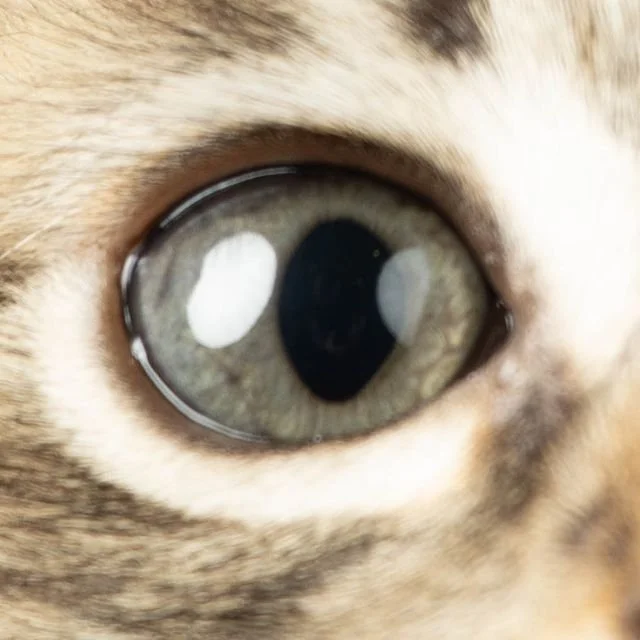
Around 7-8 weeks, the eyes will have fully transitioned away from blue and to their adult color—typically green or yellow.

If a kittens’ adult eye color is blue, it will now be present as an icy, light blue—not the darker, denim blue of a baby kitten.

7-8 week old kittens are highly energetic and eager to play, chase, climb, and hunt!
Week 7-8 Developmental Attributes
Stool and Urine:
Kittens are reliably using the litter box by this age
They urinate every few hours and typically defecate about once per day
Stool should be solid and brown
Sleep:
Kittens this age have long, active wake periods filled with play and exploration
Movement:
Running with good coordination
Climbing and jumping off mid-sized surfaces
Play behavior including chasing, pouncing, wrestling, and batting at toys
Grooming:
Regularly grooming themselves and their littermates
Grooming is coordinated and purposeful
Body temperature:
100–102°F (37.8–38.9°C)
Week 7-8 Physical Attributes
Eyes:
Adult eye color is present
Vision is very well developed; can track movement and see clearly at a distance
Eye-paw coordination is very strong
Ears:
Ears fully upright and highly responsive
Ears are similar in shape and proportion to those of an adult cat
Teeth:
Deciduous incisors, canines and premolars are all fully present and long/pointy
Claws:
Retracted when relaxed
Typical weight:
750-950g
Healthy weight gain:
At least 10-15g per day
Essential Supplies for a 7-8 Week Old Kitten
Wet kitten food
Dry kitten food
Shallow food dishes
Gram scale for weighing
Mesh playpen or plastic panel playpen
Toys and enrichment
Kittens can be housed in a small playpen that allows enough space to roam and practice playing.
Use a shallow litter box while kittens are still small and growing.
How to Set Up Your Space for a 7-8 Week Old Kitten
By 7-8 weeks of age, kittens are highly mobile, coordinated, and curious. They are running, jumping, climbing, and using the litter box consistently. If they are healthy and have completed a 2 week quarantine, they can begin to explore kitten-proofed rooms; otherwise a mesh playpen or bathroom offer an ideal setup.
In a bathroom or guest room:
If the kitten is newly rescued from the street, it’s recommended to contain them in a secure, easily disinfectable space for a 2 week quarantine while monitoring their health. If a quarantine period has passed with you or with an adoption agency, then it’s safe to allow the kitten to roam a larger space like a guest room at this age.
A bathroom can be appropriate for kittens this age, but be careful to ensure it is kitten-proofed. Keep the toilet lid shut and tuck in shower curtains so that they cannot be climbed. Ensure cabinets are closed and toxic chemicals are not accessible. Line the floor with blankets as tile can be too cold for kittens. Set up the space with all supplies listed above.
If using a guest room, ensure that the room is kitten-proofed. Remove small objects that can be choking hazards and hang curtain strings away from reach. Block areas where the kitten can get stuck or lost. Practice good judgment to ensure the area is safe.
Kittens can maintain their body temperature well at this age; no heat source is necessary unless the kitten is sick or the room is cold.
Provide a soft baby blanket, a cozy hut and/or a soft bed.
Provide a shallow litter box with kitten-safe litter.
Care Schedule: Every 6 Hours
At 7-8 weeks of age, kittens are weaned and eating solid food as their primary diet. However, some kittens may still need support to ensure they are eating enough and maintaining healthy weight gain. Sit with the kittens during feeding time to ensure they are actively eating, not just meat nursing. Continue weighing kittens regularly to confirm steady weight gain.
Feed 4 times a day, every 6 hours. Remove uneaten wet food after about an hour to reduce the risk of bacterial exposure. Wet kitten food should be the primary diet, though kitten kibble can also be freely offered so kittens become familiar with both textures.
Fresh water should always be available so kittens can drink independently and stay hydrated.
Care Routine for a 7-8 Week Old Kitten
Wash your hands or put on clean gloves, especially if the kitten is new to you.
Young kittens still have immature immune systems and should be handled with clean hands.
Offer wet kitten food.
Place wet food in a shallow dish and sit with the kitten while they explore and eat. Observe whether they are successfully eating or whether they still need assistance with kitten-led weaning.
Weigh the kitten.
Record the weight in grams, along with the time of feeding. Healthy kittens should gain weight every day.
Clean the kitten.
Use a baby wipe or warm cloth to gently clean the kitten’s face if needed.
Place the kitten in the litter box.
Eating may prompt the kitten to need to use the litter box.
Set an alarm for the next feeding in 6 hours.
Young kittens require frequent care, so setting alarms helps maintain a consistent feeding schedule.
Finding a Kitten a Home
If you’re fostering, this is a great age to start thinking about finding an adopter. Once the kitten is 8 weeks old and spayed or neutered, they can go to their forever home! Watch Kitten Lady’s videos to learn tips and tricks for finding your kitten a great adopter.
Additional Resources
Learn to care for your 8+ week old kitten
Fill out the brief form below to help Kitten Lady understand who’s using the kitten age calculator. Click “submit” to be redirected to tons of information about caring for your 8+ week old kitten!
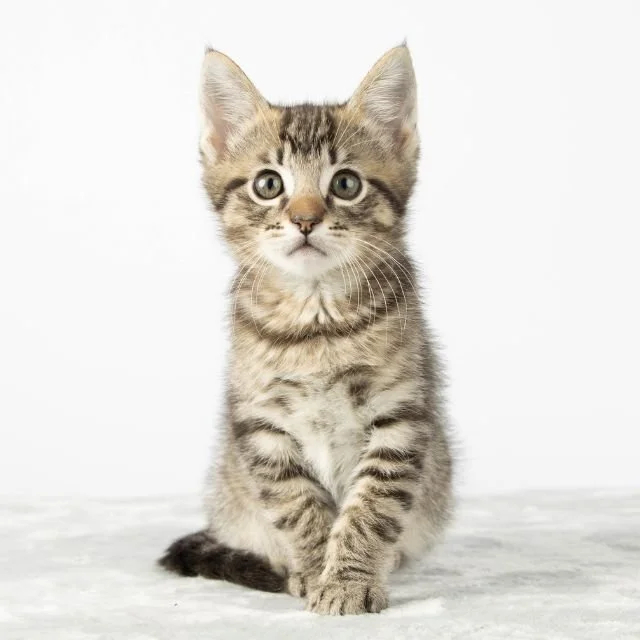
8+ Weeks Old:
Adoption Age!
After 8 weeks old, kittens are developmentally ready to be spayed or neutered and adopted into loving homes.
You Should Know:
At this age, kittens are fully weaned and eating solid food independently. Their diet should consist of high-quality kitten food, with fresh water available at all times. Consistent feeding supports continued growth and development.
8+ week old kittens are highly active, coordinated, and confident. They run, jump, climb, and engage in complex play with littermates, continuing to develop strength, balance, and important social skills such as bite inhibition and communication. Regular positive interaction with people is especially important at this age to support socialization and confidence.
Kittens this age should continue their vaccine schedule to provide protection against dangerous viruses. According to Association of Shelter Veterinarians guidelines, kittens should receive booster vaccinations every 2–4 weeks until around 16–20 weeks of age.
Kittens under 12 weeks are in a critical window for socialization, and exposure to gentle handling, normal household experiences, and enrichment is essential to help them grow into well-adjusted adult cats. If you find a kitten outdoors and are willing to foster them, it’s recommended to do so before 12 weeks of age. Don’t forget to help the mama cat access sterilization to prevent future births.
After 8 weeks of age, if a kitten is at least 2 pounds, they can typically be spayed or neutered and adopted into a loving home.
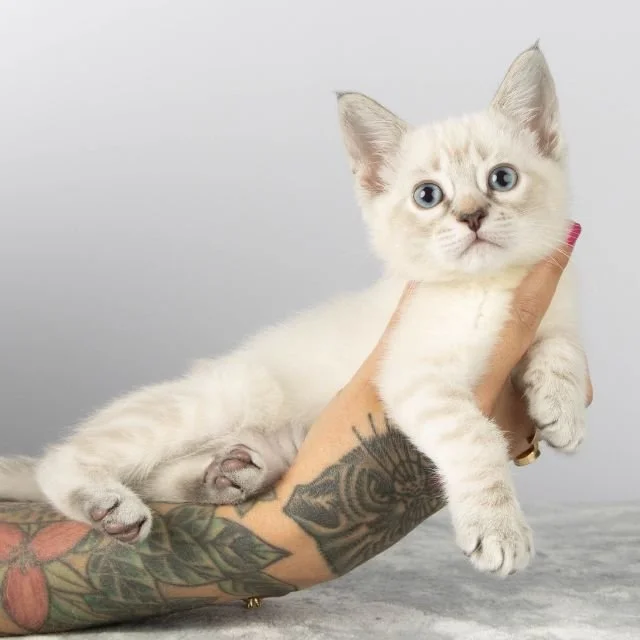
At 2 months, healthy kittens tend to weigh 2 pounds. By 3 months, they tend to weigh 3 pounds.
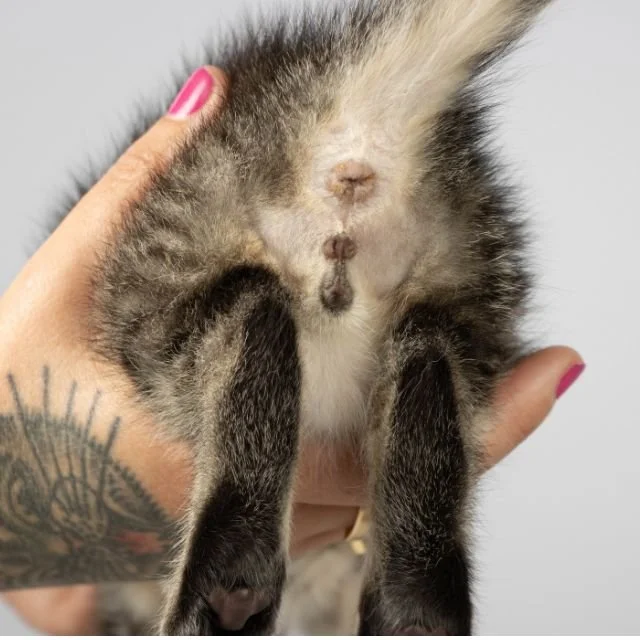
Most shelters and rescue organizations can spay or neuter a kitten at 2 months/2 pounds.
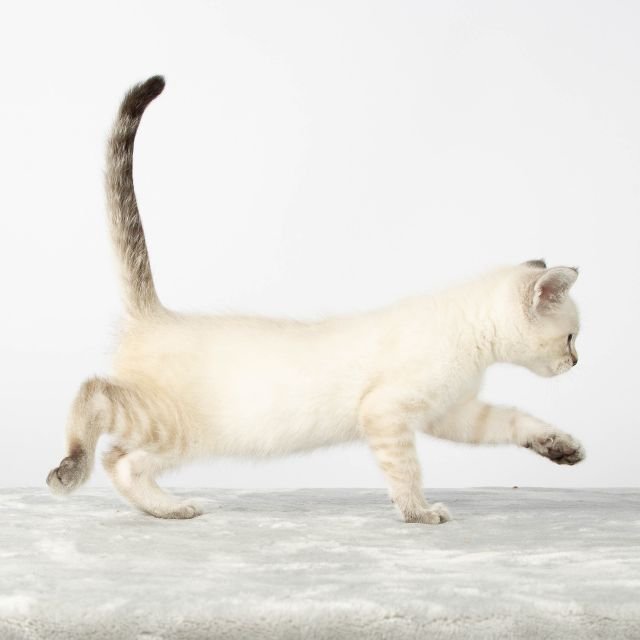
At 8+ weeks, kittens have high energy and are nearly as coordinated as an adult cat.
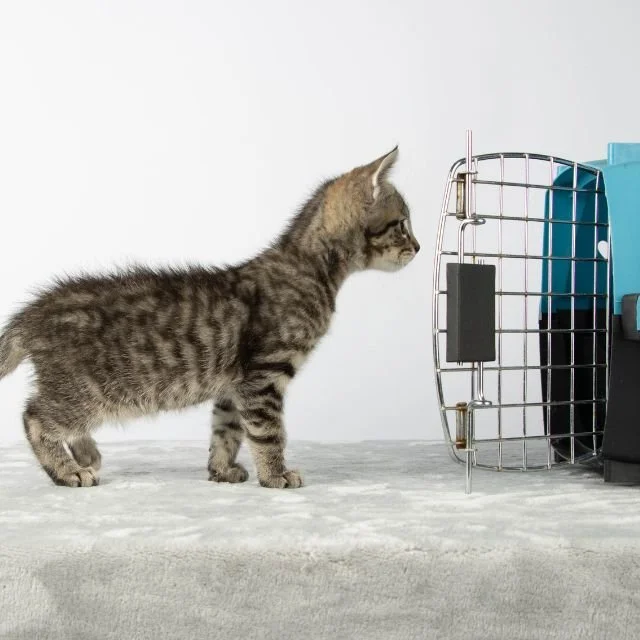
Once healthy and spayed or neutered, 8+ week old kittens can be successfully adopted out.
8+ Week Developmental Attributes
Stool and Urine:
Kittens are reliably using the litter box by this age
They urinate every few hours and typically defecate about once per day
Stool should be solid and brown
Sleep:
Kittens this age have long, active wake periods filled with play and exploration
Movement:
Running with good coordination
Climbing and jumping off mid-sized surfaces
Play behavior including chasing, pouncing, wrestling, and batting at toys
Grooming:
Regularly grooming themselves and their littermates
Grooming is coordinated and purposeful
Body temperature:
100–102°F (37.8–38.9°C)
8+ Week Physical Attributes
Eyes:
Adult eye color is present
Vision is very well developed; can track movement and see clearly at a distance
Eye-paw coordination is very strong
Ears:
Ears fully upright and highly responsive
Ears are similar in shape and proportion to those of an adult cat
Teeth:
Deciduous incisors, canines and premolars are all fully present and long/pointy
Claws:
Retracted when relaxed
Typical weight:
1kg+
Healthy weight gain:
At least 15g per day
Essential Supplies for an 8+ Week Old Kitten
Wet kitten food
Dry kitten food
Shallow food dishes
Toys and enrichment
Kittens can be housed in a small playpen that allows enough space to roam and practice playing.
Use a shallow litter box while kittens are still small and growing.
How to Set Up Your Space for an 8+ Week Old Kitten
After 8 weeks of age, kittens are eager to have room to roam. They are running, jumping, climbing, and using the litter box consistently. If they are healthy and have completed a 2 week quarantine, they can begin to explore kitten-proofed rooms and begin familiarizing with the home layout; for fostering otherwise a mesh playpen or bathroom are options.
Kitten-proofing a room:
Keep toilet lids closed and secure windows/screens
Remove or block access to cords, strings, and small swallowable objects
Store cleaning supplies, medications, and toxic plants out of reach
Close cabinets, drawers, and appliances; block tight or hidden spaces
Remove breakable or unstable items from low surfaces
Provide safe toys and appropriate scratching surfaces
Ensure that the kitten has plenty of toys and kitten-safe enrichment to keep them physically and psychologically engaged—and be sure you are actively offering plenty of interactive play! Offer water and dry kitten food at all times, and wet food 3 times daily. Provide a shallow litter box with kitten-safe litter.
Care Schedule: Every 8 Hours
After 8 weeks of age, kittens are weaned and eating solid food as their primary diet. However, some kittens may still need support to ensure they are eating enough and maintaining healthy weight gain. Sit with the kittens during feeding time to ensure they are actively eating, not just meat nursing. Continue weighing kittens regularly to confirm steady weight gain.
Feed 3 times a day, every 8 hours. Remove uneaten wet food after about an hour to reduce the risk of bacterial exposure. Wet kitten food should be the primary diet, though kitten kibble can also be freely offered so kittens become familiar with both textures.
Fresh water should always be available so kittens can drink independently and stay hydrated.
Finding a Kitten a Home
If you’re fostering, this is a great age to find an adopter. Once the kitten is 8 weeks old and spayed or neutered, they can go to their forever home! Watch Kitten Lady’s videos to learn tips and tricks for finding your kitten a great adopter.