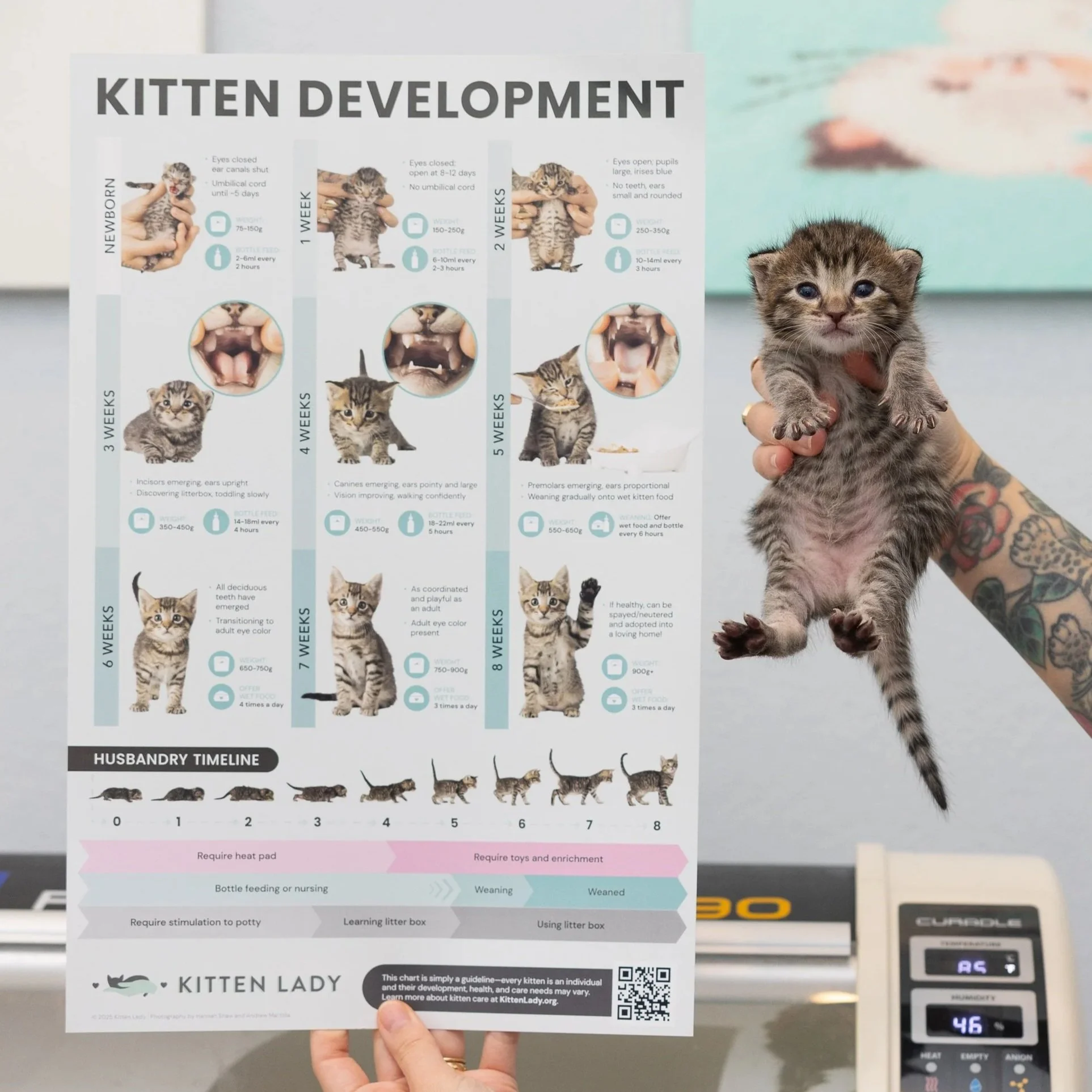
3-4 Weeks Old:
The Wide-eyed Stage
This transitional week brings major milestones like improved vision and the first tiny teeth.
You Should Know:
Kittens’ vision improves rapidly during this week, and they become very curious about the world around them. By about 3.5 weeks they can make eye contact and observe their immediate surroundings with wide blue eyes, but they aren’t yet coordinated enough to reach out and bat at toys.
At this age, kittens develop their first tiny teeth—the incisors at the front of the mouth. These teeth are not for eating solid food; kittens this age are still 100% dependent on nursing with mom or bottle feeding.
Because their immune systems are still developing, kittens this age should be handled only with clean hands and protected from other animals and potential sources of infection.
Whenever possible, kittens should stay with their mother. If you find a kitten outdoors, make every effort to keep the family together.
If a kitten this age is truly orphaned, they will need special support like bottle feeding and a gentle heat source.

The first tiny teeth, the incisors, emerge at 3 weeks; no other teeth are present at this time.

At 3-4 weeks, kittens’ ears look rounded with a tiny point, and their eyes are denim blue.

At 3-4 weeks, kittens are toddling curiously with their feet placed and their bellies touching the floor.

3-4 week old kittens can make eye contact and keep their heads upright as they observe their world.
Week 3-4 Developmental Attributes
Stool:
Kittens are developing the ability to eliminate independently, but may still need assistance. Provide a shallow litter box and continue stimulation should be offered until the kitten is using the litter box.
They typically defecate about once per day.
Stool should be solid and mustard yellow.
Urine:
Kittens start urinating on their own around this age, and a shallow litter box should be provided. Continue to stimulate at each feeding until the kitten is clearly using the litter box.
They should urinate each time they are stimulated.
Sleep:
Kittens this age still sleep for most of the day, but have longer wake periods.
Movement:
Kittens are toddling curiously and interested in brief exploration outside of their nest. Their belly is still touching the floor as they walk.
Early grooming behaviors are beginning.
Body temperature:
98–100°F (36.7–37.8°C)
Week 3-4 Physical Attributes
Eyes:
Blue irises
Vision rapidly improving; can make eye contact and observe within a few feet
Ears:
Ears upright or floppy in appearance
Rounded with a small point
Teeth:
At 3 weeks: tiny incisors emerge at the front of the mouth; these teeth may appear as small white points along the gumline
At 4 weeks: canine teeth emerge, which appear as tiny fangs
Claws:
Retracted when relaxed
Typical weight:
350-450g
Healthy weight gain:
At least 10g per day
Essential Supplies for a 3-4 Week Old Kitten

Blender bottle for mixing
Gram scale for weighing
Mesh playpen or plastic panel playpen
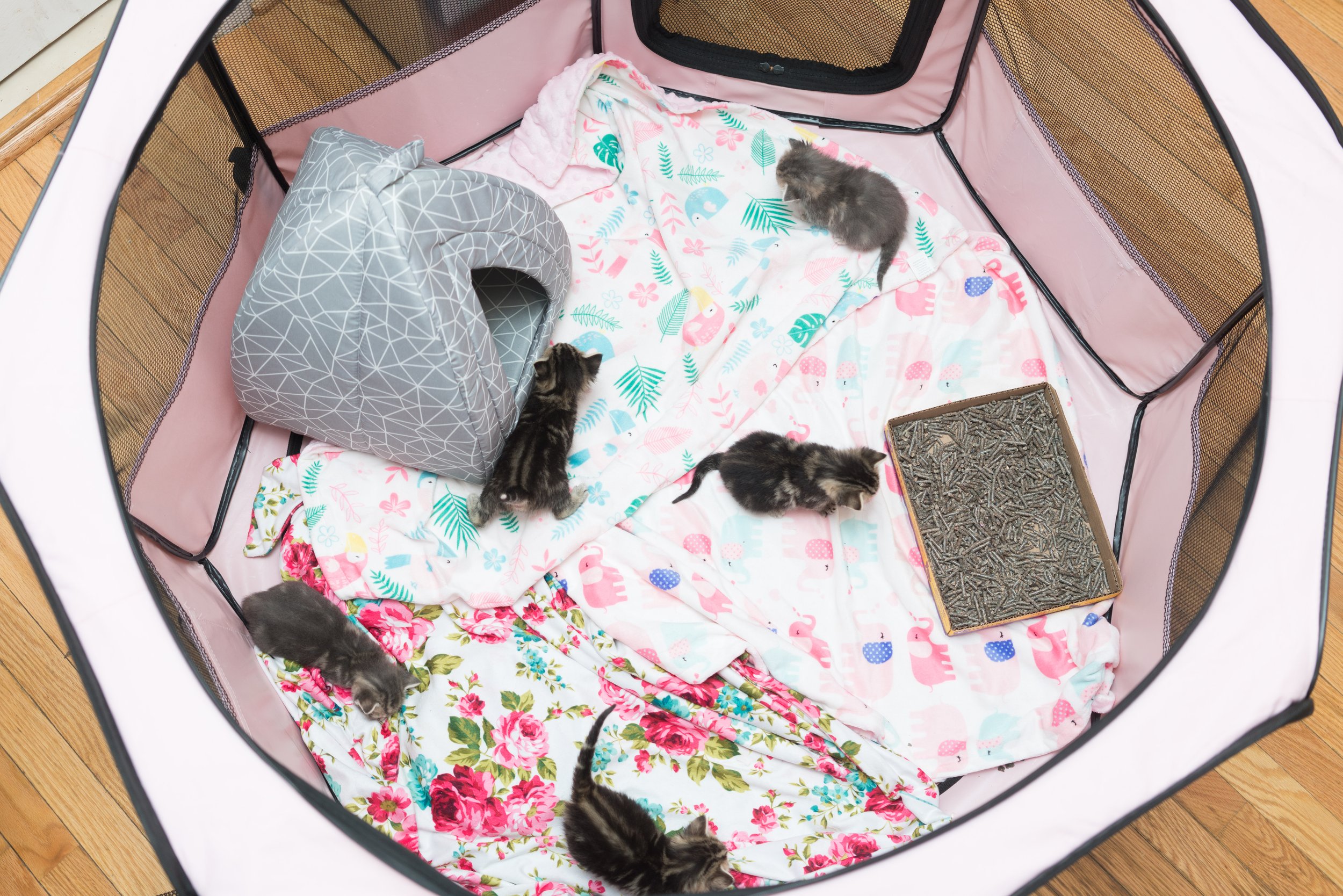
Kittens can be housed in a storage bin with a heated disk, blanket and stuffed toy.

A heated disk is an essential supply for kittens 0-4 weeks of age.
How to Set Up Your Space for a 3-4 Week Old Kitten
At 3 weeks old, kittens are curious and wanting to explore slightly beyond their bed/nest. They are much too small to freely roam a room, but a contained playpen offers an ideal balance of safety and space to walk.
In a playpen:
The ideal setup is a mesh playpen or plastic panel playpen.
Place a kitten-safe heat source in one corner, covered with a soft baby blanket.
Provide a cozy hut and/or a soft bed.
Provide a shallow litter box (a cardboard cat food tray works well) with kitten-safe litter.
In a bathroom:
A small bathroom can be appropriate for kittens this age, but be careful to ensure it is kitten-proofed. Keep the toilet lid shut and tuck in shower curtains so that they cannot be climbed. Ensure cabinets are closed and toxic chemicals are not accessible. Line the floor with blankets as tile can be too cold for kittens. Set up the space with all supplies listed above.
In an incubator:
An incubator is generally too small for this developmental stage, as they don’t allow the kitten to practice walking, briefly exploring and using the litter box. Only use an incubator at this age if the kitten is sick and needs extra rest and thermal support. If healthy, use a playpen and simply offer a kitten-safe heat disk.
With a mama:
An ideal setup is a nesting box in a closed room free of hazards and other animals.
Keep the space warm and clean.
Ensure the mother has easy access to fresh food, water, and a litter box nearby. Add a small shallow litter box for the kitten.
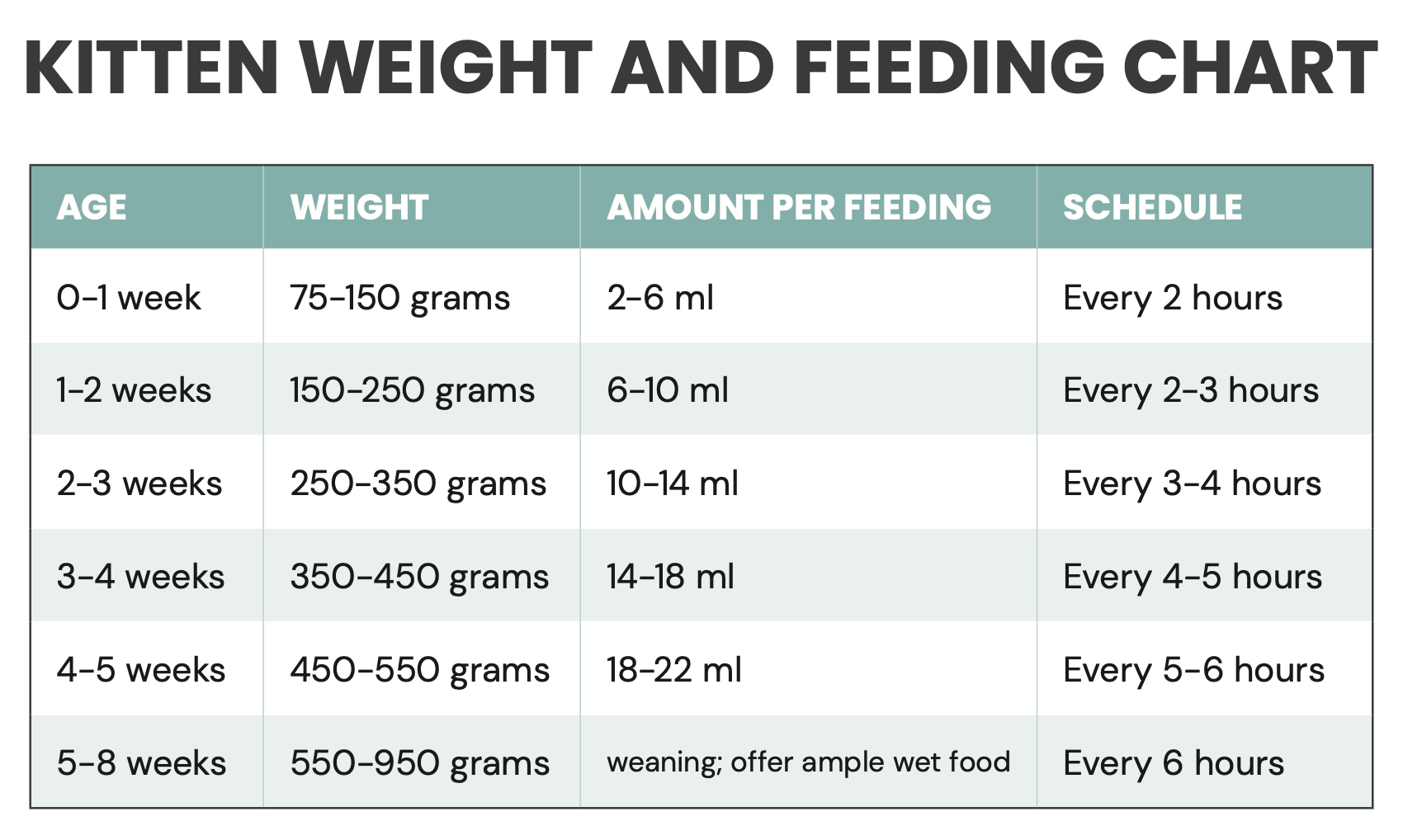
Care Schedule: Every 4-5 Hours
At 3-4 weeks of age, kittens can go slightly longer between feedings, though they still require frequent meals because their stomach capacity remains small and their bodies are growing rapidly. In a natural setting, a mother cat would continue nursing her kittens many times throughout the day and night.
Kittens at this age are developing the neuromuscular signaling needed to eliminate waste on their own. You’ll need to watch closely to see if they are using the litter box. If not, continue to stimulate them at each meal until they do.
Most kittens this age will eat about 14-18 ml of formula per feeding, typically every 4-5 hours. These regular feedings keep the kitten hydrated, fuel their high metabolism, and ensure healthy development.
Care Routine for a 3-4 Week Old Kitten
Wash your hands or put on clean gloves.
Neonatal kittens have immature immune systems and should be handled with clean hands.
Stimulate the kitten to go to the bathroom if needed.
You can skip this step once the kitten is clearly using the litter box to both urinate and defecate.
Bottle feed the kitten.
Allow the kitten to bottle feed at her own pace.
Weigh the kitten.
Record the weight in grams, along with the time of feeding. Healthy kittens should gain weight every day.
Clean the kitten.
Use a baby wipe or warm cloth to gently clean the kitten’s face and bottom if needed.
Return the kitten to her bed or hut.
Ensure the kitten is placed near the warm zone. At this age, it’s normal if they choose to explore a little before they go back to sleep.
Set an alarm for the next feeding in 4-5 hours.
Young kittens require around-the-clock care, so setting alarms helps maintain a consistent feeding schedule.