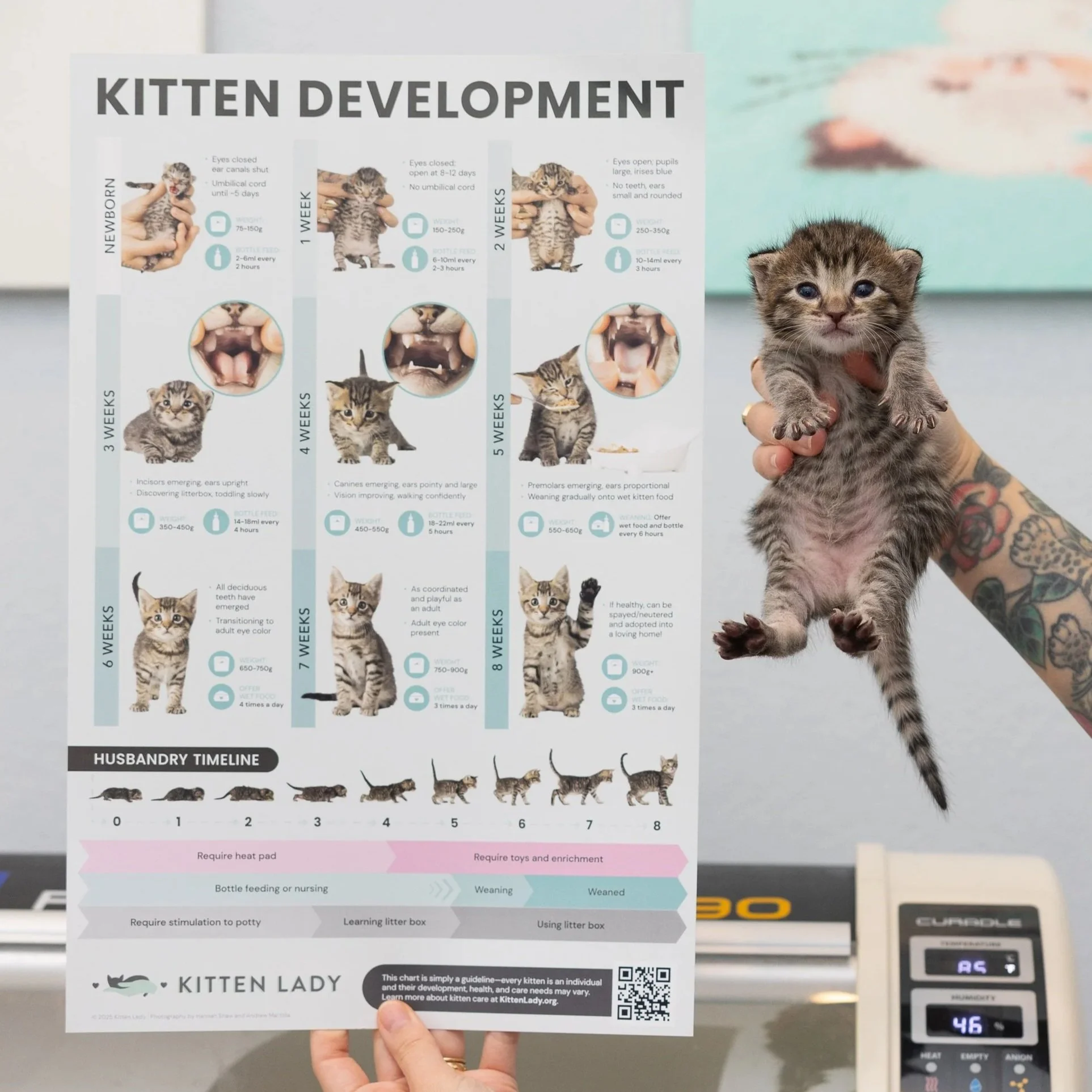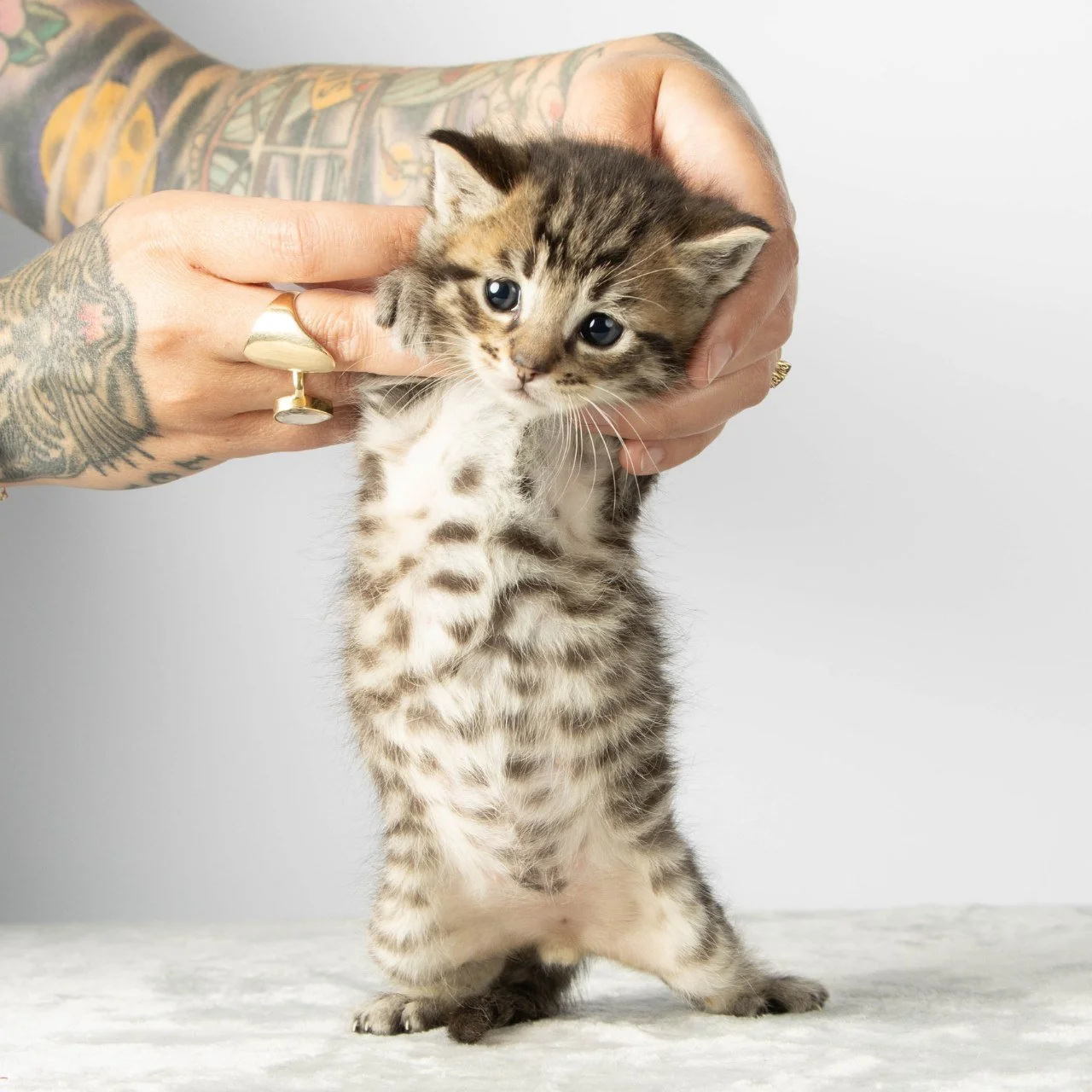
4-5 Weeks Old:
The Little Explorer Stage
At this age, kittens are developing the coordination to engage with the world around them.
You Should Know:
At this age, kittens can confidently walk and are exploring their environment with growing confidence. They are not running or climbing just yet, but short bursts of play are common as kittens begin pouncing clumsily at their littermates and investigating new objects.
Vision is now much clearer, and kittens are able to see at a further distance, track movement, and respond to activity around them. With improving motor skills and eye-paw coordination, they begin to gently experiment with playful behaviors such as batting at toys.
By 4 weeks, most kittens don’t require stimulation to go to the bathroom. Soiling bedding may occur, but most kittens begin to use the litter box during this time frame.
By 4 weeks, kittens’ thermoregulatory ability has improved significantly. Their body temperature is approaching normal and they can usually tolerate typical indoor temperatures if healthy, well-fed, not wet, and with littermates and/or soft bedding. If the room is below ~72–75°F (22–24°C)
you are advised to continue using a heat source.
Because their immune systems are still developing, kittens this age should be handled only with clean hands and protected from other animals and potential sources of infection. At this age, the Association of Shelter Veterinarians guidelines recommend for kittens to receive their first FVRCP vaccine.
Whenever possible, kittens should stay with their mother. If you find a kitten outdoors, make every effort to keep the family together.
If a kitten this age is truly orphaned, they will need special support like bottle feeding and a gentle heat source.
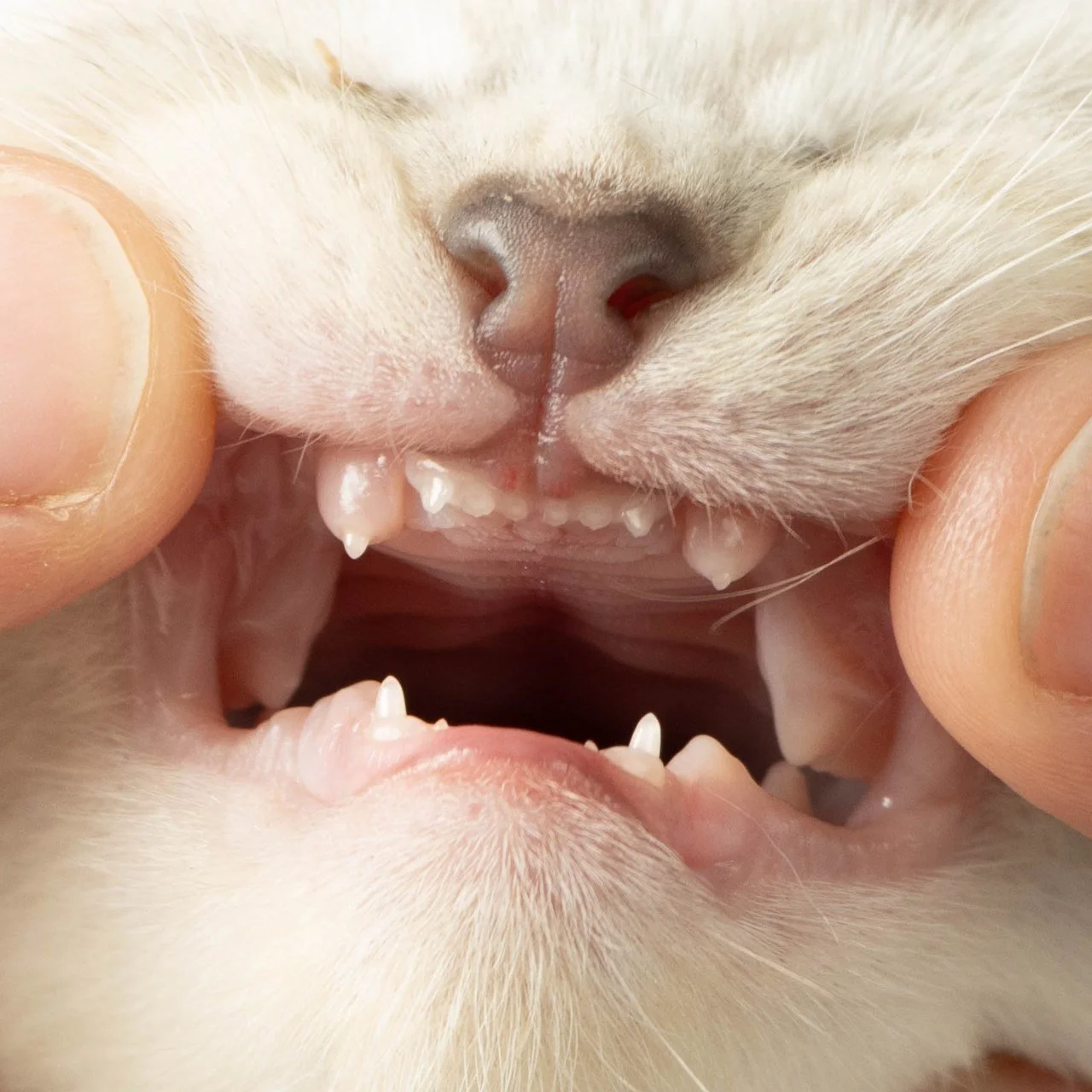
At 4 weeks, the canine teeth (four fangs) are emerging next to the incisors. No teeth are present at the back.
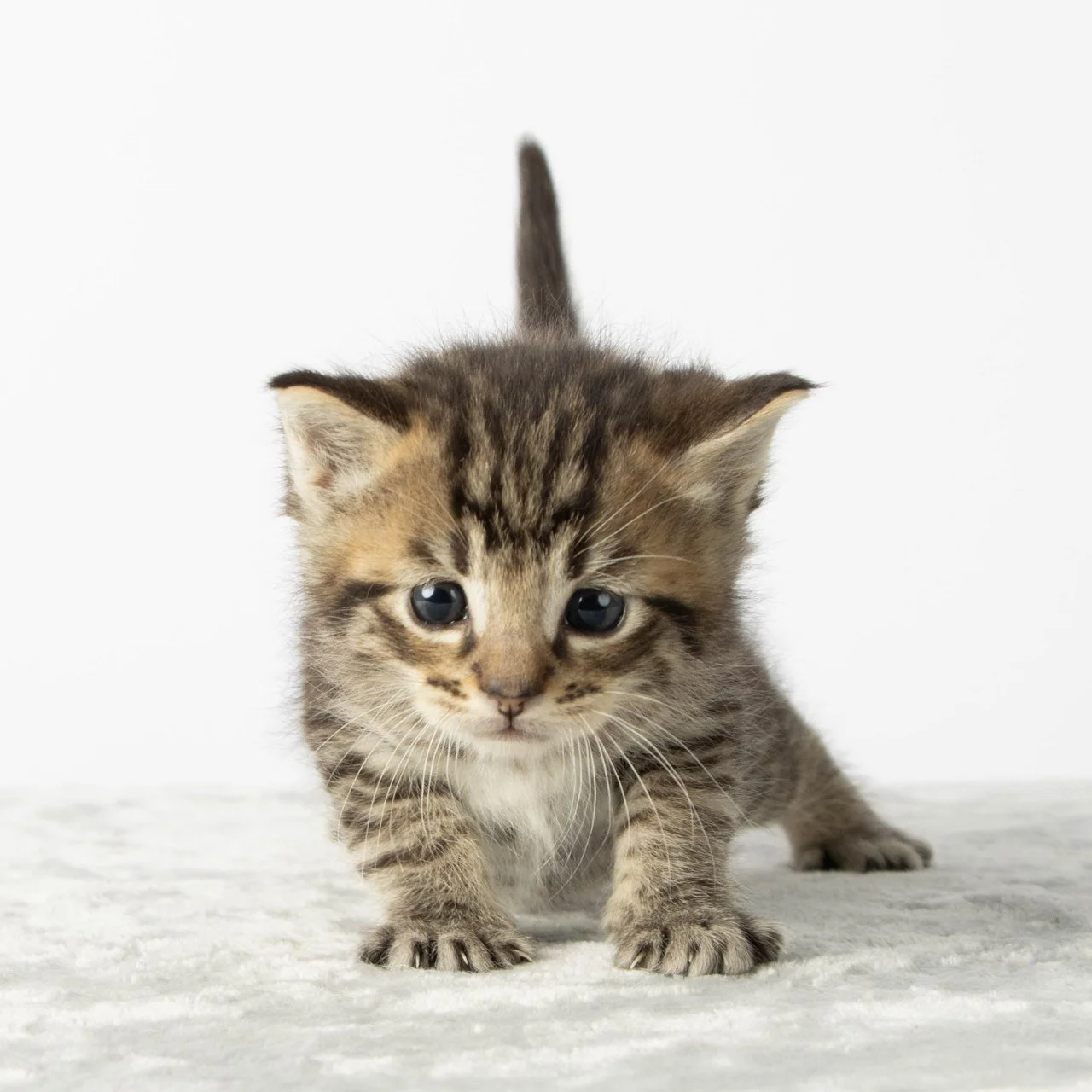
4-5 week old kittens have pointy ears, and bellies that are lifted off the ground as they walk.
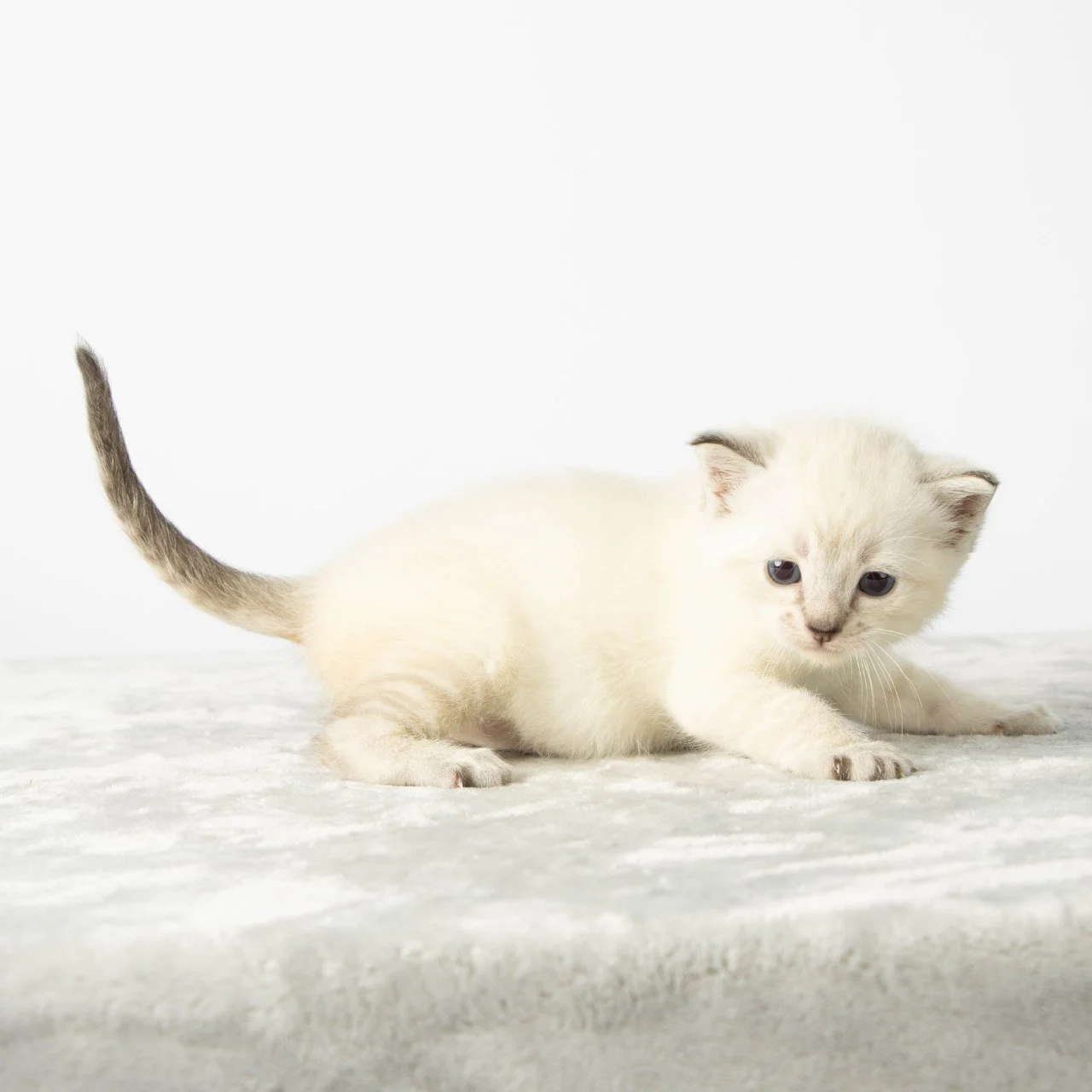
4-5 week old kittens have long tails that raise behind them. They make clumsy movements as they learn new skills.
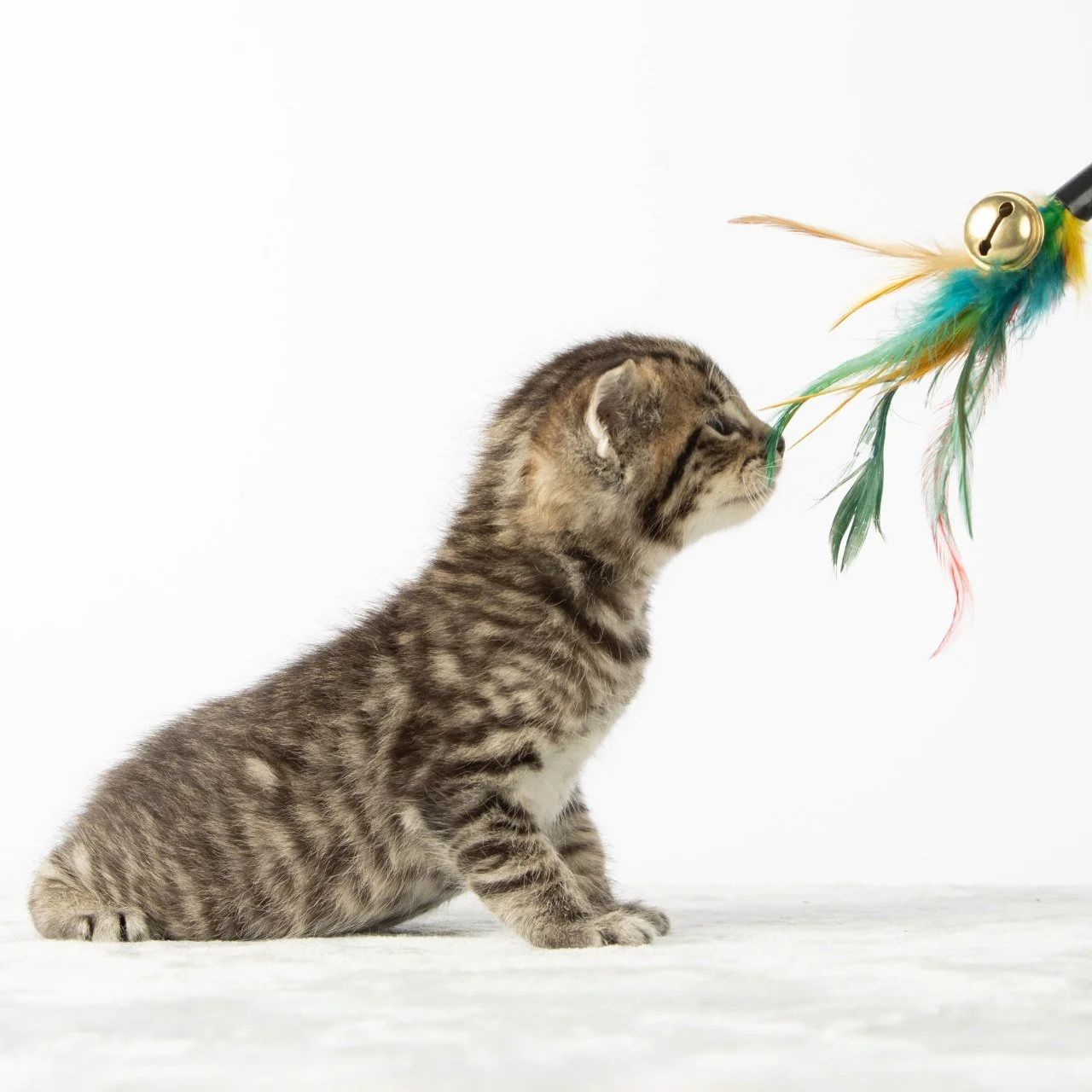
Kittens become curious about exploring toys at 4-5 weeks, but don’t quite know what to do with them…yet!
Week 4-5 Developmental Attributes
Stool and Urine:
Kittens are typically beginning to use the litter box by this age
They urinate every few hours and typically defecate about once per day
Stool should be solid and mustard yellow
Sleep:
Kittens this age still sleep for much of the day but have wake periods in which they are exploring and playful
Movement:
Walking steadily with their belly off the ground
Beginning to gently bat at objects
Not yet running or climbing well
Grooming:
Starting to groom themselves and littermates much more regularly
Body temperature:
99–101°F (37.2-38.3°C)
Week 4-5 Physical Attributes
Eyes:
Blue irises
Vision has significantly improved; can focus on and track objects and see from several feet away
Eye-paw coordination is developing
Ears:
Ears fully upright and responsive
Ears are pointy and look more like an adult cat’s ear shape
Teeth:
Incisors (tiny teeth at the front of the mouth) fully present
Canine teeth (four small fangs) erupting
No premolars present
Claws:
Retracted when relaxed
Typical weight:
450-550g
Healthy weight gain:
At least 10-12g per day
Essential Supplies for a 4-5 Week Old Kitten

Blender bottle for mixing
Gram scale for weighing
Mesh playpen or plastic panel playpen
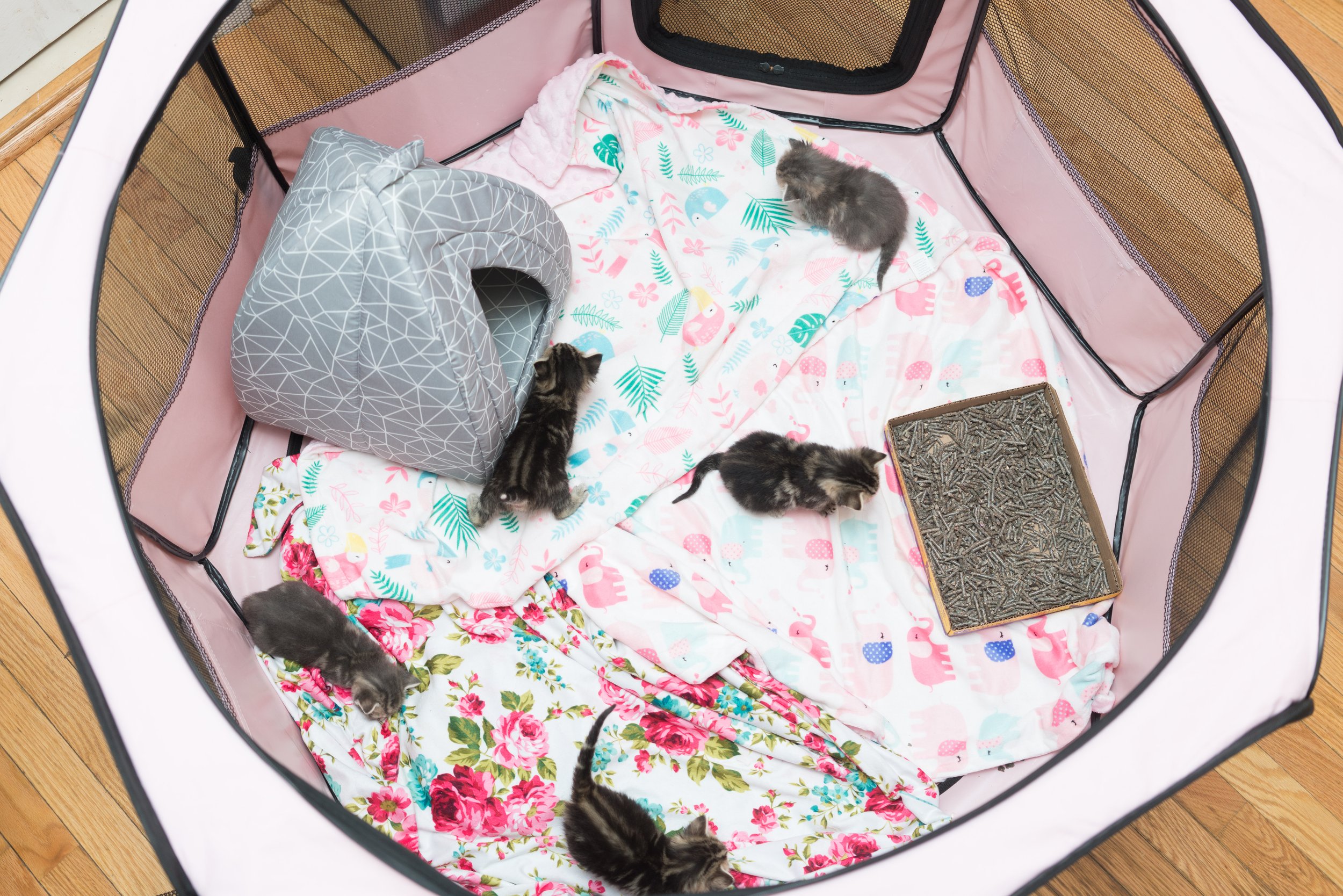
Kittens can be housed in a small playpen that allows enough space to roam and practice playing.
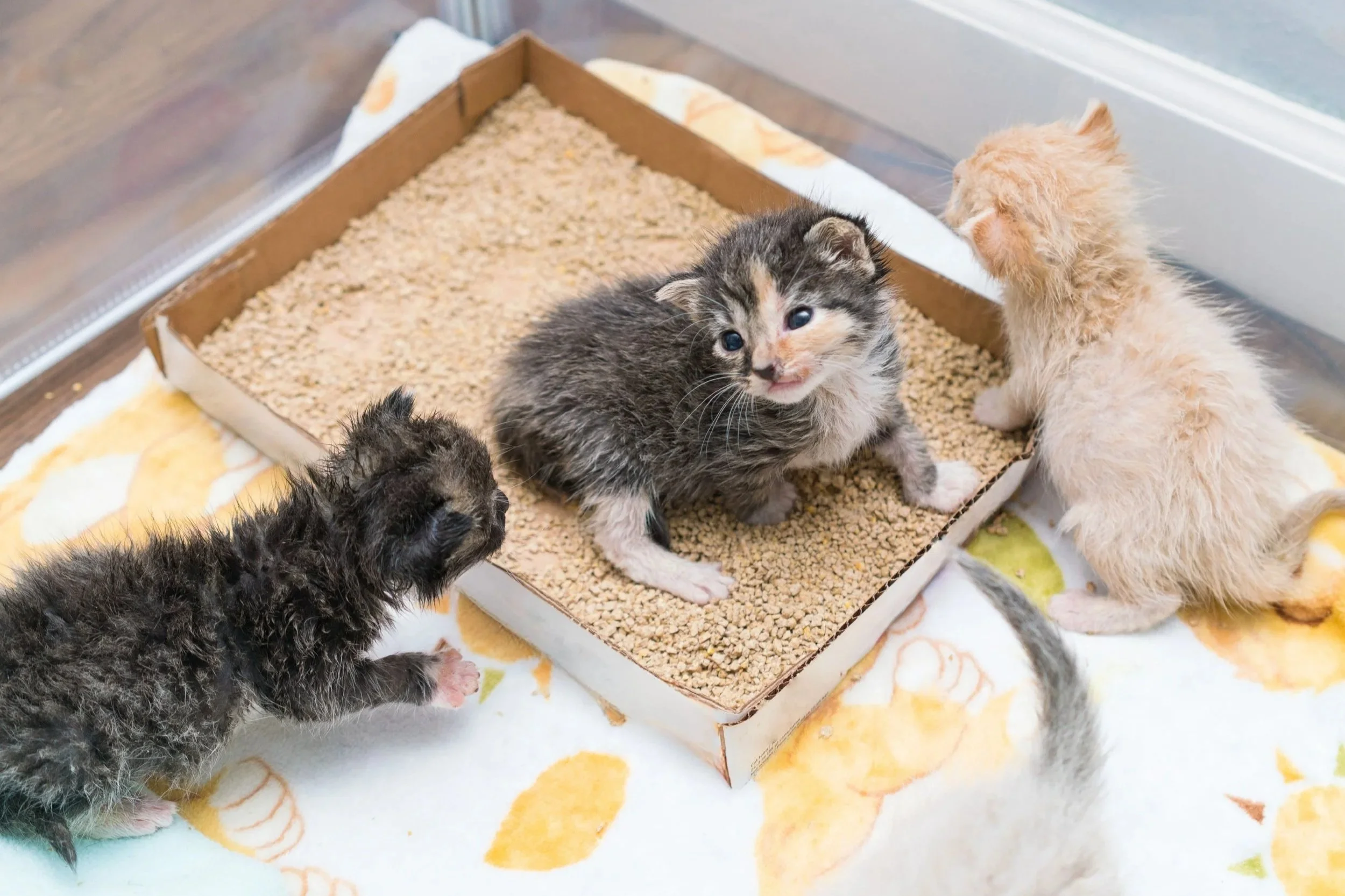
A cardboard cat food tray makes a perfect first litter box for a kitten.
How to Set Up Your Space for a 4-5 Week Old Kitten
By 4–5 weeks of age, kittens are much more mobile and curious. They are walking confidently and beginning to play, explore, and use the litter box. They are still far too small to roam freely in a home, but they benefit from having a safe space where they can move around, play, and continue developing their coordination.
In a playpen:
The ideal setup is a mesh playpen or plastic panel playpen.
Place a kitten-safe heat source in one corner, covered with a soft baby blanket. At this age kittens can usually tolerate normal room temperature, but providing a warm option allows them to rest comfortably if needed.
Provide a shallow litter box (a cardboard cat food tray works well) with kitten-safe litter.
In a bathroom:
A small bathroom can be appropriate for kittens this age, but be careful to ensure it is kitten-proofed. Keep the toilet lid shut and tuck in shower curtains so that they cannot be climbed. Ensure cabinets are closed and toxic chemicals are not accessible. Line the floor with blankets as tile can be too cold for kittens. Set up the space with all supplies listed above.
With a mama:
An ideal setup is a nesting box in a closed room free of hazards and other animals.
Keep the space warm and clean.
Ensure the mother has easy access to fresh food, water, and a litter box nearby. Add a small shallow litter box for the kitten.
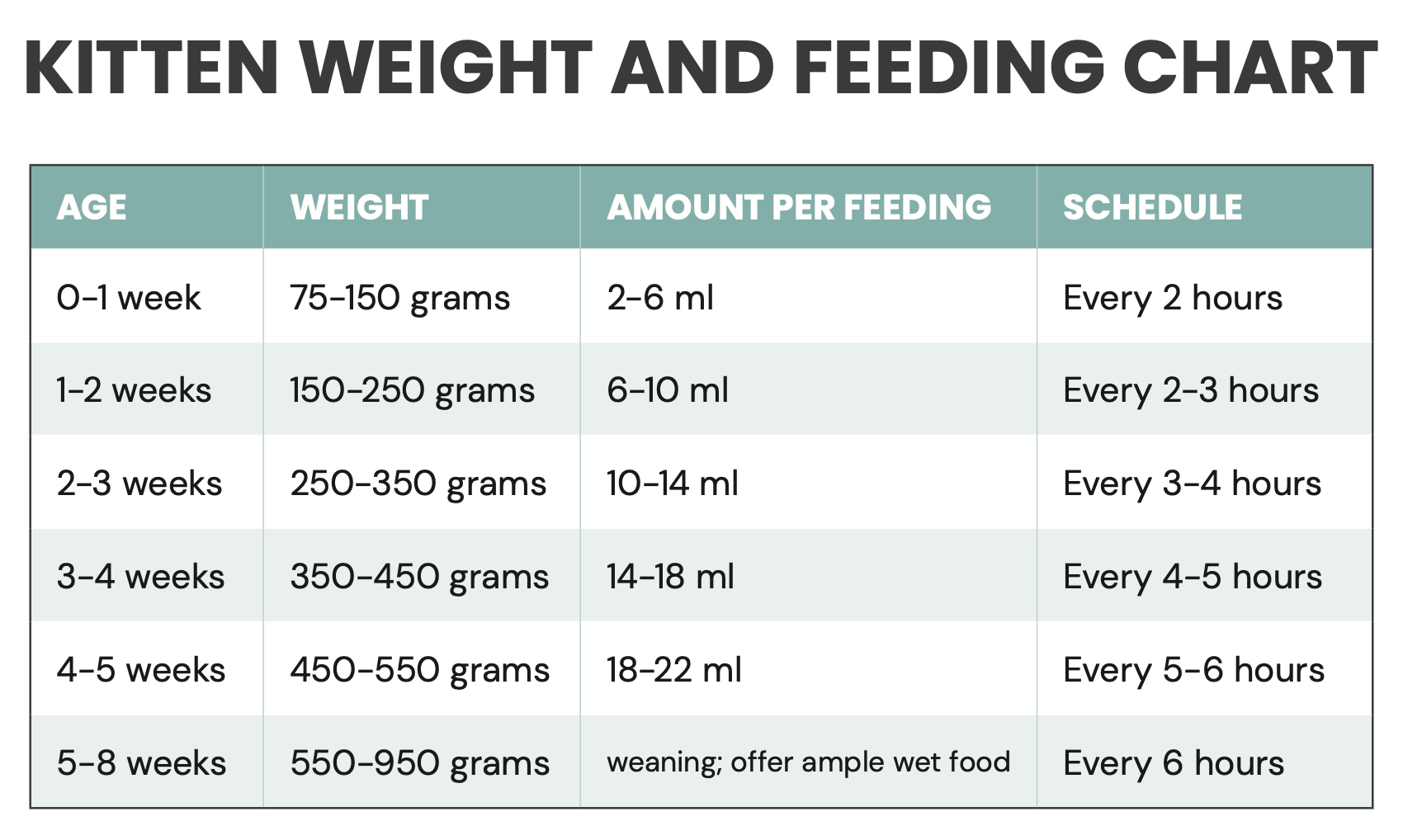
Care Schedule: Every 5-6 Hours
At 4–5 weeks of age, kittens are still developmentally adapted for nursing. In a natural setting, mother cats continue nursing frequently during this stage, and milk remains the primary source of nutrition.
Although some guides suggest beginning the weaning process around this age, Kitten Lady cautions against premature weaning and encourages weaning to start only once premolars are present (around 5 weeks.) At 4-5 weeks, their motor skills are still developing, and they often lack the oral structures, coordination, and digestive enzymes needed to reliably consume and process solid food. For these reasons, it is generally best to continue bottle feeding kitten formula (or nursing with mom) as the kitten’s primary nutrition during this stage.
Stimulation is no longer necessary at this age; kittens are reliably learning to use the litter box.
Most kittens this age will eat about 18-22 ml of formula per feeding, typically every 4-5 hours. These regular feedings keep the kitten hydrated, fuel their high metabolism, and ensure healthy development.
Care Routine for a 4-5 Week Old Kitten
Wash your hands or put on clean gloves.
Neonatal kittens have immature immune systems and should be handled with clean hands.
Bottle feed the kitten.
Allow the kitten to bottle feed at her own pace.
Weigh the kitten.
Record the weight in grams, along with the time of feeding. Healthy kittens should gain weight every day.
Clean the kitten.
Use a baby wipe or warm cloth to gently clean the kitten’s face and bottom if needed.
Return the kitten to her bed or hut.
Ensure the kitten is placed near the warm zone. At this age, it’s normal if they prefer to play for a bit rather than to fall back asleep.
Set an alarm for the next feeding in 5-6 hours.
Young kittens require frequent care, so setting alarms helps maintain a consistent feeding schedule.