
how to Stop a Kitten from Biting You
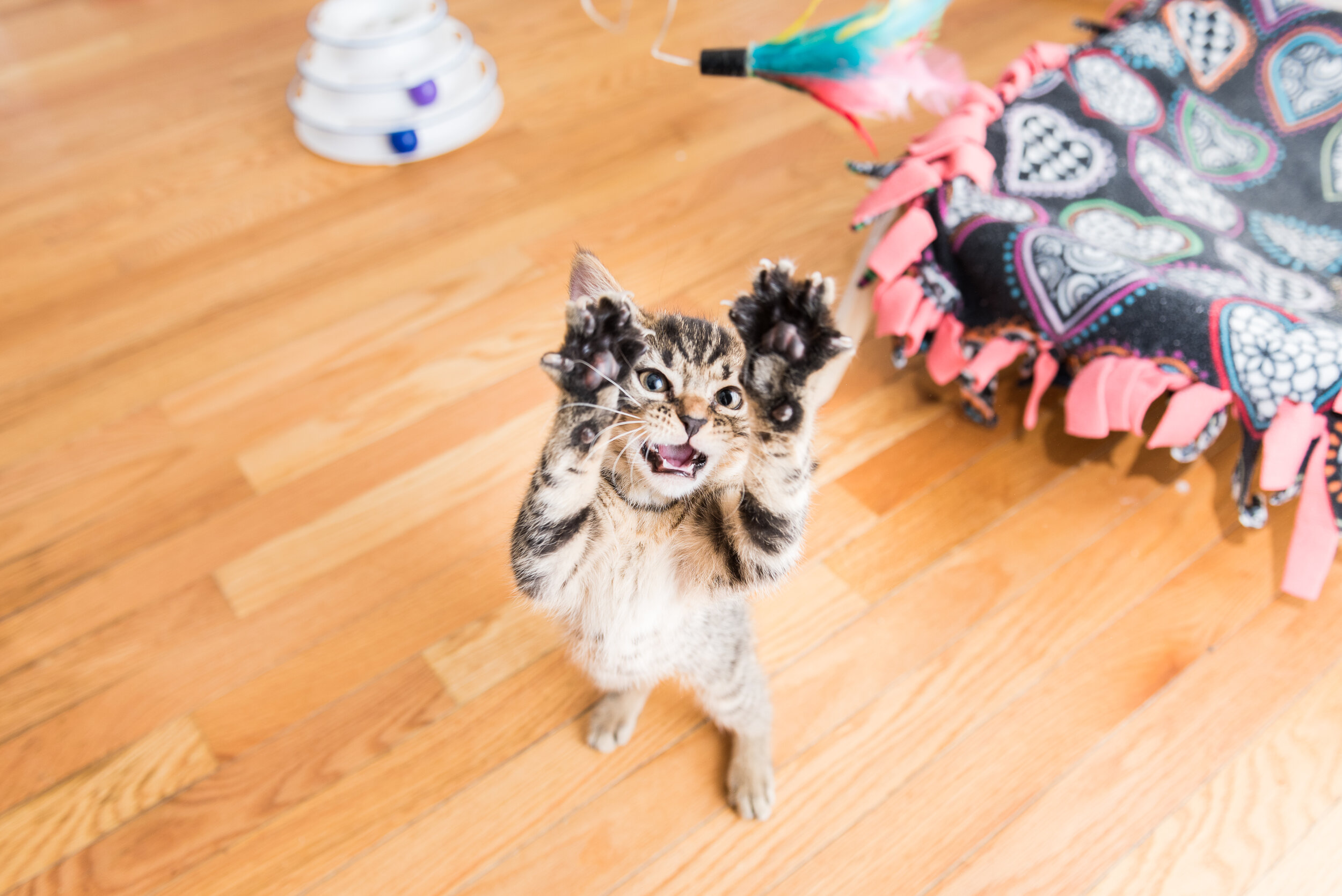
Cats are a predator species, so it’s perfectly normal for kittens to express their natural instinct to attack, chomp, and gnaw. Beginning around 4 weeks of age, kittens will start visually track objects that look like prey, and practice their pounce. And if any part of your body is in motion, it might seem like fair game to these little micropredators!
Biting is a totally acceptable behavior for a kitten, but that doesn’t mean we want them attacking our hands or bare feet. Instead, we want to encourage kittens to practice these behaviors on an appropriate target. Fortunately, kittens are very adaptive and can learn quickly with a little assistance.
Kittens Need to Bite Something
The reason kittens bite us is simple: they want to practice their attack on a moving object. In fact, kittens are biologically wired to attack an object that moves, so it’s important to teach them how to play with toys--not fingers or feet--from a young age. Actively playing multiple times a day before meals is a great way to help kittens develop their motor skills, learn appropriate habits, and get out pent up energy.
The Importance of Interactive Play
If a toy doesn’t move, it isn’t interesting for a kitten who is trying to practice their hunt. Pick out some toys you can actively play with that mimic different kinds of prey: wand toys, crinkle balls, felt mice, and kicker toys are my favorite.
Move the toys in an engaging fashion, encouraging them to stalk, chase, pounce, and catch. Once the kitten catches the toy, let her bite and bunny kick it before moving it again. When the play session has ended, reward the kitten with a treat or meal to simulate the satisfying experience of eating after a kill. By giving them a treat, you’re rewarding their proper hunting behaviors!
Even when you’re not actively engaged in play, it’s a good idea to keep a few kicker toys within arm’s reach. If the kitten bites you, don’t scold them—simply grab a kicker toy and redirect them. It’s not about saying “don’t bite”…it’s about saying “bite this!”
Don’t Encourage Hand Play
As tempting as it is to wiggle your fingers or tickle their bellies, this teaches them that it’s okay to practice their hunt on your skin. Even if you don’t mind the playful attacks, prospective adopters will -- especially as the kittens get bigger. There’s nothing cute about a 12 pound tabby stalking your ankle! Kitten caregivers therefore have a responsibility to help kittens establish good biting behaviors from a young age, as it’s easier to build a good habit than it is to break a bad one. When a kitten attacks your hands or feet when you move, simply disengage and redirect them to a more suitable object.
Quick Tips
Plenty of Stimulation - Make sure your kitten has plush toys, wand toys, crinkle balls, tunnels, and other enrichment items to play with. Offer a variety of toys that mimic different types of prey. You can even make your own toys at home!
Daily Play - Actively play with the kitten multiple times a day using toys you can make wiggle and flutter. Don’t expect the kitten to play all alone! If you never make toys move and entice them to hunt, then the only moving targets the kitten has to practice hunting on are your hands and feet.
Reward Good Behavior - Allow the kitten to catch the toy, then give an opportunity for biting and bunny kicking. Let the kitten know she did a great job by rewarding her after playtime with a treat or meal. This tells the kitten that she’s a great hunter!
Remember to Redirect - Redirect any biting behaviors towards an appropriate target. It’s important that every time you give a kitten a ‘no’, you give them an equal or more attractive ‘yes’. Don’t focus on penalizing a kitten with a “no.” Simply recognize that the kitten is looking for a specific kind of stimulus, and provide them with a bitable alternative. If you do that, your kittens will have their natural urges satisfied—and you’ll be bite free in no time.
One More Thing
Lastly, if the kitten is a solo kitten, you may want to consider getting her a friend. Kittens are happiest and best behaved when they have a friend! Kittens will play hunt with one another, get out their energy together, and even teach each other important biting boundaries. Read more about why kittens do best in pairs!
Watch my video about how to stop kittens from biting you:

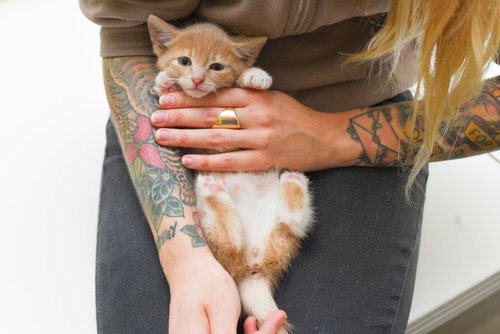
Knowing a kitten's age is the first step to knowing how to care for them and what to anticipate.