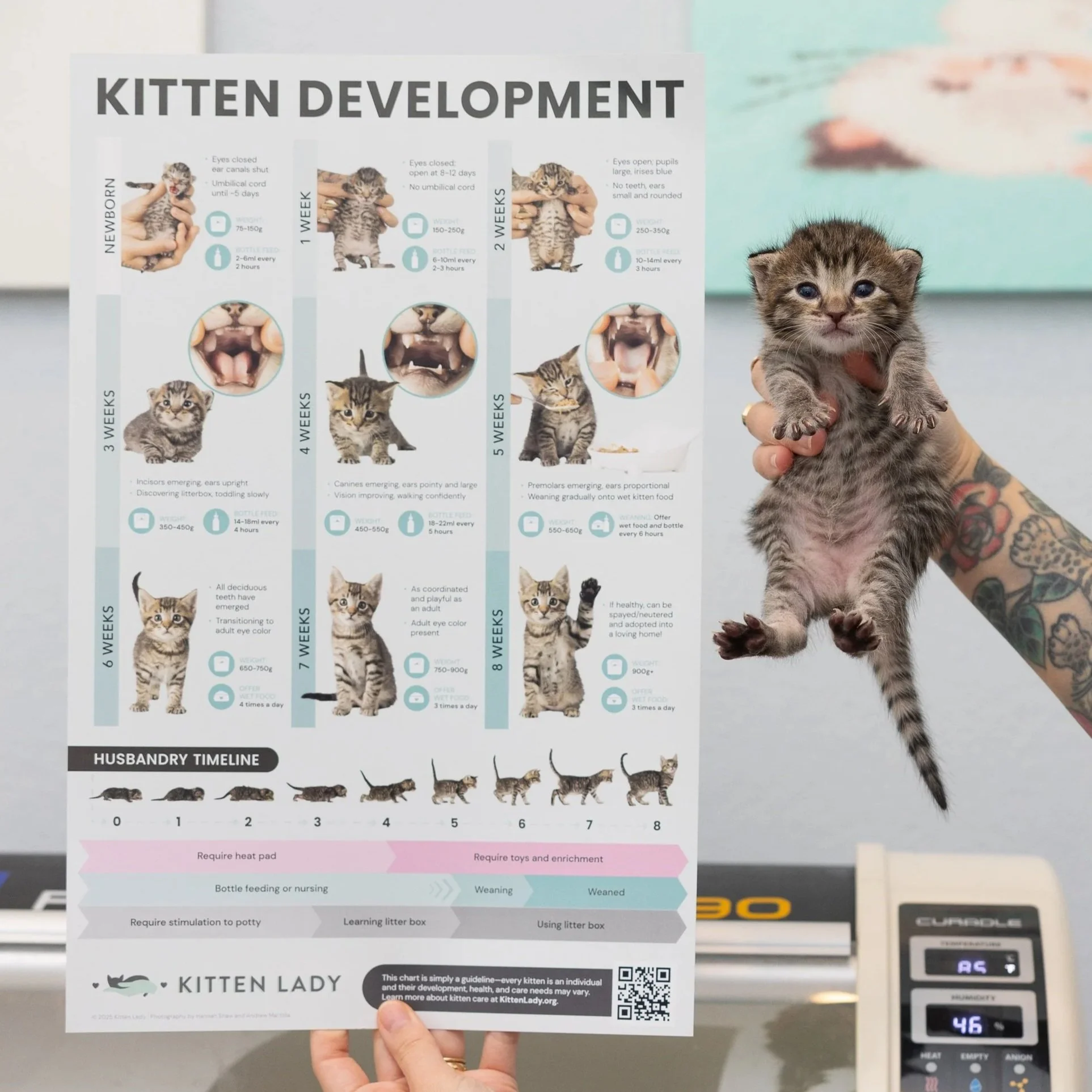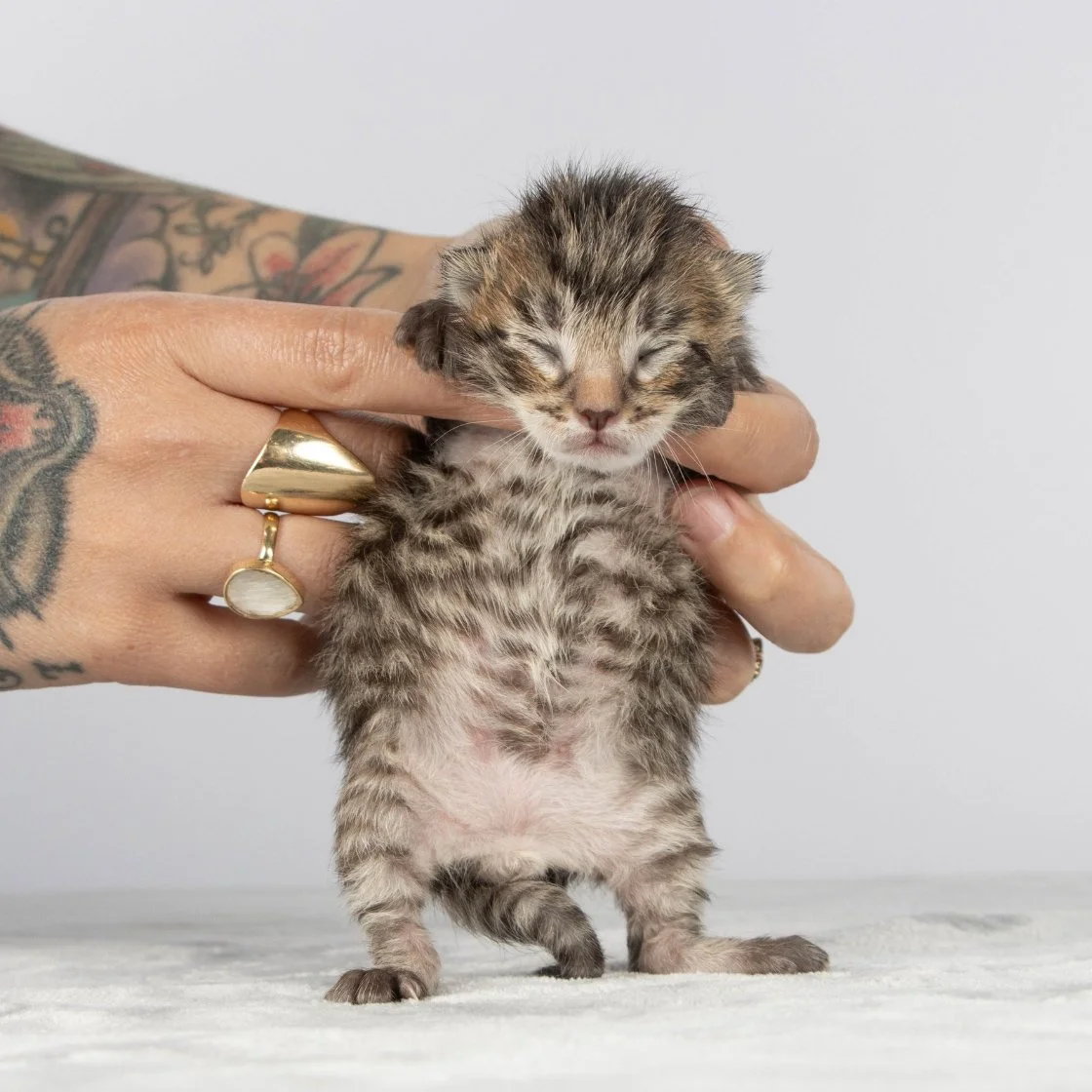
1-2 Weeks Old:
The Eye Opening Stage
The second week of life is a special time when kittens begin taking their first (blurry) peek at the world.
You Should Know:
Kittens are born with closed eyes. Around day 8, moisture appears near the tear duct as the eyes begin to open. The kitten may look a little silly during this stage, but the eyes should be left to open naturally; the full process may take 1 to 3 days.
Once their eyes are open, their vision will be very poor. It is normal for kittens this age not to make eye contact or visually track objects.
Because their immune systems are still immature, kittens this age should be handled only with clean hands and protected from other animals and potential sources of infection.
Whenever possible, kittens should stay with their mother. If you find a kitten outdoors, make every effort to keep the family together.
If a kitten is truly orphaned, they will need intensive care: constant warmth, help urinating and defecating, and frequent bottle feedings around the clock.
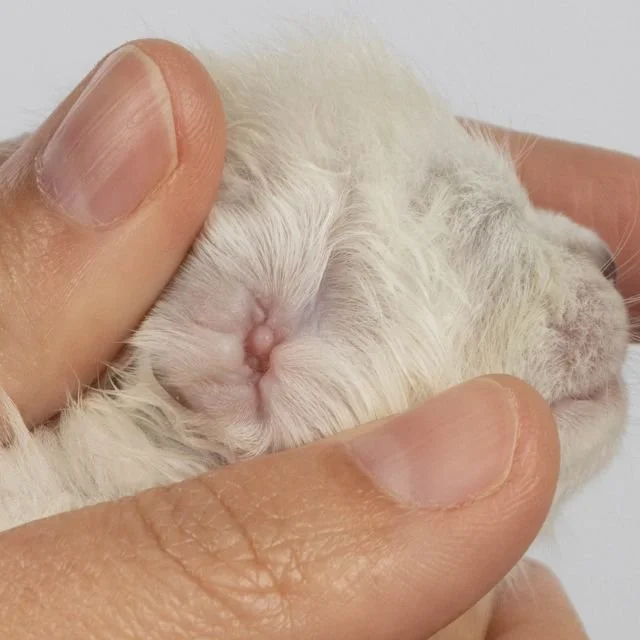
Kittens’ ear canals are shut at birth, but open slowly around day 10.
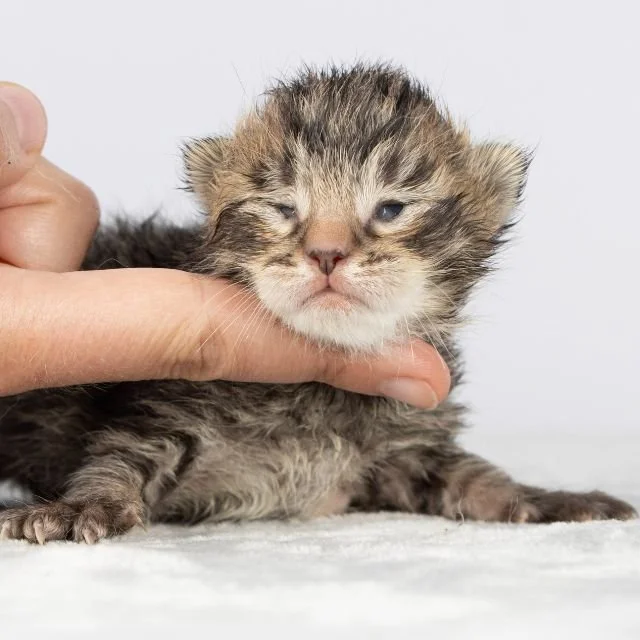
Kittens’ eyes are shut at birth, but open slowly around 8-12 days.
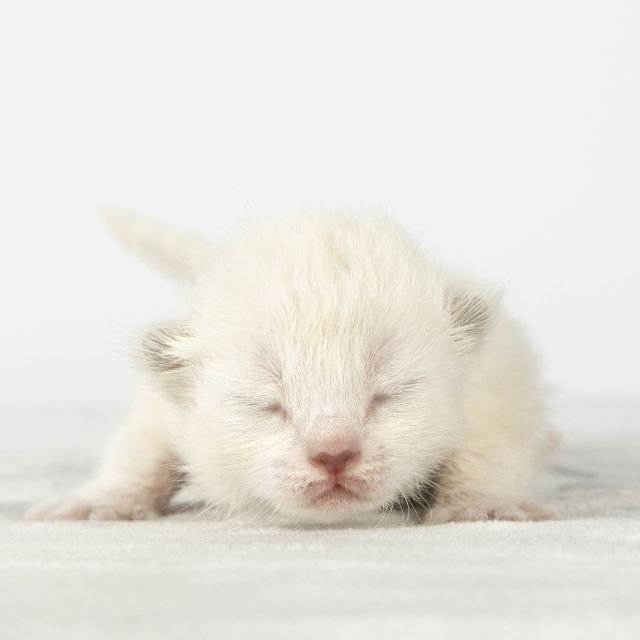
At 1-2 weeks, kittens gently lift their heads for brief periods.

Once open, kittens’ eyes have large pupils that cause them to look very dark.
Week 1-2 Developmental Attributes
Stool:
Kittens cannot defecate on their own and must be stimulated at every feeding.
They typically defecate about once per day.
Stool should be solid and mustard yellow.
Urine:
Kittens cannot urinate on their own and must be stimulated at every feeding.
They should urinate each time they are stimulated.
Sleep:
Kittens this age sleep almost constantly when not nursing.
Movement:
Neck muscles still fairly weak; head may lift for brief periods but still appear heavy.
Kittens crawl or wiggle slowly and cannot yet stand or walk. They may begin slightly pushing up on their limbs.
Body temperature:
97–99°F (36–37°C)
Week 1-2 Physical Attributes
Eyes:
Day 7: closed
Day ~8-12: opening
Day 13-14: open with large pupils and poor vision
Ears:
Day ~7-10: ear canals slowly opening
Day ~10-14: ear canals open
Teeth:
No teeth present
Umbilical cord:
Umbilical cord is absent
Claws:
Often still extended even at rest
Typical weight:
150-250g
Healthy weight gain:
At least 7g per day
Essential Supplies for a 0-1 Week Old Kitten

Blender bottle for mixing
Gram scale for weighing
Cozy hut and/or stuffed animal
Plastic storage pin with no lid
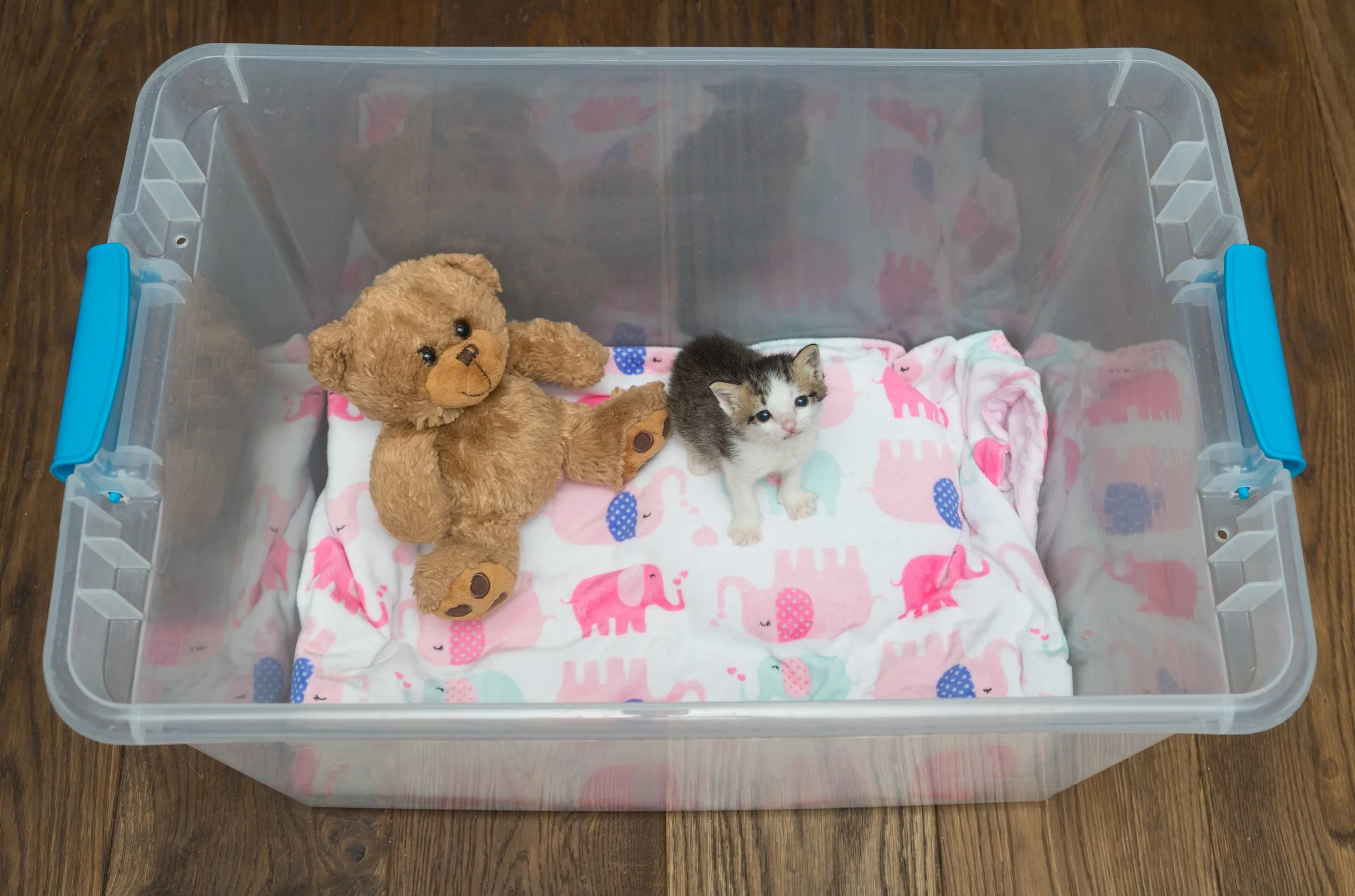
Kittens can be housed in a storage bin with a heated disk, blanket and stuffed toy.
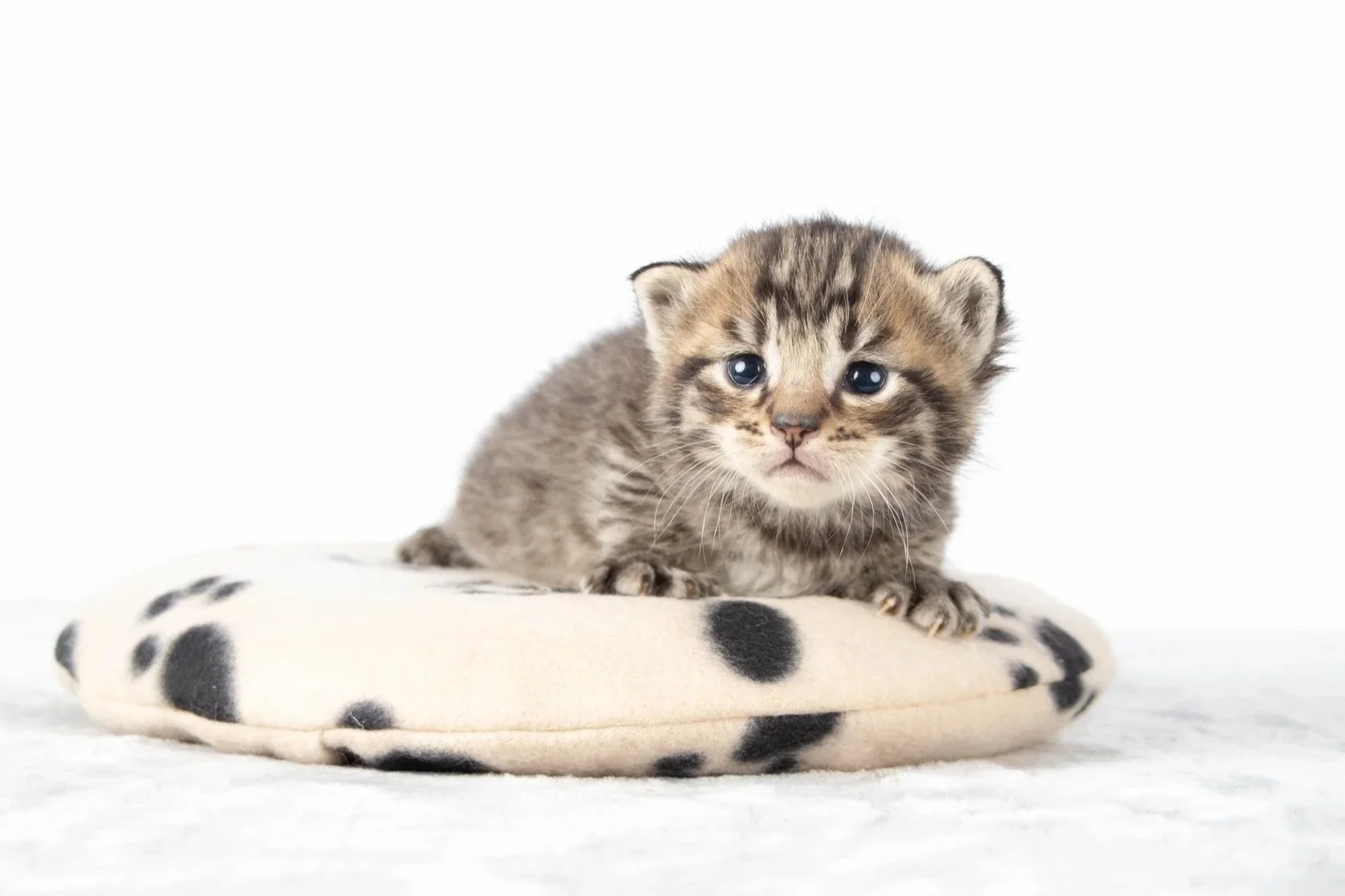
A heated disk is an essential supply for a newborn kitten.
How to Set Up Your Space for a 1-2 Week Old Kitten
Baby kittens need a small, safe, and warm environment. Always keep neonatal kittens quarantined from unfamiliar animals to reduce the risk of infectious disease.
In a bin:
Use a plastic storage bin without a lid to allow airflow.
Place a kitten-safe heat source under one side of the bin, creating a warm zone and a cooler zone so the kitten can move if it becomes too warm. Make sure the heat source remains comfortably warm at all times, but never hot.
Cover the entire base with a soft baby blanket.
Add a small cozy hut or stuffed animal to provide comfort and something to lean against.
In an incubator:
Use a kitten-safe incubator with a soft baby blanket. Never use a cheap incubator.
Provide a cozy hut or stuffed animal so the kitten has something to snuggle against.
Set the incubator to approximately 88-90°F (32°C) during the first week of life.
Maintain around 60% humidity.
With a mama:
Use a nesting box or small enclosed bed lined with a baby blanket or soft bedding.
Keep the space warm and clean.
Ensure the mother has easy access to fresh food, water, and a litter box nearby.
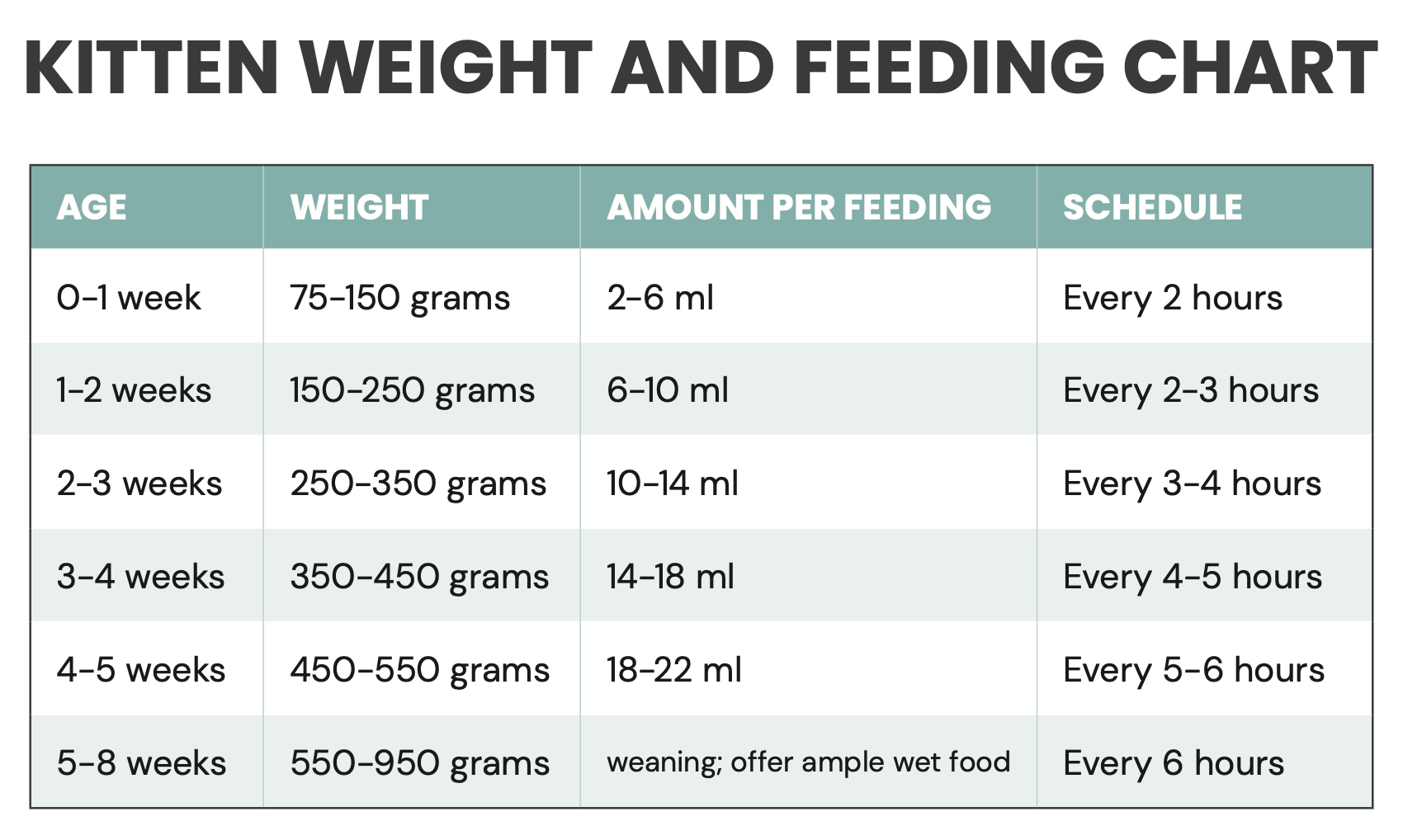
Care Schedule: Every 2-3 Hours
At 1-2 week of age, kittens eat frequent meals because their stomach capacity is very small and their bodies are growing quickly. In a natural setting, a mother cat would nurse her kittens throughout the day and night, providing almost constant opportunities to nurse.
In addition to the need for frequent feedings, kittens lack the neuromuscular signaling needed to eliminate waste on their own. After a few hours their bladder will be quite full, and you will need to stimulate them to go to the bathroom, which their mother would normally do.
Most kittens this age will eat about 6-10 ml of formula per feeding, typically every 2-3 hours. These regular feedings keep the kitten hydrated, fuel their high metabolism, and ensure steady weight gain.
Care Routine for a 1-2 Week Old Kitten
Wash your hands or put on clean gloves.
Neonatal kittens have immature immune systems and should be handled with clean hands.
Stimulate the kitten to go to the bathroom.
Use a clean tissue to gently rub the genital area until the kitten urinates and, if needed, defecates.
Bottle feed the kitten.
Use a kitten bottle and allow them to nurse at their own pace.
Weigh the kitten.
Record the weight in grams, along with the time of feeding. Healthy kittens should gain weight every day.
Clean the kitten.
Use a baby wipe or warm cloth to gently clean the kitten’s face and bottom if needed.
Return the kitten to the warm nest.
Ensure the kitten is placed in the warm zone of the nesting area.
Set an alarm for the next feeding in 2-3 hours.
Baby kittens require around-the-clock care, so setting alarms helps maintain a consistent feeding schedule.