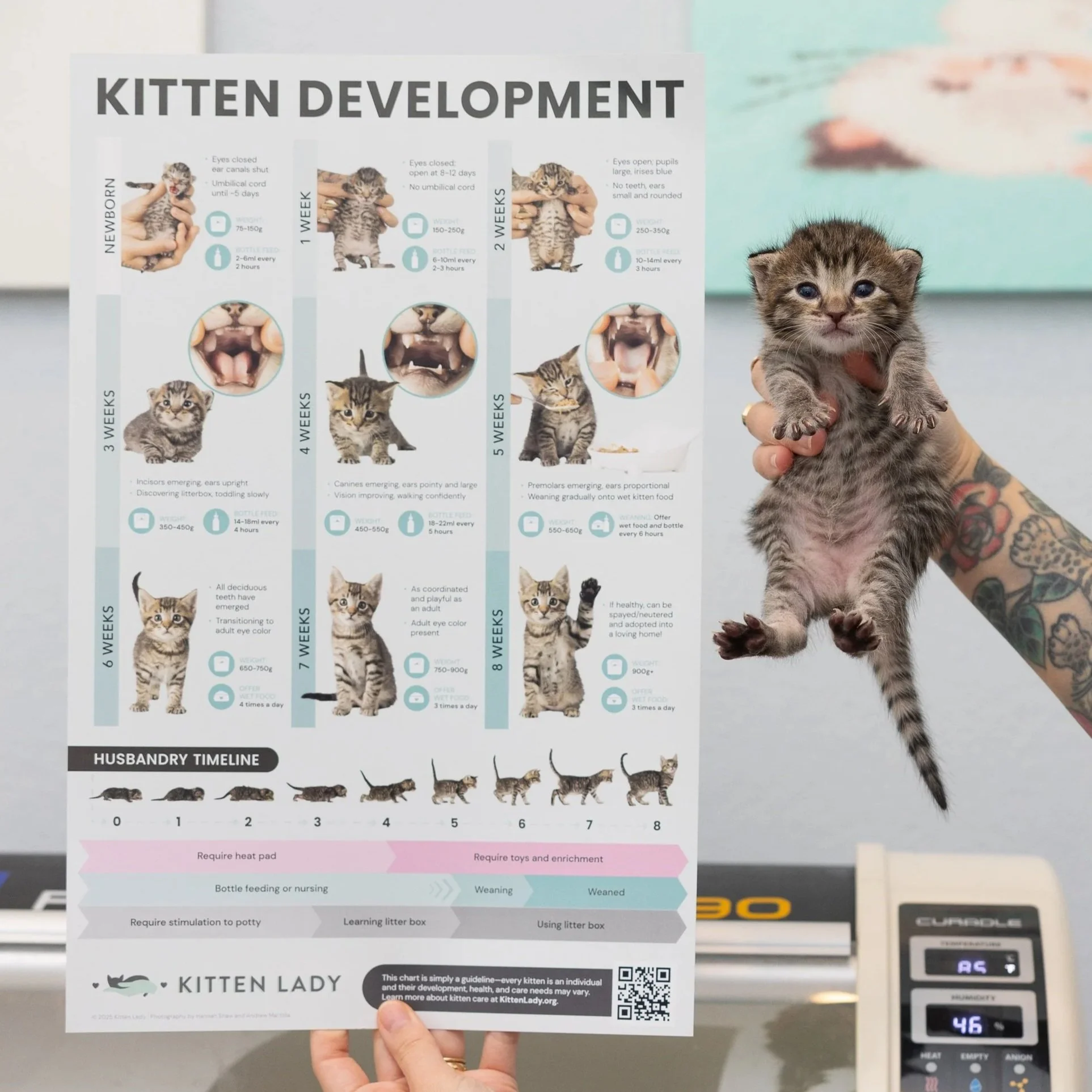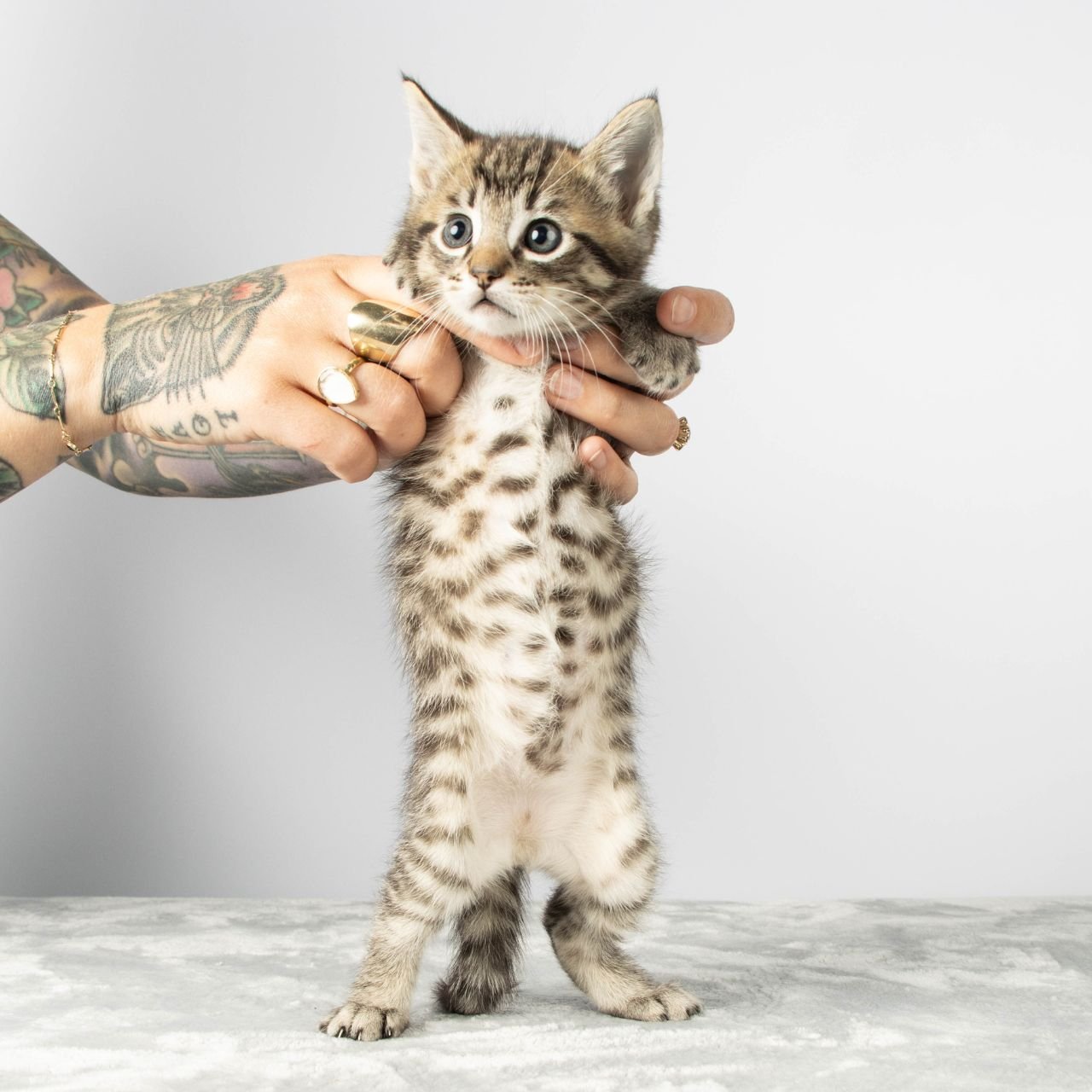
7-8 Weeks Old:
The Socialization Stage
7-8 week old kittens are just days from adoption age, and learning to be independent, social little cats.
You Should Know:
At this age, kittens are fully weaned and eating solid food independently. Their primary nutrition should come from high-quality wet kitten food, with access to dry kitten food and fresh water. Consistent, frequent meals support their rapid growth and high energy needs.
7–8 week old kittens are highly active, coordinated, and confident. They run, jump, climb, and engage in complex play with littermates, continuing to develop strength, balance, and important social skills such as bite inhibition and communication. Regular positive interaction with people is especially important at this age to support socialization and confidence.
Because their immune systems are still developing, kittens this age should continue to be protected from unfamiliar animals and potential sources of infection. According to Association of Shelter Veterinarians guidelines, kittens should have received their first FVRCP vaccine and will typically be due for booster vaccinations every 2–4 weeks until around 16–20 weeks of age.
At 7–8 weeks, kittens are independent from their mother and are nearly ready for adoption. This is a critical window for socialization, and continued exposure to gentle handling, normal household experiences, and enrichment will help them grow into well-adjusted adult cats. If you find a kitten outdoors and are willing to foster them, this age is an ideal time to take them in. Don’t forget to help the mama cat access sterilization to prevent future births.

By 7 weeks, all of the deciduous teeth are present and appear long and pointy.
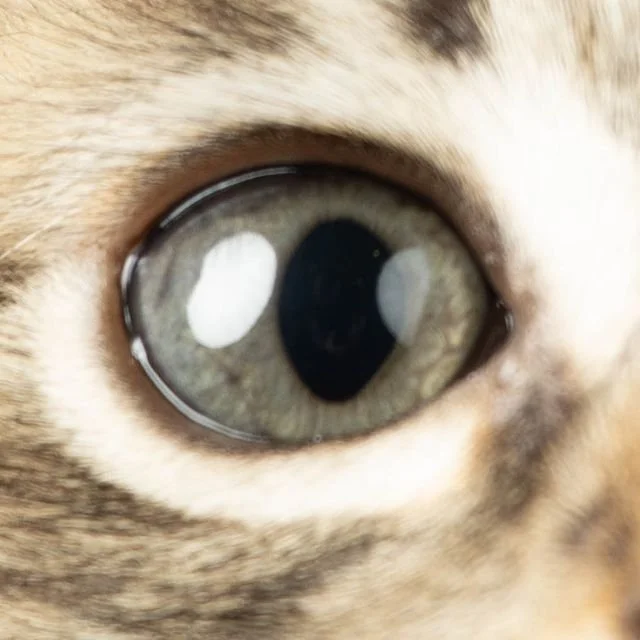
Around 7-8 weeks, the eyes will have fully transitioned away from blue and to their adult color—typically green or yellow.

If a kittens’ adult eye color is blue, it will now be present as an icy, light blue—not the darker, denim blue of a baby kitten.

7-8 week old kittens are highly energetic and eager to play, chase, climb, and hunt!
Week 7-8 Developmental Attributes
Stool and Urine:
Kittens are reliably using the litter box by this age
They urinate every few hours and typically defecate about once per day
Stool should be solid and brown
Sleep:
Kittens this age have long, active wake periods filled with play and exploration
Movement:
Running with good coordination
Climbing and jumping off mid-sized surfaces
Play behavior including chasing, pouncing, wrestling, and batting at toys
Grooming:
Regularly grooming themselves and their littermates
Grooming is coordinated and purposeful
Body temperature:
100–102°F (37.8–38.9°C)
Week 7-8 Physical Attributes
Eyes:
Adult eye color is present
Vision is very well developed; can track movement and see clearly at a distance
Eye-paw coordination is very strong
Ears:
Ears fully upright and highly responsive
Ears are similar in shape and proportion to those of an adult cat
Teeth:
Deciduous incisors, canines and premolars are all fully present and long/pointy
Claws:
Retracted when relaxed
Typical weight:
750-950g
Healthy weight gain:
At least 10-15g per day
Essential Supplies for a 7-8 Week Old Kitten

Wet kitten food
Dry kitten food
Shallow food dishes
Gram scale for weighing
Mesh playpen or plastic panel playpen
Toys and enrichment
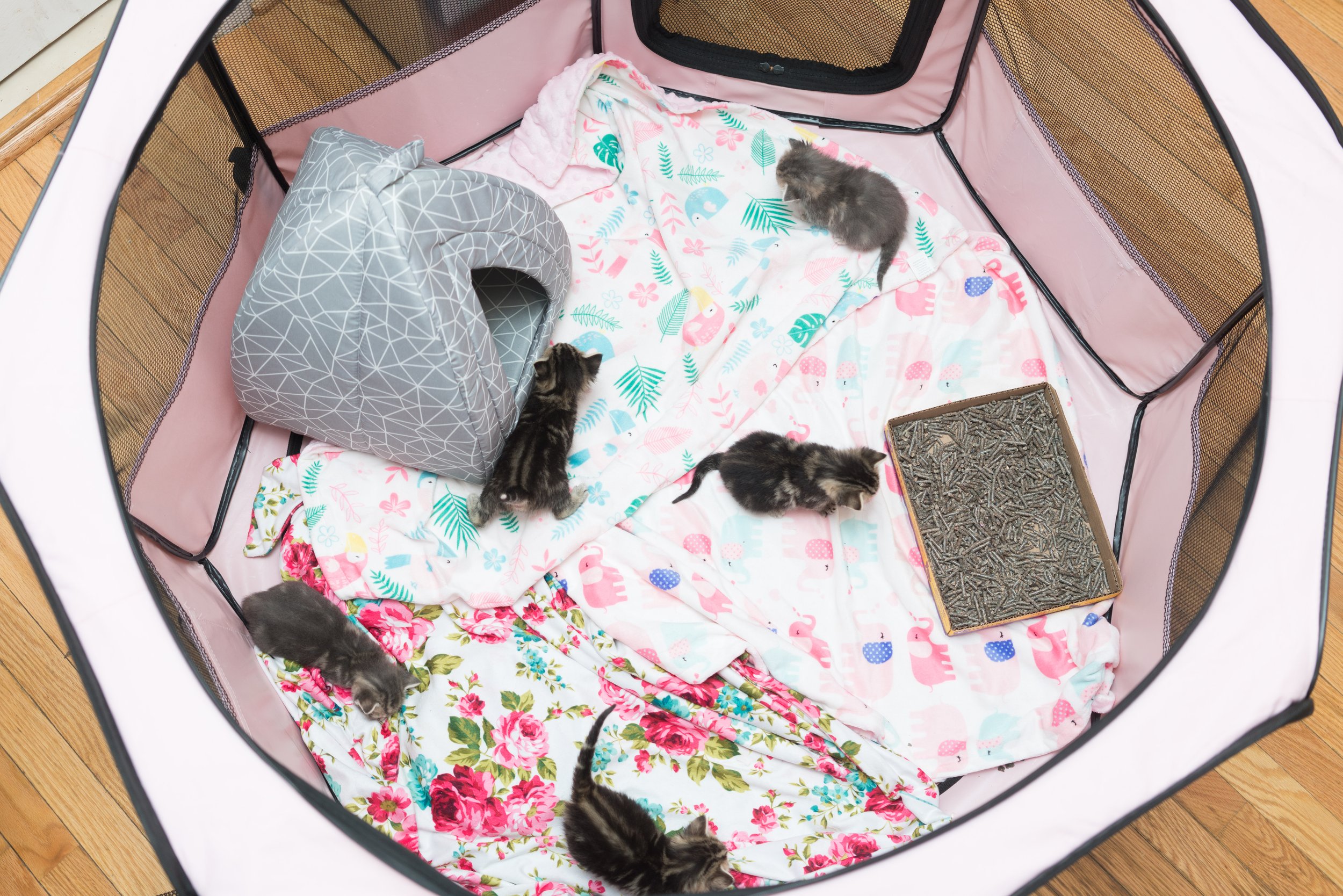
Kittens can be housed in a small playpen that allows enough space to roam and practice playing.
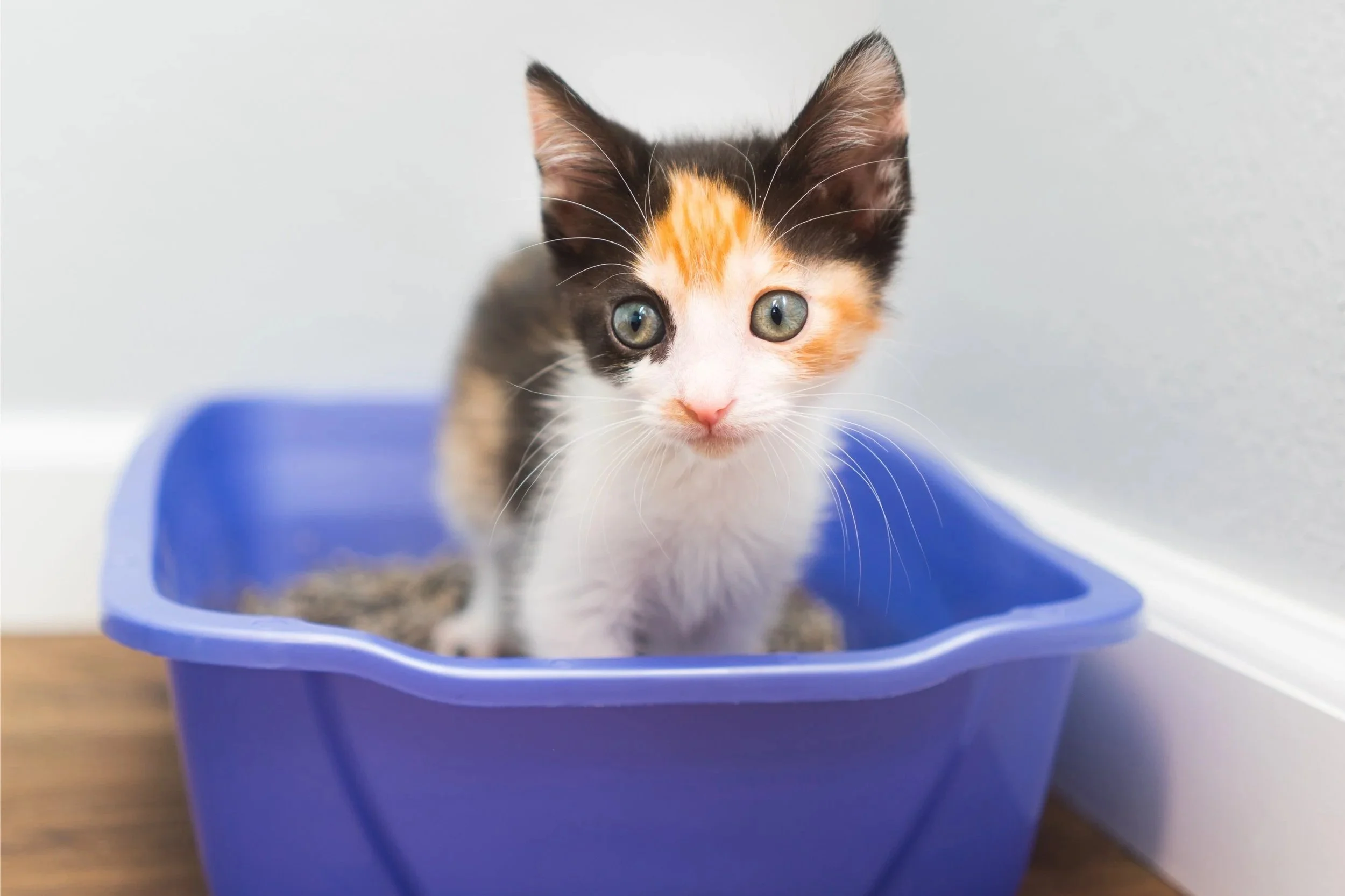
Use a shallow litter box while kittens are still small and growing.
How to Set Up Your Space for a 7-8 Week Old Kitten
By 7-8 weeks of age, kittens are highly mobile, coordinated, and curious. They are running, jumping, climbing, and using the litter box consistently. If they are healthy and have completed a 2 week quarantine, they can begin to explore kitten-proofed rooms; otherwise a mesh playpen or bathroom offer an ideal setup.
In a bathroom or guest room:
If the kitten is newly rescued from the street, it’s recommended to contain them in a secure, easily disinfectable space for a 2 week quarantine while monitoring their health. If a quarantine period has passed with you or with an adoption agency, then it’s safe to allow the kitten to roam a larger space like a guest room at this age.
A bathroom can be appropriate for kittens this age, but be careful to ensure it is kitten-proofed. Keep the toilet lid shut and tuck in shower curtains so that they cannot be climbed. Ensure cabinets are closed and toxic chemicals are not accessible. Line the floor with blankets as tile can be too cold for kittens. Set up the space with all supplies listed above.
If using a guest room, ensure that the room is kitten-proofed. Remove small objects that can be choking hazards and hang curtain strings away from reach. Block areas where the kitten can get stuck or lost. Practice good judgment to ensure the area is safe.
Kittens can maintain their body temperature well at this age; no heat source is necessary unless the kitten is sick or the room is cold.
Provide a soft baby blanket, a cozy hut and/or a soft bed.
Provide a shallow litter box with kitten-safe litter.
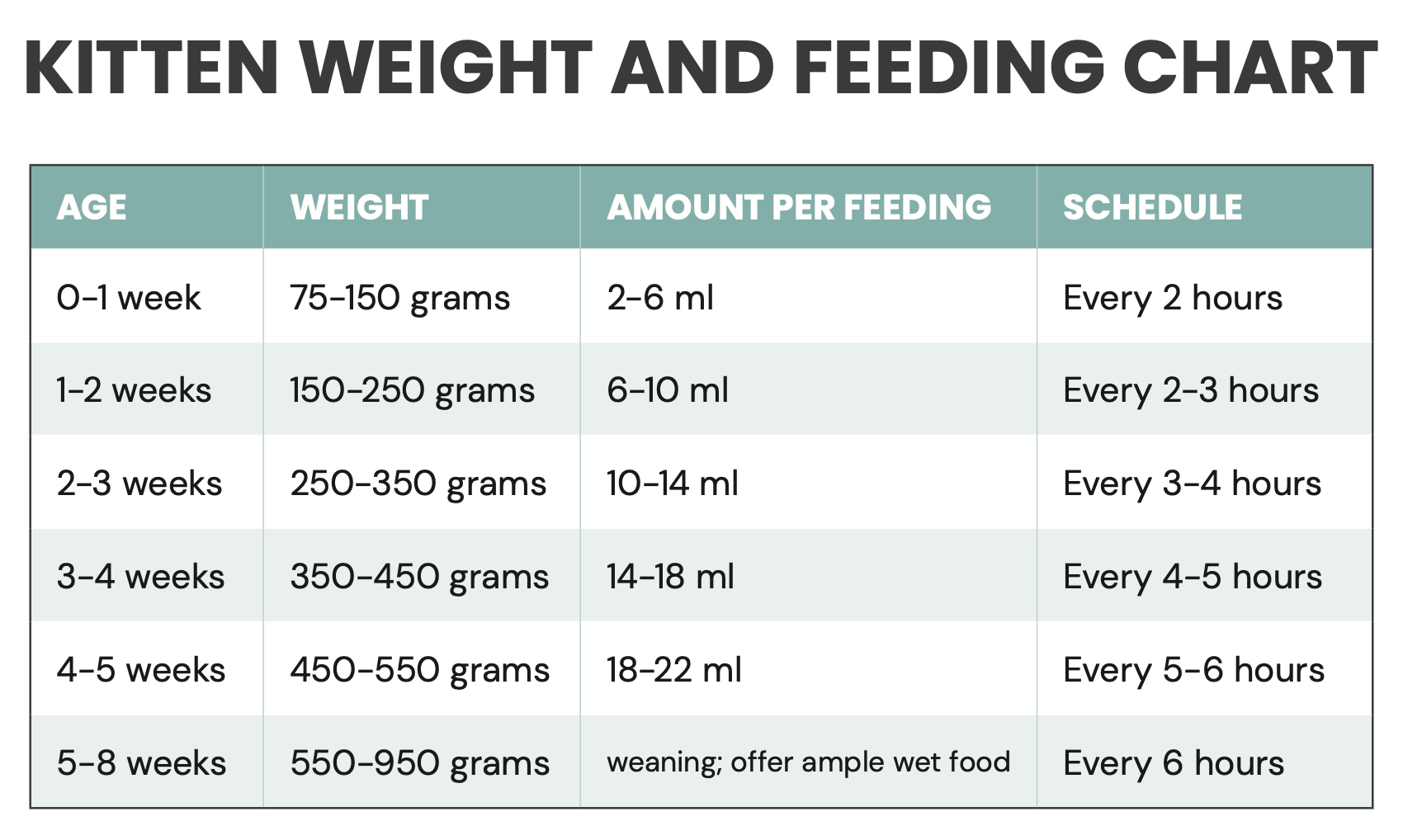
Care Schedule: Every 6 Hours
At 7-8 weeks of age, kittens are weaned and eating solid food as their primary diet. However, some kittens may still need support to ensure they are eating enough and maintaining healthy weight gain. Sit with the kittens during feeding time to ensure they are actively eating, not just meat nursing. Continue weighing kittens regularly to confirm steady weight gain.
Feed 4 times a day, every 6 hours. Remove uneaten wet food after about an hour to reduce the risk of bacterial exposure. Wet kitten food should be the primary diet, though kitten kibble can also be freely offered so kittens become familiar with both textures.
Fresh water should always be available so kittens can drink independently and stay hydrated.
Care Routine for a 7-8 Week Old Kitten
Wash your hands or put on clean gloves, especially if the kitten is new to you.
Young kittens still have immature immune systems and should be handled with clean hands.
Offer wet kitten food.
Place wet food in a shallow dish and sit with the kitten while they explore and eat. Observe whether they are successfully eating or whether they still need assistance with kitten-led weaning.
Weigh the kitten.
Record the weight in grams, along with the time of feeding. Healthy kittens should gain weight every day.
Clean the kitten.
Use a baby wipe or warm cloth to gently clean the kitten’s face if needed.
Place the kitten in the litter box.
Eating may prompt the kitten to need to use the litter box.
Set an alarm for the next feeding in 6 hours.
Young kittens require frequent care, so setting alarms helps maintain a consistent feeding schedule.
Finding a Kitten a Home
If you’re fostering, this is a great age to start thinking about finding an adopter. Once the kitten is 8 weeks old and spayed or neutered, they can go to their forever home! Watch Kitten Lady’s videos to learn tips and tricks for finding your kitten a great adopter.