Kitten Data for Shelters and Rescues
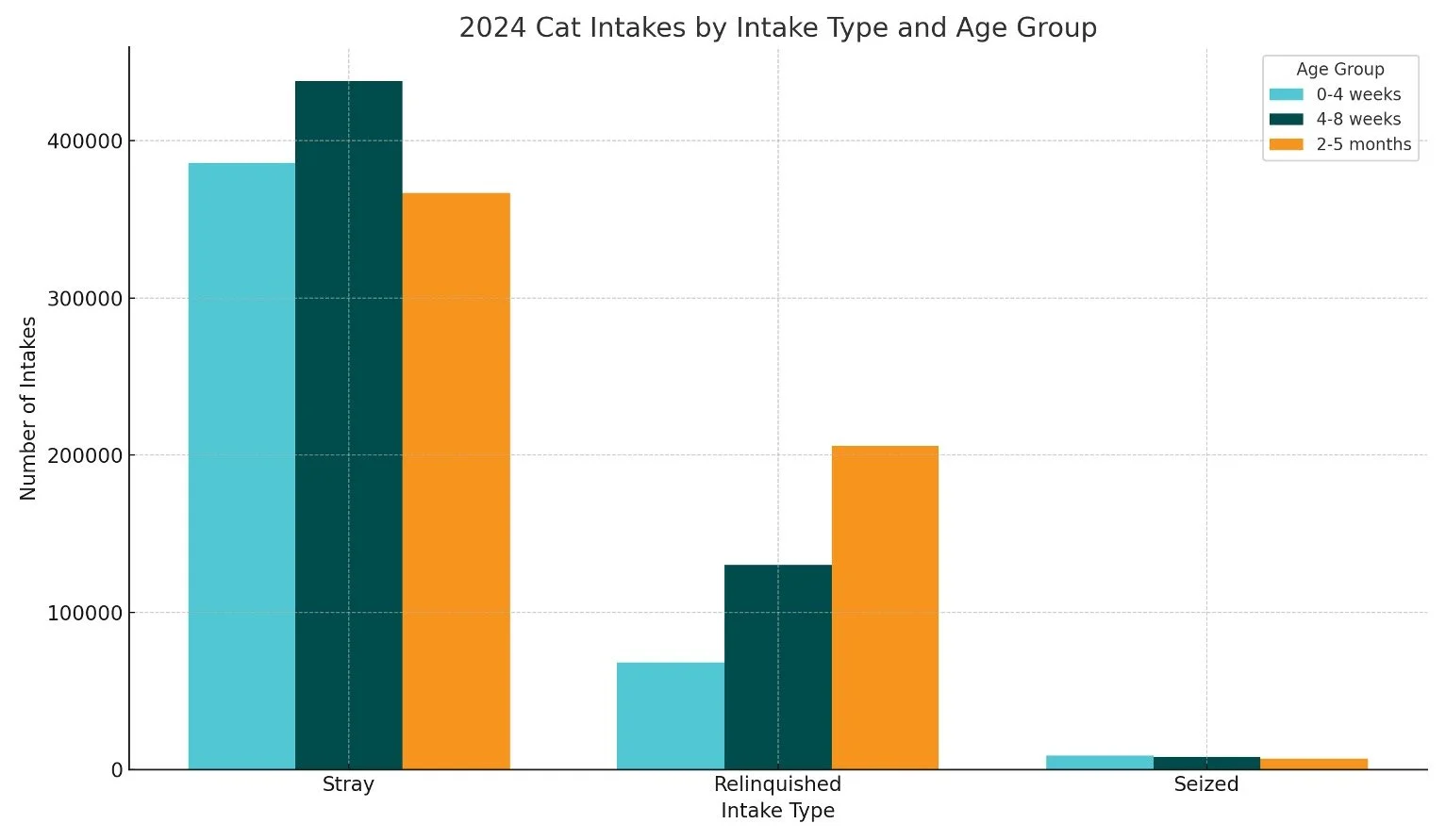
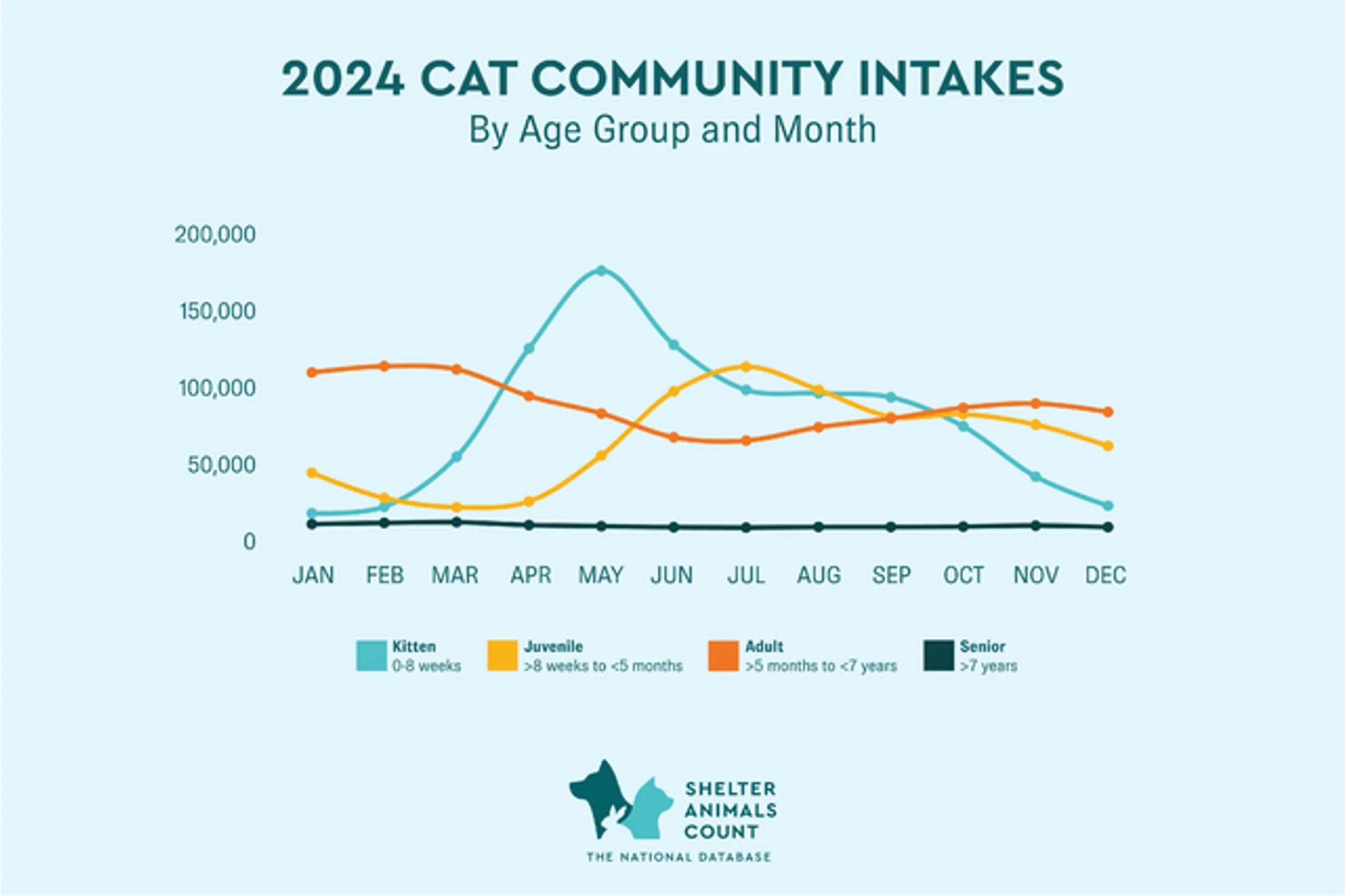
Accurate data tracking and reporting on kitten age is vital for animal welfare organizations. However, many shelters and rescues currently categorize kittens as any feline under 5 or 6 months old. While this may seem convenient for reporting purposes, it’s not a best practice for kitten lifesaving. Categorizing kittens in broad categories overlooks critical developmental stages that dramatically affect survival, care needs, and resource allocation.
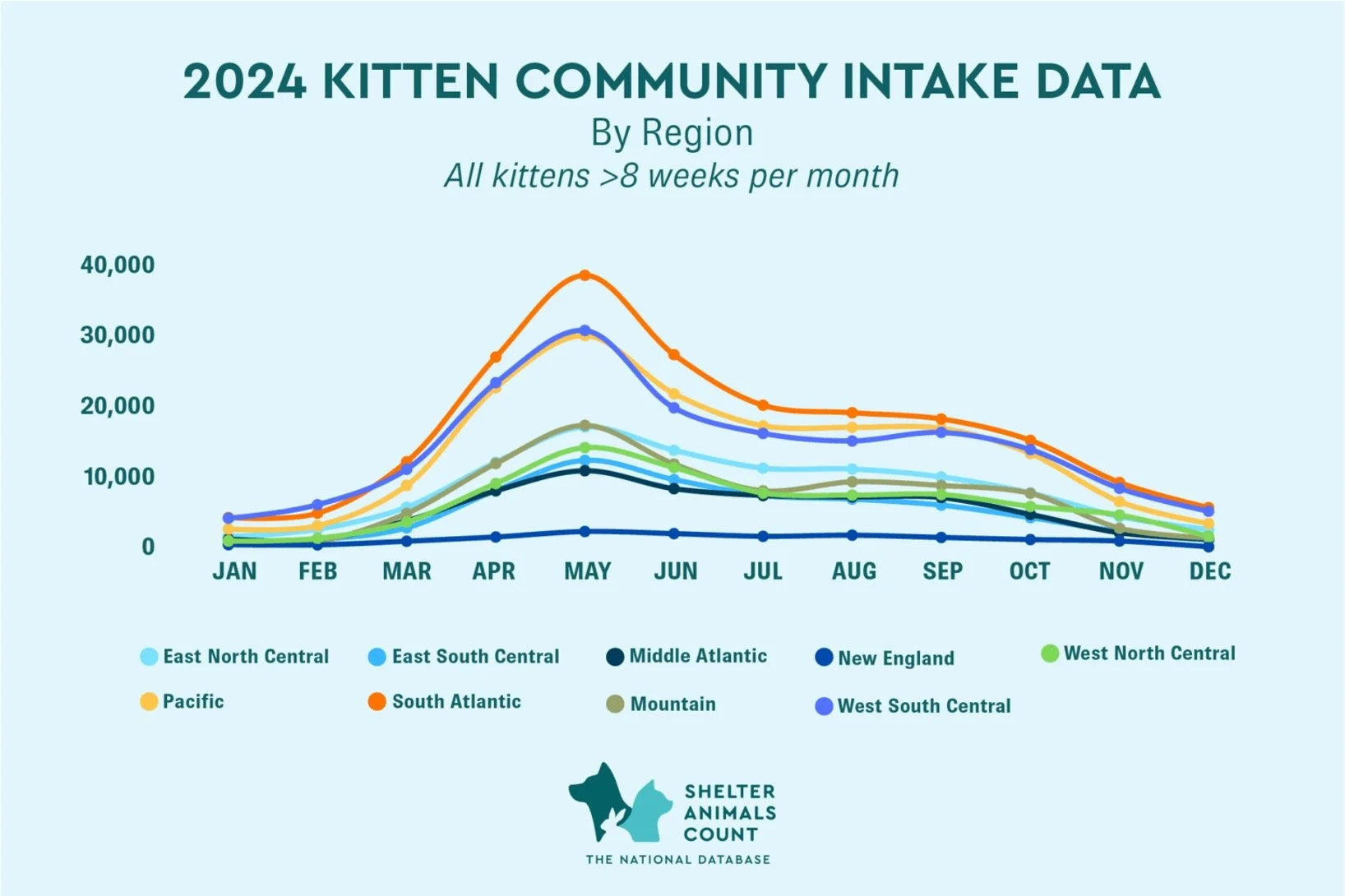
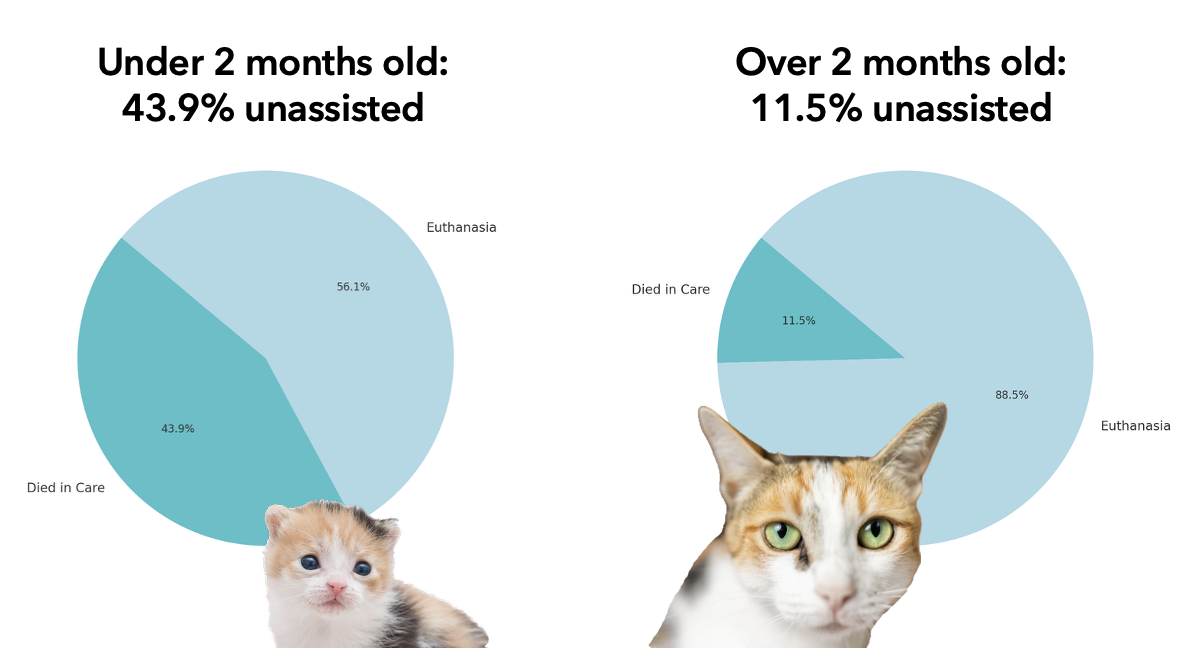
Kittens in the pre-adoption age range of 0–8 weeks require different types of care, supplies, program strategies, staffing, and support. Their medical needs, foster requirements, and survival rates differ significantly from older kittens. For this reason, tracking them separately is critical for strategic planning.
Standardizing how shelters track kitten ages allows organizations to:
Identify the most vulnerable populations
Allocate resources effectively
Evaluate program efficacy, capacity, and opportunities
Improve medical protocols
Demonstrate impact to funders and stakeholders
If your organization isn’t yet tracking 0-8 week olds, you could be missing out on funding opportunities. For instance, this information is required for partnership with Orphan Kitten Club, whose kitten-focused grants help shelters and rescues improve outcomes for the youngest felines. Unlock your data to unlock new lifesaving opportunities!
This guide outlines how shelters and rescues can configure their systems to accurately track kittens by age and use that data to improve outcomes.
Watch Kitten Lady’s Data Webinar here:
Accurately Age Your Kittens
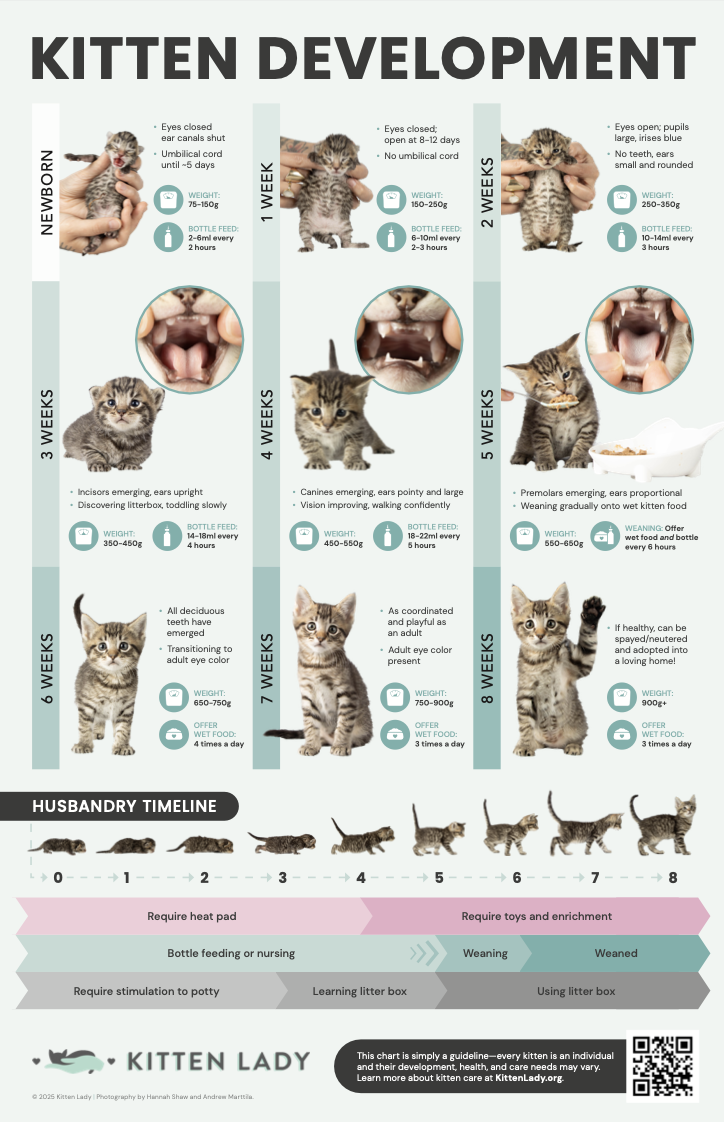
Before entering a kitten’s date of birth into any system, it is essential that all staff and volunteers involved in kitten intake are well-trained in accurately determining a kitten’s age. Each team member should aim to estimate the kitten’s birthdate within a 2-4 day window of the actual birthdate. Precise age determination is critical to efficiently managing kittens through your shelter or rescue system.
Age influences key decisions such as dietary needs, foster placement, vaccination and deworming schedules, spay/neuter timing, and adoption readiness.
To support your staff, you can share Kitten Lady’s resources on how to age a kitten, and download or purchase an educational poster for your intake and animal care areas.
Daily Rounds
Once kittens are in your care, daily rounds are necessary to ensure no data is missing and any age-related errors are corrected. These rounds are vital for maintaining up-to-date records and can be conducted virtually for kittens in foster care. Adopting best practices for daily rounds ensures accurate and comprehensive record-keeping.
Best Practices for Kitten Data Tracking
Make date of birth a required category in your software system so that staff do not have the option of leaving it blank.
Report on intakes and outcomes for 0-4 weeks and 4-8 weeks.
0-4 Week Olds: These kittens are highly dependent on a nursing mother. If they are orphans, they require round-the-clock bottle feeding and heat support to survive. Their care is more intensive.
4-8 Week Olds: Kittens in this range are either weaning or nearing weaning*. They remain resource-intensive but require different care compared to younger kittens.
*Please note that weaning is a process we recommend beginning at 5 weeks for best results.
Pull outcomes by age at intake to understand the ultimate outcome of kittens who enter at different life stages.
Include category tags for kittens with queens vs orphan kittens. Because their care varies significantly, tracking their intake and outcomes will help you determine future needs and opportunities.
Tools and Resources for Configuring Kitten Data
To support shelters and rescues in tracking kitten data, we have created a step-by-step guide for configuring your kitten data in three commonly used shelter management systems: Chameleon, PetPoint, and ShelterLuv. These guides will help you organize your data into animal age groups and streamline your kitten data, ensuring that you can quickly generate reports and track kittens in different developmental stages. It will require some fluency in the software you use to be able to follow these detailed instructions; we recommend contacting your software support team for further assistance.
Chameleon
Before building reports, it is important in this software to make the date of birth (DOB) field mandatory in the animal window. This is a context change that you can contact Chameleon Support to make to your environment. However, if you have someone who is comfortable making changes to your context files, you can open Cham1.ini in Notepad and locate the section for DLG_ANIMAL. You will then change the line for DOB to read:
DBM7=1405^DOB^-1^9^27^VT_DATE^16^ ^1^NONE^=^1404^ ^ ^
Be sure to test this in a single computer before deploying the change.

Once you are satisfied that the DOB field is mandatory, entering an estimated DOB is simple. Enter the estimated years and months old for the animal and the DOB will be automatically computed. If you know the exact DOB, simply enter that value in the DOB field.
Once DOB is getting filled in consistently, reporting your age groups is very simple. There are two methods, depending on your level of skill. If you are comfortable writing SQL queries for your reports, you can add this simple CASE statement to your query:
SELECT CASE
WHEN a.ANIMAL_TYPE = 'CAT' AND DATEDIFF(DD, a.DOB, k.INTAKE_DATE) > 56 THEN 'Cats'
WHEN a.ANIMAL_TYPE = 'CAT' AND DATEDIFF(DD, a.DOB, k.INTAKE_DATE) <= 56 THEN '0-8 Week Kittens'
END AS AgeGroup
FROM ANIMAL.SYSADM.KENNEL AS k
INNER JOIN ANIMAL.SYSADM.ANIMAL AS a ON k.ANIMAL_ID = a.ANIMAL_ID
WHERE (a.ANIMAL_TYPE = 'CAT')
The DATEDIFF function is the key. The first value, DD, specifies that you want the difference in days between the start date and end date. The start date is always your DOB.
** If DOB has not been required and left blank for animals in your shelter, you might need to change the start date to: ISNULL(a.DOB, DATEADD(DD, -365, GETDATE())). This says that if your DOB is blank, use a start date one year prior to today.
Once you are confident all animals have a DOB, you can leave the start date as a DOB. The second date in the example above is the date the animal came into the shelter.
Using the intake date, we compute the age group at the time of intake. The second date can be any date such as k.OUTCOME_DATE or GETDATE(). In this example, we are saying that cats 56 days or younger are classified as 0-8 week old kittens and over 56 days are post-adoption age cats.
The other method of determining Age Group is directly in Crystal Reports. You’ll need to create a formula similar to this:
IF DATEDIFF("d", {ANIMAL.DOB}, {KENNEL.INTAKE_DATE}) <= 56
THEN "0-8 Week Kittens"
ELSE "Cats"
This assumes you have this in your record selection formula: {ANIMAL.ANIMAL_TYPE} = "CAT". The DATEDIFF function in Crystal Reports is similar to SQL. The calculation value is specified differently in Crystal and the field names are represented in curly braces. The same options apply to the end date. You can select any date to compare to for the age calculation.
Whether you have created a command object in Crystal with your tailored SQL statement or you have created a formula in Crystal, simply adding the field to your report will compute the age groups for kittens, adults and other age groups.
PetPoint
The PetPoint Support team can help organizations with any questions or concerns. Support can be contacted by opening a support ticket in PetPoint. Within the top feature selection bar of PetPoint, choose “Support” and in the drop down, and click “Contact Us.” Describe the question or issue and support will respond via email.
Help articles about all PetPoint features can also be found by going to Support and clicking “Community.” Users will need to be logged into PetPoint for the help articles to load.
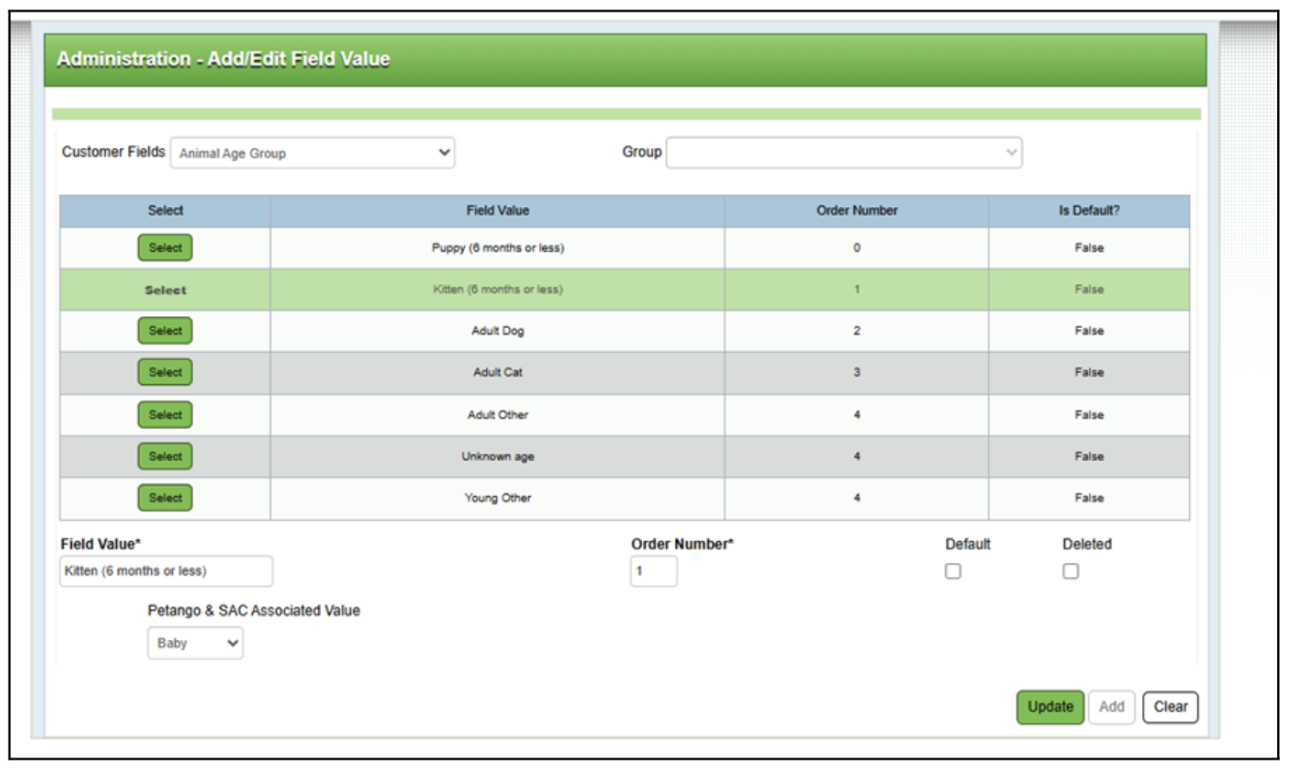
Animal age groups can be created and edited under Admin > Admin Options > Setup > Add/Edit Field Value. Here is a link to a help article with details: Add/Edit Field Value (site.com). We suggest that you create an age group for Pre-Adoption Age Kittens comprising 0-8 week old kittens.
Organizations will need to map the age group field values they create to a corresponding value in the Petango Associated Field Value. The Petango field values are what map animals by age onto PetPlace.com (formerly Petango).
As age groups are created, we recommend also adding the organization’s defined date range in parenthesis to help users make the appropriate selection. For example, below, an organization has created: Kitten (6 months or less).
*The age group field value in PetPoint will not change automatically. Users will need to manually change it as the animal ages out of the group. To edit an age group for an animal, search for the animal record, find the animal, then click the pencil icon to edit the records.

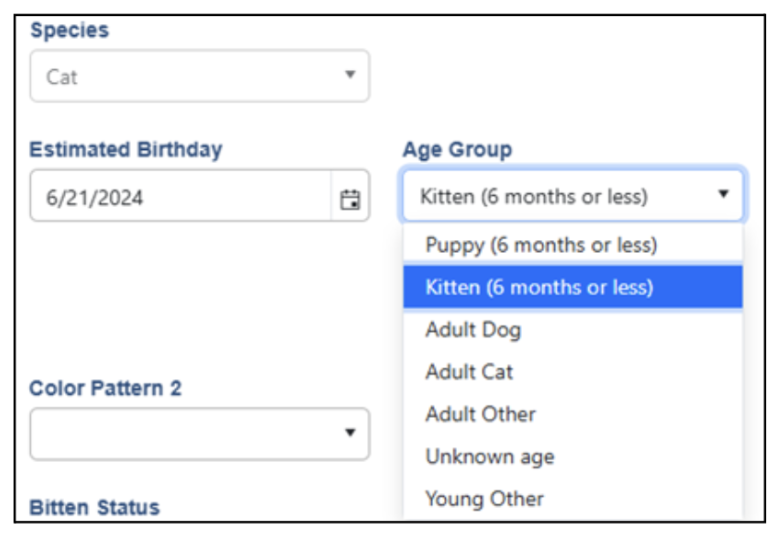
The animal’s date of birth can be entered in the age or estimated birthday field values. The age field value allows the user to enter in a numeral with corresponding days, weeks, months, or years. For example, 1 week could be entered. The estimated birthday field value will automatically populate to one week prior.
If an actual birthday is known, that can be manually selected in the estimated birthday field value from the calendar month/day/year selector. The age will automatically change with time and so this method is strongly encouraged for accurate reports.


Here is an article about editing animal records: Animal records (site.com).
There are several PetPoint reports that can help make sure animals always have ages entered. One quick and easy report can be accessed by going to Reports > Location View Report. If your organization is just starting to data track, leave all filters set to all, click “apply” then print the report to see a list of all animals in the care of the organization. Have the team work on making sure all animals without an age get an accurate one added. In this example below you can see that all five animals in this area have a Date of Birth (DOB).

The Active Animals report on the main PetPoint home screen can also be downloaded and printed. Click on the green home icon, which will default to active animals. Filter by age group, then click the age button twice to show the reverse order of ages. Animals without ages will show at the top of the report.
Here’s a link to a PetPoint webinar about the strategy and value of data entry efficiency: Revolutionizing Your Data Entry (site.com).

ShelterLuv
You can edit the age groups that you use for each animal species that you work with, rather than having to use default groups. To do so, go to configuration from the gear menu in the top-right corner and click on the "age groups" section. Select an animal type to view that animal's current age groups.

Click "edit record" to edit, delete, or add to the existing age groups. While in edit mode, anything underlined can be updated. There are a few age group rules to keep in mind:
Your age groups must cover all ages without any gaps.
Age groups can't overlap with each other.
The youngest age group must have a minimum age of "0 weeks", and the oldest group must include a maximum age of "No End".
Once you're all done updating, be sure to click "Save".
Shelter Buddy
Information coming soon!
Conclusion
Standardizing the way we age and report on kittens, particularly those in the critical 0–8 week pre-adoption stage, empowers animal welfare organizations to provide more targeted, effective care. With consistent, accurate kitten data, we can better meet the needs of our most vulnerable feline population and give them the best chance possible.
Questions?
Be sure to utilize your shelter management software point of contact for specific questions about each program. If you’re a representative of an Orphan Kitten Club partner organization, you can also reach out to your OKC contact with any questions!