Weighing Kittens
Monitoring a kitten’s weight is one of the most important parts of neonatal kitten care. When a kitten begins to struggle, the earliest signs can be extremely subtle—but changes in weight are often one of the first indicators that something isn’t right. Rather than waiting until a kitten is visibly ill, regular weight checks can alert you to a problem early, allowing you to intervene quickly and improve the kitten’s chances of thriving.
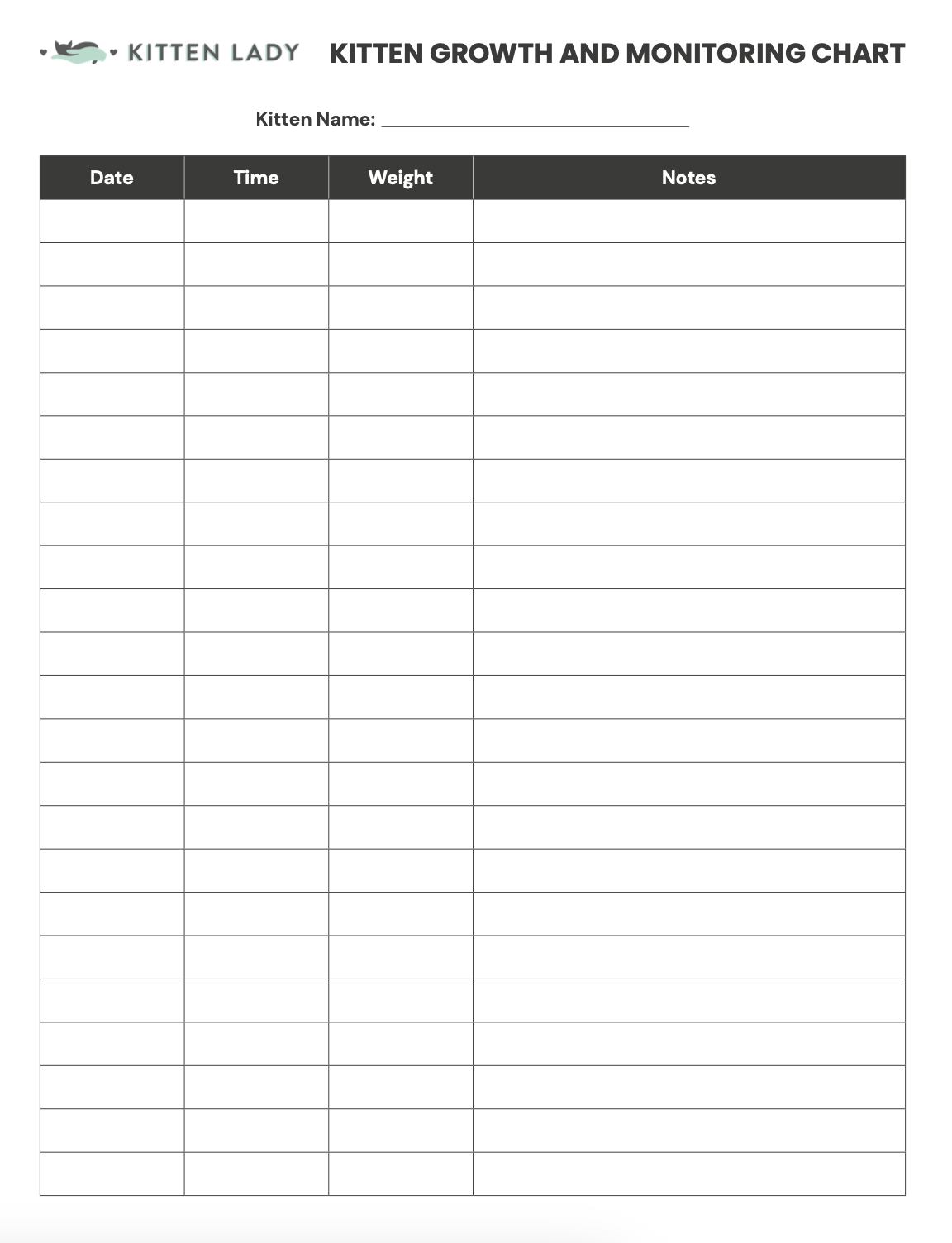
Weight monitoring is also essential for determining feeding amounts and schedules, calculating medication and fluid dosages, and tracking a kitten’s overall growth and development on the journey to adoption age. Click here for a printable weight monitoring sheet.
Simply put: weighing kittens is not optional. If you want your kittens to succeed, make weight monitoring a part of your daily care routine.
Watch an Instructional Video on Weighing Kittens
How to Weigh Kittens
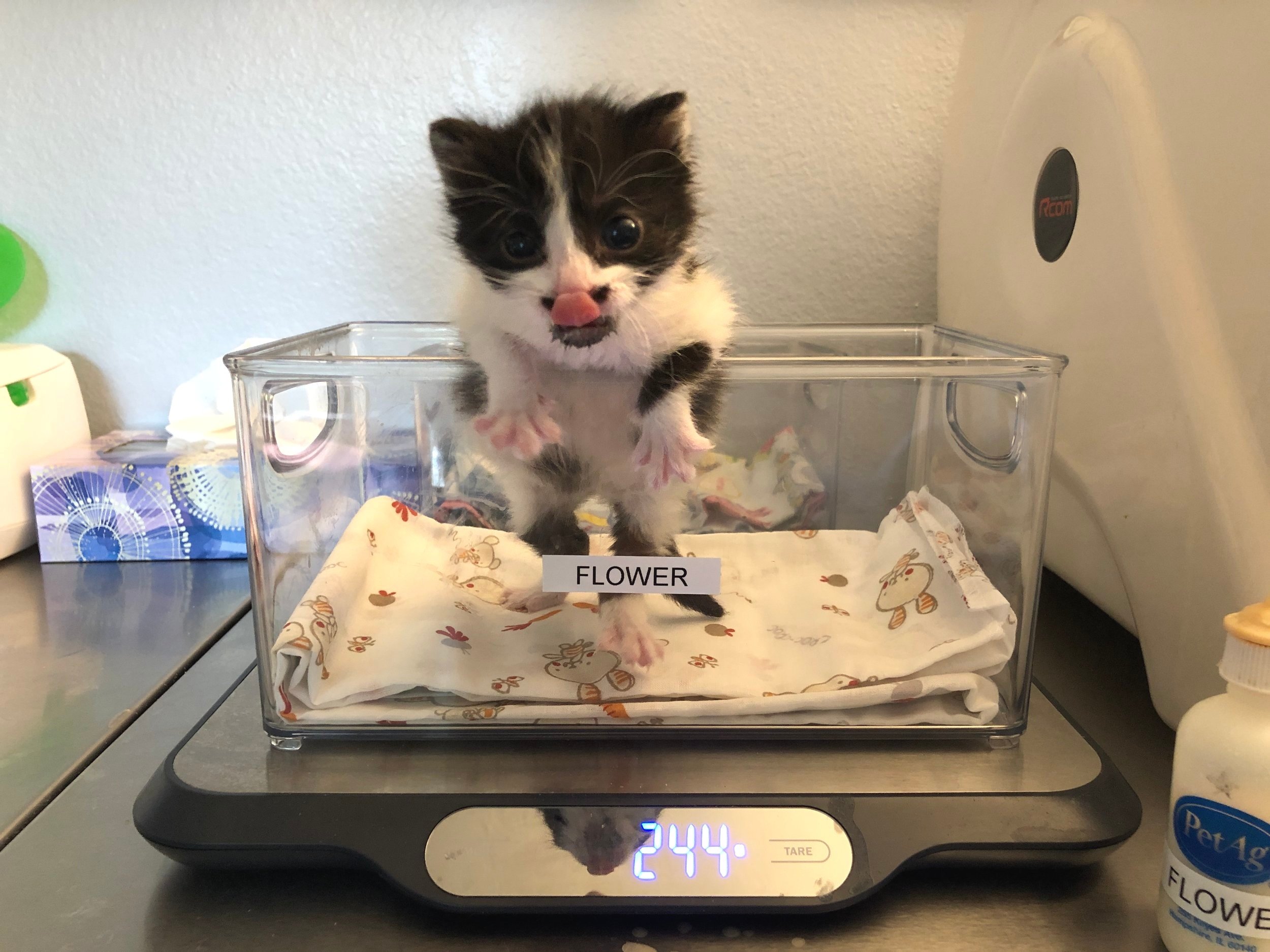
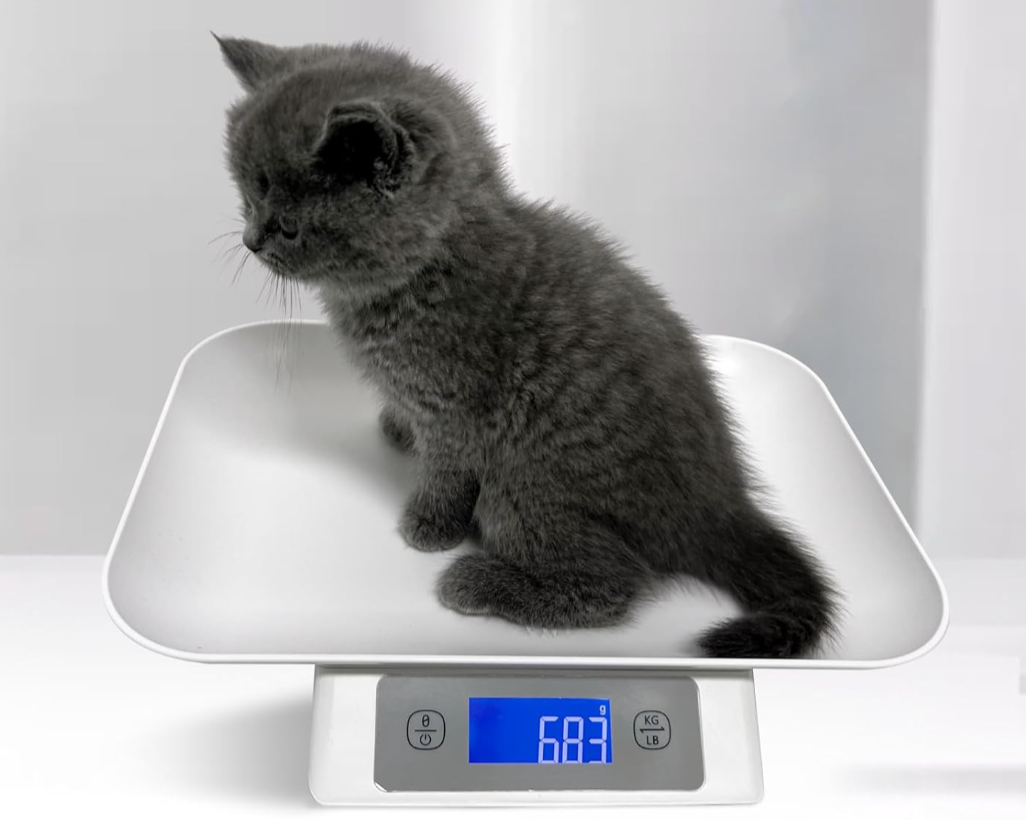
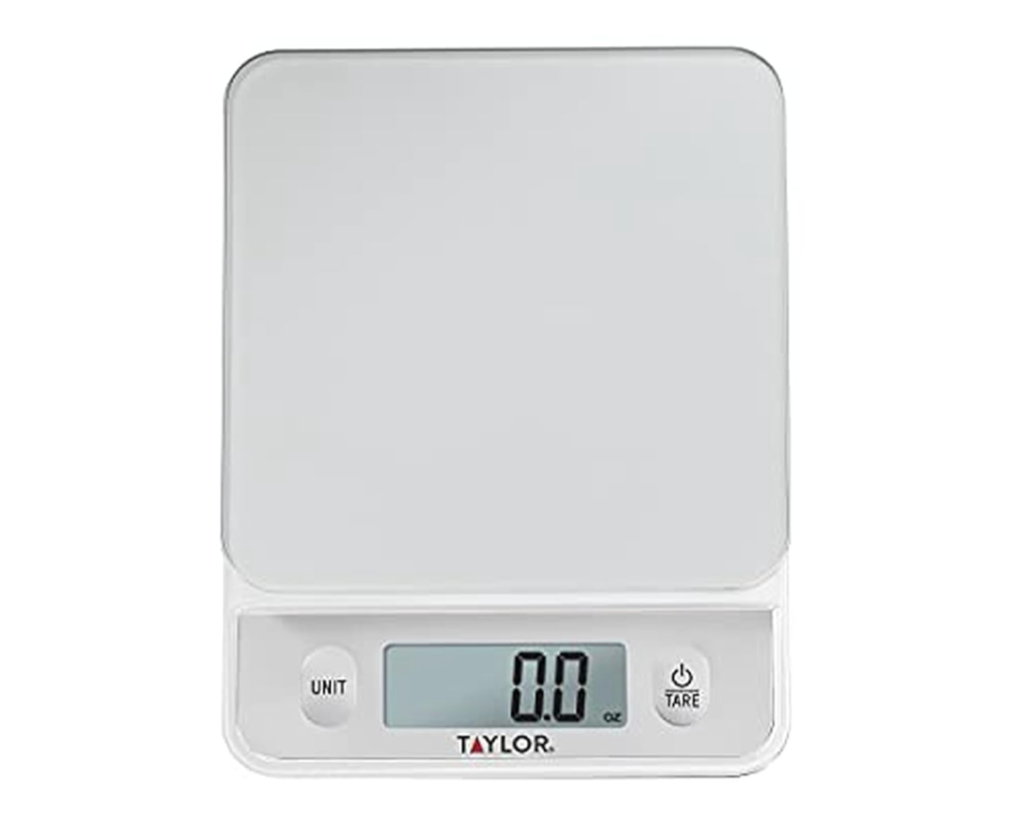
To weigh a kitten, use a small digital scale to weigh your kittens such as a kitchen scale or small animal scale that weighs in grams. Place a bowl, bin, or other lightweight container on the scale to help keep the kitten safely contained, then tare (zero out) the scale before placing the kitten inside. This ensures that only the kitten’s weight is being recorded.
Always record weights in grams whenever possible. Grams provide the precision needed to accurately monitor growth, calculate medication dosages, and determine feeding amounts. While some scales measure in ounces, ounces are less precise and can make it harder to identify subtle changes in weight. And pounds are far too broad for neonatal kittens—it takes a kitten about a month to gain a single pound!
Once you’ve recorded the kitten’s weight, write it down immediately so you can track trends over time. A single weight is useful, but a pattern of steady growth is what really tells the story.
For best results, weigh neonatal kittens at every feeding, or at least once daily, until they are fully weaned and healthy.
Recommended Products

Interpreting Results
When monitoring a kitten’s weight, focus on the overall trend over a 24-hour period rather than individual weigh-ins. It’s normal for a kitten’s weight to fluctuate slightly throughout the day. For example, a kitten may weigh a few grams less after having a bowel movement, so don’t be alarmed by small drops between feedings.
What matters most is whether the kitten is gaining weight from day to day. Over the course of 24 hours, a healthy growing kitten’s weight should be moving upward.
Most healthy neonatal kittens gain approximately 7–14 grams per day, though individual kittens may gain more or less depending on age, size, and circumstances. The goal is not to hit an exact number, but to see consistent forward progress.
If a kitten is failing to gain weight, has a plateau in growth, or is losing weight, this should be treated as an urgent concern.
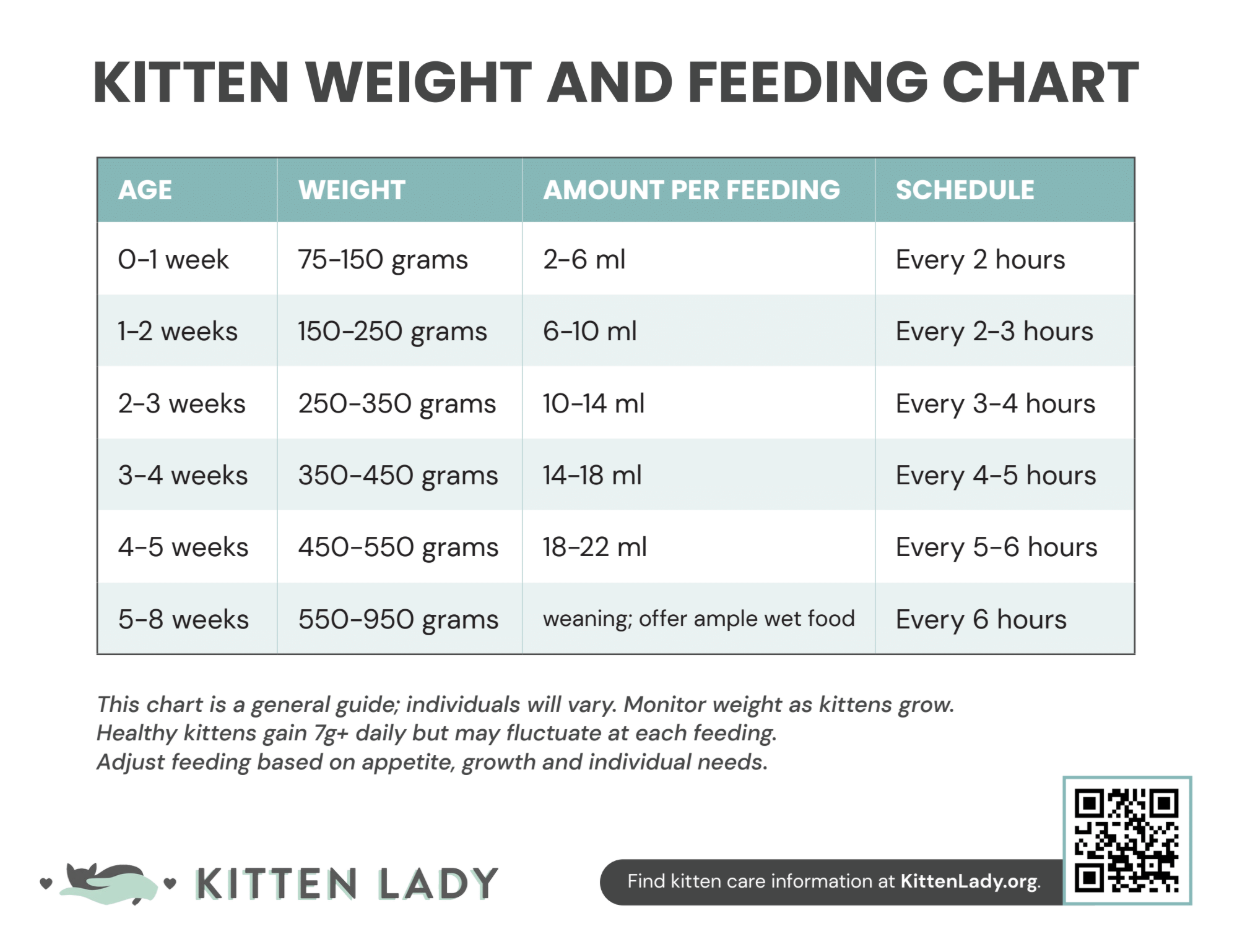
Check out Kitten Lady’s Weight and Feeding Chart to determine the average healthy weight for each week of kitten development, and note that this is only a guideline--not a rule book. Every kitten's weight will vary, but what is most important is that the kitten is making progress.
If a Kitten Isn’t Gaining or Loses Weight
For growing neonatal kittens, failure to gain weight is always a concern. While older kittens and adult cats may experience minor fluctuations in weight, a kitten between birth and 8 weeks of age should be steadily growing. If a young kitten is not gaining weight—or is losing weight—it’s important to investigate the cause and take action right away.
Weight loss is not a diagnosis; it’s a symptom. There are many reasons a kitten may be losing weight, including but not limited to:
Inadequate milk intake in nursing kittens. The kitten may not be nursing effectively from mom, or may not be consuming enough formula during bottle feeding. It may be necessary to increase feeding frequency, evaluate feeding technique, or adjust the bottle, nipple, formula, or feeding temperature.
Insufficient food intake during weaning. Some kittens need extra support as they transition to solid food. Offering starter bites, hand-feeding, supplemental bottle feedings, or slowing the weaning process may help ensure they are consuming enough calories.
Diarrhea or gastrointestinal upset. Ongoing diarrhea can quickly lead to weight loss, dehydration, and serious illness. Kittens should not be allowed to continue losing fluids without intervention.
Dehydration. Weight loss is commonly linked with dehydration, and many kittens losing weight may benefit from subcutaneous fluids.
Underlying medical conditions. Conditions such as panleukopenia (if diarrhea and vomiting seen), cleft palate (if feeding is unsuccessful and milk is seen coming from the nose), congenital hypothyroidism (if the kitten is eating but not growing) or any other viral, bacterial, parasitic, congenital, or metabolic conditions can all interfere with normal growth.
If your kitten is losing weight, start by looking at the whole picture. Is the kitten eating well? Are they nursing effectively? Do they have diarrhea, vomiting, dehydration, lethargy, or other signs of illness? Sometimes the solution is a simple adjustment to the feeding plan, but often there is a larger issue that needs to be addressed.
If your kitten is failing to gain weight and you cannot quickly identify and resolve the cause (such as increasing feeding schedule, providing supplemental bottles to weaning kittens, etc), contact your foster coordinator or veterinarian immediately. Don’t wait for additional weight loss or more obvious symptoms to appear. Early intervention gives you the best chance of identifying the problem, providing appropriate support, and helping the kitten survive and thrive.